Twenty-two years. Eight thousand and sixty days. More near-misses than any fanbase should have to endure. And then, on a Tuesday evening in Bournemouth, it ended.
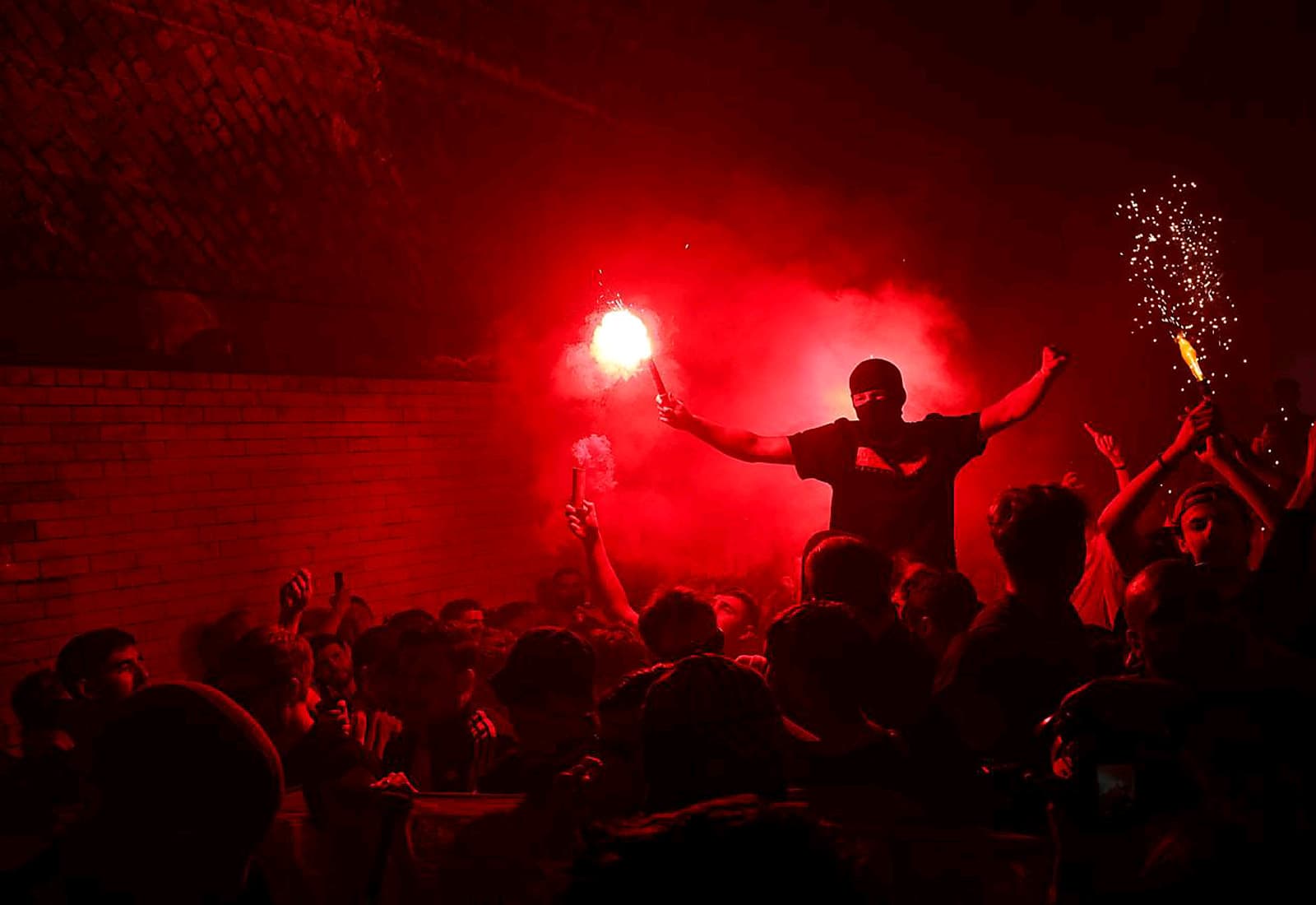
Manchester City drew 1-1 at the Vitality Stadium on 19 May 2026, and the moment Erling Haaland's stoppage-time equaliser was confirmed as too little too late, the scenes outside Arsenal's Emirates Stadium told the story. Red flares. Thousands of supporters flooding the streets. Players watching at the Colney Road training ground breaking into celebrations that had been rehearsed in imagination for two decades.
Arsenal are Premier League champions. Their first title since the Invincibles of 2003-04. Their fourteenth league title in the club's history. And the first time since 2017 that a team other than Manchester City or Liverpool has been crowned champion of England.
This is the full story of how they did it, what it means, and what comes next.
How the Title Was Won: The Bournemouth Result
Arsenal needed one of two things to happen on Tuesday evening. Either Manchester City to fail to win at Bournemouth, or Arsenal to win their own final match at Crystal Palace on Sunday 24 May and hope City did not win both of their remaining games. The first scenario played out.
Bournemouth's Junior Kroupi scored in the 39th minute to put City behind at the Vitality Stadium. Pep Guardiola's side, who had been champions in six of the previous eight seasons, pressed and probed for an equaliser throughout the second half. Haaland, who has defined Premier League goalscoring records in recent seasons, eventually found the net in stoppage time to make it 1-1. But a draw was not enough. City needed a win to keep the title race alive. The draw left them five points behind Arsenal with only one game remaining. The mathematics were over.
When the final whistle sounded in Bournemouth, Arsenal's players at their Colney Road training ground erupted. One member of the squad was pictured carrying a cardboard cutout of the Premier League trophy. The real one will be presented at Selhurst Park on Sunday.
The Road to the Title: How Arsenal Built This Season
Arsenal's 2025-26 Premier League campaign was built on two foundations: defensive solidity and set-piece excellence.
The Gunners lost only five league matches across the entire season, one of the meanest defensive records in Premier League history. Their ability to grind out wins in tight, nervy matches proved decisive in the closing weeks. The 1-0 win over Burnley on Monday 18 May, secured through Kai Havertz's header from Bukayo Saka's corner delivery, was the 18th time Arsenal had scored from a corner in the league this season. That returns the discipline, organisation, and technical precision that Mikel Arteta has built over seven years at the club.
Havertz himself was also lucky. His challenge on Lesley Ugochukwu in the second half against Burnley, which raked his studs down the midfielder's calf, was reviewed by VAR and kept as a yellow card rather than upgraded to red. Had he been dismissed, the final thirty minutes against a desperate Burnley side would have been far more fraught.
The contributions across the squad tell the story of a team, not a collection of individuals. Saka, Odegaard, Rice, White, Saliba, Raya. Every position reinforced by Arteta's meticulous recruitment and coaching. The Swede Viktor Gyokeres, brought on as a substitute against Burnley, provided fresh energy in the closing stages. The summer acquisitions have integrated seamlessly into a system that was already elite before they arrived.
Arteta: Seven Years to This Moment
Mikel Arteta was appointed Arsenal manager in December 2019 with a brief to rebuild a club that had lost its way. He had no previous experience as a senior manager. He had a squad that needed significant work. And he had a fanbase that had been waiting for a title since the year Arsenal went an entire league season unbeaten.
What followed was a seven-year project of extraordinary patience and precision. The 2022-23 season brought Arsenal close before City eventually pulled away. The 2023-24 season brought them even closer before another collapse in the final weeks. This time, they held on.
Arteta's players now stand alongside Thierry Henry, Dennis Bergkamp, Patrick Vieira, and Ian Wright in Arsenal's pantheon of champions. The current manager's name will be listed alongside the greats of the club's history not as a promising coach but as a title-winning one.
His post-match comments were measured in the way that genuine emotion often is. He spoke about the process, about the people around him, about what the players had endured to get here. He did not need to be dramatic. The occasion was doing that for him.
Pep Guardiola's Last Title Race at City
The Bournemouth result also confirmed something that reports on Monday had been building toward: Pep Guardiola is leaving Manchester City at the end of this season after ten years at the club.
Guardiola arrived at the Etihad in 2016 and transformed City into the dominant force of English and European football. Under his management, City won six Premier League titles, including an unprecedented four in a row, along with multiple domestic cups and the Champions League in 2023.
His final title challenge ended not with a loss in a direct confrontation with the champions but with a draw in Bournemouth, watching his side fail to recover from a first-half goal scored by a young player who had never beaten City before in his career. That is the brutal mathematics of title races. There is no narrative justice. There is only the table.
The tributes to Guardiola from players, opponents, and pundits have been extensive. Arsenal's supporters, generous in victory, acknowledged what he built and what he meant to the modern game. His next chapter is unconfirmed.
The Champions League Final Still to Come
Arsenal's domestic triumph arrives with a remarkable additional dimension. Six days after lifting the Premier League trophy at Selhurst Park, they face Paris Saint-Germain in the Champions League final in Budapest on Saturday 30 May 2026.
The prospect of an unprecedented double, the Premier League and the Champions League in the same season, is now being discussed openly and with genuine credibility. PSG eliminated Liverpool 4-0 on aggregate and Bayern Munich in a nine-goal semi-final to reach Budapest. They are formidable opponents. But Arsenal have been the most consistent team in European competition this season, going unbeaten through the group stage with eight wins from eight.
The last English club to win the league and European Cup double was Manchester United in 1999. Arsenal have the opportunity to join that exclusive list in less than two weeks.
The Celebrations: A City That Stood Still
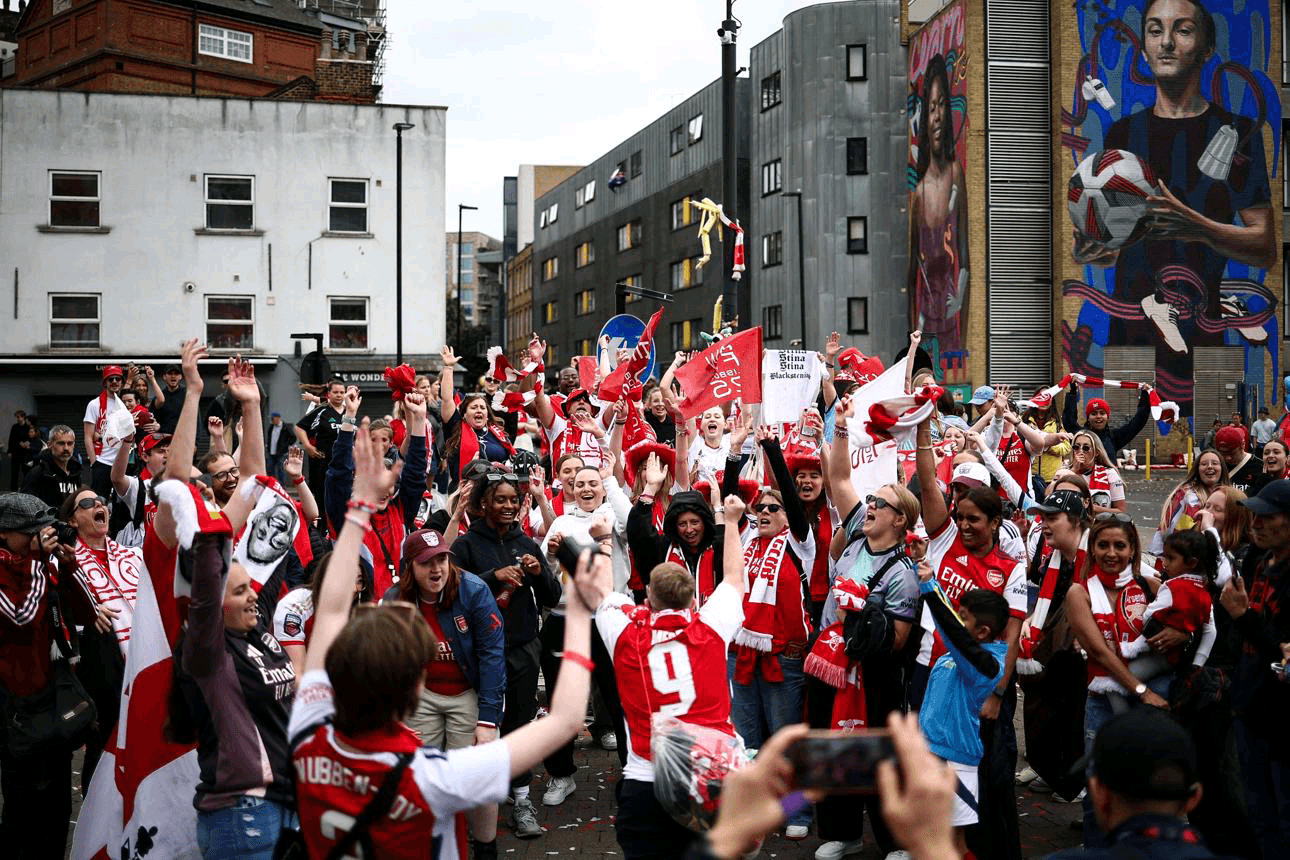
The scenes outside the Emirates Stadium on Tuesday evening were extraordinary. Thousands of supporters arrived even though no match was being played at the ground. Red and white filled the streets of North London. Flares were set off. Songs that had been sung in hope for twenty-two years were sung in joy.
Inside the training ground at Colney Road, the Arsenal squad watched the Bournemouth match together. The photographs and videos shared by the club afterward showed a group of players and staff who had built something together over years, celebrating not a lucky result but the confirmation of sustained excellence.
Arsenal will lift the trophy on Sunday at Selhurst Park. The party in North London has already started.
What This Title Means
The significance of this Arsenal title extends beyond the statistics and the trophy.
For the club's supporters, many of whom were children or teenagers the last time Arsenal were champions, this is a moment of pure vindication. The years of watching City and Liverpool dominate, the near-misses, the questions about whether Arteta was the right man, whether the squad was good enough. All of it answered.
For English football more broadly, it matters that the duopoly has been broken. City and Liverpool between them won every Premier League title from 2017 to 2025. A new champion changes the conversation about whether elite English football has become predictable. It has not. Arsenal have proved that patient, intelligent, well-financed clubs built on coherent identity can compete with and ultimately overcome even the most dominant forces in the game.
For Arteta, for the players, for the staff who stayed through the difficult years. This is what it was for.
No comments yet. Be the first to spark the conversation.