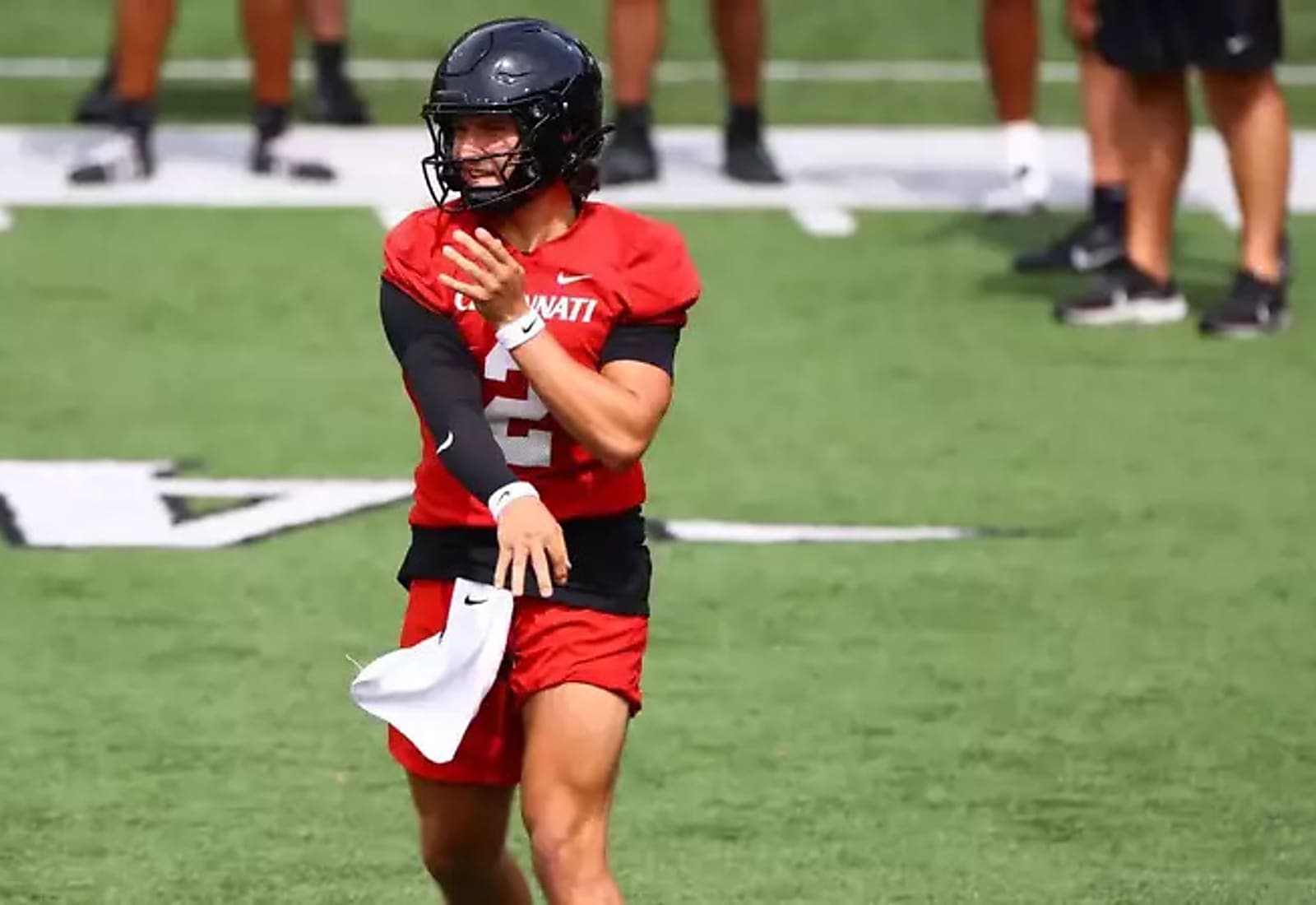
The Brendan Sorsby story should not be read only as a scandal around one player's future earnings or public image. Its deeper value lies elsewhere. According to reporting summarised by People from ESPN and other outlets, Sorsby stepped away from football to enter a residential treatment programme for gambling addiction after the NCAA began investigating alleged betting activity that could affect his eligibility. That development matters because it brings together three issues college sport is struggling to manage at the same time: athlete welfare, the integrity of competition and the speed at which betting culture has become normalised through apps, notifications and constant marketing.
Why this story matters
This story matters because college sport has entered an era where gambling is no longer a distant vice operating at the edge of the game. It sits directly inside the media environment athletes consume every day. Odds, prop bets, gambling partnerships and app-based betting prompts now form part of the background noise of sport itself.
When a player such as Sorsby reportedly ends up seeking treatment, the issue can no longer be treated only as a rules violation. Rules still matter. Integrity still matters. But the welfare dimension becomes impossible to ignore because a regulatory breach may also be evidence of compulsion, access problems and weak preventative systems.
For readers in Nigeria, the relevance is immediate. Sports betting has become deeply embedded in youth culture, football fandom and app-based daily life. That means the central question in the Sorsby story is not uniquely American. It is whether institutions know how to respond when betting shifts from entertainment to dependence, especially among young people whose careers and judgment are still forming.
Context and background
The People report says Sorsby took an immediate leave of absence from the Texas Tech programme and entered treatment after allegations that he had made thousands of online bets through a gambling app. According to the summary, the bets reportedly included Indiana basketball games from the period when he had been at the university as a freshman in 2022, but there was no indication that he had tried to influence game outcomes. The report also says law-enforcement involvement had not been triggered.
That context is important because it separates several questions that are often confused in public debate. One question is whether the athlete broke NCAA rules. Another is whether competition integrity was directly compromised. A third is whether the player is dealing with an addiction problem rather than a one-off lapse in judgment. Those questions overlap, but they are not identical.
The report also notes that Sorsby had been viewed as a highly valuable player in the college game and was expected to earn significant money through the economics of modern college football. That financial angle helps explain why the public conversation became so loud. Once a player's eligibility, future earnings and treatment all appear in the same story, the debate quickly becomes moral, commercial and medical at once.
What happened
According to People's summary of ESPN and other reporting, Sorsby stepped away from team activity to seek professional help through a residential treatment programme. Texas Tech coach Joey McGuire said the programme supported the decision and was focused on Sorsby as a person. The NCAA, while not commenting on specific investigations, reiterated that it takes sports betting seriously and is committed to student-athlete well-being and the integrity of competition.
Those two strands are worth holding together. On one hand, governing bodies have strong reasons to take gambling breaches seriously. Athletes are not supposed to bet on sports because even the appearance of compromised judgment can damage trust in competition. On the other hand, when a player is reportedly entering treatment, institutions are also being asked to treat the matter as a health issue rather than only a disciplinary problem.
The original weak framing around fans, money and scepticism pushed the story toward spectacle. The stronger reading is more careful. What happened is that a prominent player, under investigation for alleged betting activity, reportedly entered treatment while questions about eligibility and responsibility continued in the background.
Why it matters now
It matters now because sport is living through a contradiction. Betting companies and betting content are everywhere, yet athletes are expected to navigate that environment without crossing a strict line. Many do. Some do not. When they fail, institutions often struggle to decide whether the right response is punishment, treatment, suspension, reinstatement or some mix of all four.
It also matters because gambling products have become frictionless. App notifications, instant deposits, in-play betting and constant odds updates reduce the distance between temptation and action. If a player is vulnerable, those features can intensify harm quickly. That is why the Sorsby case is not only about rules. It is about product design, behavioural pressure and whether young athletes are being exposed to more risk than institutions are prepared to manage.
For Nigeria, this matters because digital betting growth has been rapid and normalised. University-age readers, football fans and aspiring athletes are living in a media culture where betting language is common and easy to access. The Sorsby story is a warning that the line between entertainment and dependency can become harder to recognise when the technology is designed to keep users engaged.
Deeper analysis
The key tension in the case is that athlete welfare and sporting integrity can pull institutions in different directions. A governing body may need to protect the credibility of competition through strict penalties. But if an athlete has moved from ordinary betting into addictive behaviour, a punishment-only response may fail to deal with the root problem. The sport then satisfies its rules while ignoring its human duty.
This is where the betting-app angle matters. Modern gambling systems are not passive. They are designed to be recurring, personalised and difficult to ignore. If, as reporting suggested, betting became a steady pattern rather than a single moment of bad judgment, then prevention clearly did not work early enough. Education alone is often too weak when the commercial environment is aggressively optimised for habit formation.
The Sorsby case also raises a credibility issue for college sport. Public trust depends on the belief that games are being contested honestly. Even where no evidence suggests manipulated outcomes, repeated stories about athlete betting erode that trust. That is why the NCAA cannot afford to dismiss these cases as private problems. But it also cannot afford to pretend that discipline by itself resolves the underlying pressures.
For Nigerian readers, the deeper lesson is that betting-related harm should be discussed before it becomes scandal. Schools, clubs and families often speak about gambling only after losses, addiction or public embarrassment appear. By then, the problem is already more expensive and more painful. Stronger prevention means earlier conversation, clearer boundaries and better access to confidential treatment.
What happens next
The next thing to watch is how institutions balance recovery with accountability. Cases like this often move slowly because eligibility questions, medical treatment and legal concerns do not follow the same timeline. Readers should watch for whether the public discussion stays trapped in moral outrage or begins asking more useful questions about prevention, support and platform responsibility.
It will also be important to see whether colleges and governing bodies strengthen practical safeguards around gambling education, app exposure and mental-health support. When repeated cases emerge, the meaningful test is not only how a player is punished but whether the system learns anything.
For broader audiences, the story is a reminder that betting policy cannot be separated from the digital tools that make betting constant, easy and socially normal. Any serious response has to account for both behaviour and environment.
Final takeaway
The Brendan Sorsby case matters because it exposes the uncomfortable space where discipline, addiction and digital betting culture overlap. It is not only about one player's judgment. It is about whether college sport understands the environment it has allowed to grow around young athletes.
That is what gives the story lasting value. If institutions respond only when a case becomes public, they will keep arriving late. The better response is to treat athlete protection and competition integrity as connected problems, not competing ones.
No comments yet. Be the first to spark the conversation.