Introduction
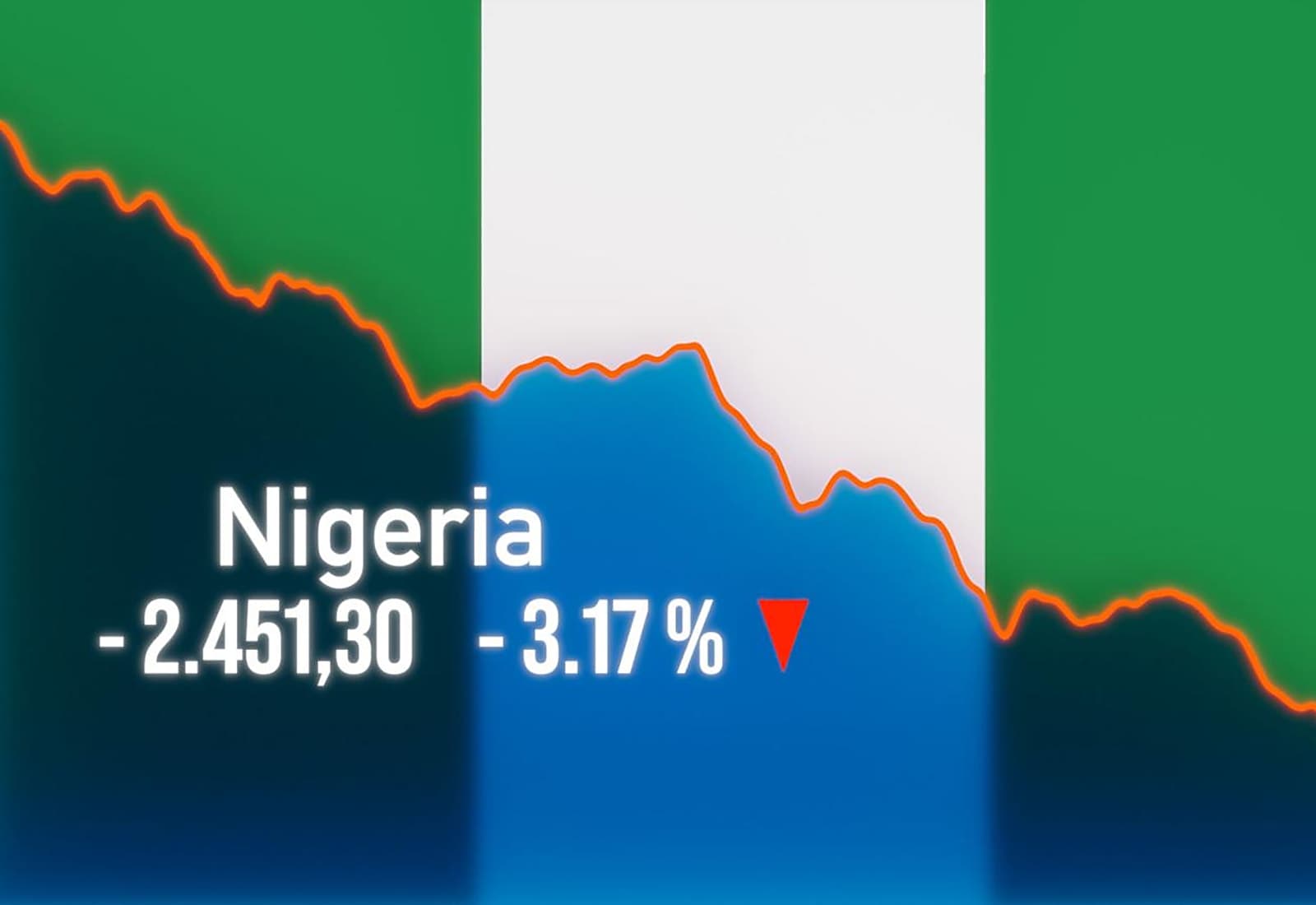
On 22 May 2026 the Nigerian Exchange (NGX) recorded a 1.02 per cent decline in its All‑Share Index, an event that erased an estimated N1.62 trillion from market capitalisation. For traders the headline is stark, but the ripple effects touch pension funds, corporate financing, foreign investment and everyday household budgets. Understanding why the market moved, what the numbers reveal about Nigeria's macro‑economic health, and how the slump may shape policy and investment decisions is essential for anyone with a stake in the country's financial future.
Executive summary
- The All‑Share Index fell 1.02 per cent, wiping out roughly N1.62 trillion in market value.
- Inflation remains above 30 per cent year‑on‑year, while the Central Bank of Nigeria's policy rate sits at 26.75 per cent.
- The parallel naira rate hovers near ₦1,395 per a substantial sum adding pressure on import‑dependent firms.
- Banking, consumer‑goods, industrial and energy stocks all slipped between 1.1 per cent and 1.5 per cent.
- Pension fund valuations contracted, raising concerns about future retiree payouts.
- Upcoming CBN policy decisions, corporate earnings and fiscal‑reform progress will dictate the market's next direction.
Table of contents
- Why this story matters
- Context and background
- What happened
- Key facts readers should know
- Why it matters for Nigeria
- Wider African and global context
- Expert insight and practical implications
- What readers should watch next
- Frequently asked questions
- Conclusion
Why this story matters
A single trading session that removes more than N1.62 trillion from market capitalisation is not merely a statistic for market analysts. Pension schemes, which are required by the Nigerian Pension Commission to hold a sizeable equity allocation, see the value of their holdings shrink, potentially reducing projected retirement benefits. Corporate financing becomes costlier as investors demand higher returns to compensate for perceived risk, prompting firms to postpone expansion projects and hiring plans. For the average Nigerian, a weakening stock market often foreshadows broader macro‑economic stress-higher food and transport costs, a volatile naira and tighter credit conditions-all of which directly affect household disposable income. Moreover, foreign investors monitor the NGX closely; a sustained sell‑off can deter new capital inflows, limiting the foreign exchange needed to stabilise the currency. In short, the mid‑week slump is a barometer of confidence that influences everything from individual savings plans to national economic policy.
Context and background
Nigeria's equity market has been on a roller‑coaster ride since the start of 2024. After a brief rally driven by optimism over oil‑price recovery, the All‑Share Index has struggled against a backdrop of record‑high inflation, which the National Bureau of Statistics reported at over 30 per cent year‑on‑year in March. The Central Bank of Nigeria (CBN) responded with a series of interest‑rate hikes, pushing the policy rate to 26.75 per cent - the highest level in recent memory. At the same time, the naira has depreciated sharply against the dollar, with the parallel market hovering around ₦1,395 per a substantial sum a level that fuels import‑cost pressures and erodes corporate profit margins.
Fiscal concerns have compounded these macro‑economic strains. Nigeria's debt‑to‑GDP ratio has risen above 40 per cent, prompting investors to scrutinise the government's reform agenda and its ability to service external obligations. Listed companies face higher borrowing costs, and many rely on imported inputs whose prices rise with the weakening naira. The combination of inflation, high rates, currency weakness and fiscal uncertainty creates a fragile stage for any market movement, making the recent N1.62 trillion loss a symptom of broader systemic stress.
What happened
During the mid‑week session on 22 May 2026, the NGX recorded a 1.02 per cent decline in its All‑Share Index, translating to an estimated N1.62 trillion erosion in market capitalisation. The sell‑off was broad‑based, touching key sectors such as banking, consumer goods, industrials and energy. Analysts cited a mix of profit‑taking after earlier gains and heightened investor anxiety over inflation and monetary policy as primary drivers. The breadth of the decline suggested more than a fleeting technical correction.
Sector‑specific data showed banking stocks slipping an average of 1.4 per cent, while consumer‑goods companies fell around 1.2 per cent as investors feared reduced consumer spending power. Industrial equities, which are particularly sensitive to input‑cost volatility, dropped close to 1.5 per cent, and energy stocks - traditionally a hedge against inflation - were not immune, slipping roughly 1.1 per cent amid concerns over global oil‑price volatility and domestic regulatory uncertainty.
Trading volume surged, indicating that the decline was driven by active selling rather than a lack of liquidity. While profit‑taking is a normal part of a healthy market cycle, the confluence of macro‑economic headwinds amplified the magnitude of the sell‑off.
Key facts readers should know
- All‑Share Index movement: -1.02 per cent on 22 May 2026.
- Market‑value loss: Approximately N1.62 trillion erased.
- Inflation: Over 30 per cent year‑on‑year in March 2024 (latest reported figure).
- Policy rate: 26.75 per cent, the highest in recent history.
- Parallel naira rate: Around ₦1,395 per $1.
- Debt‑to‑GDP: Above 40 per cent.
- Sector performance: Banking -1.4 per cent, Consumer goods -1.2 per cent, Industrials -1.5 per cent, Energy -1.1 per cent.
- Foreign participation: Roughly 30 per cent of daily turnover on the NGX.
- Pension fund exposure: Mandatory equity allocation means pension valuations are directly affected by market swings.
Why it matters for Nigeria
The timing of the decline is critical. Nigeria is navigating tight monetary conditions while the government pushes forward with fiscal reforms aimed at stabilising the naira and curbing inflation. A sharp market correction can undermine these efforts by shaking investor confidence, which in turn may raise the cost of capital for both private firms and the public sector. Foreign investors, already sensitive to policy stability, may interpret the sell‑off as a warning that inflationary pressures are persisting longer than expected, prompting a pull‑back of external capital.
Domestically, the loss reverberates through pension fund valuations. The mandatory equity component means a sudden dip reduces projected returns that retirees rely on, potentially prompting calls for policy adjustments to protect pensioners' incomes. Moreover, the decline adds pressure on the naira, as capital outflows can exacerbate currency depreciation, feeding back into higher import costs and further inflation - a classic feedback loop.
For ordinary Nigerians, a weaker equity market often foreshadows slower job growth. Companies facing a lower market valuation may delay hiring or postpone expansion projects, limiting opportunities in a labour market already strained by high youth unemployment. In short, the mid‑week slump is not an isolated market event; it signals that the broader economic environment remains fragile and that policy responses will be closely scrutinised.
Wider African and global context
Nigeria's market dynamics echo challenges seen across several emerging economies. Across Africa, many equity markets have grappled with inflation spikes, currency depreciation and tightening monetary policy as central banks respond to global commodity price shocks. For instance, South Africa's JSE and Kenya's NSE have both recorded periods of heightened volatility linked to similar macro‑economic pressures. On the global stage, the 2024‑2025 oil‑price rally provided a temporary boost to oil‑exporting economies, but the subsequent slowdown in oil demand and the resurgence of global inflation have eroded that advantage.
Foreign investors often view Nigeria as a high‑risk, high‑reward destination. The country's large population, growing middle class and abundant natural resources remain attractive, yet the combination of fiscal deficits, a volatile naira and policy uncertainty can tilt risk assessments. The NGX's 30 per cent foreign‑participation share underscores the importance of external sentiment; a sustained sell‑off in Nigeria can ripple through regional investment flows, influencing portfolio allocations across the continent.
Expert insight and practical implications
Market analysts stress that the current correction is less a one‑off anomaly and more a reflection of underlying economic fragility. The high policy rate of 26.75 per cent makes government bonds comparatively attractive, prompting a portfolio shift from equities to fixed‑income assets. Coupled with a currency‑risk premium demanded for holding naira‑denominated securities, the environment favours lower‑risk holdings.
Corporate finance advisers warn that firms may face tighter financing conditions. Higher borrowing costs reduce the net present value of future projects, leading to postponed capital expenditures. Companies with significant import exposure will see margins squeezed as the parallel naira rate remains near ₦1,395 per a substantial sum inflating the cost of raw materials and intermediate goods.
Pension fund managers are likely to reassess asset‑allocation strategies. While the regulatory mandate requires a substantial equity share, the volatility may prompt a tilt toward more defensive sectors or increased use of hedging instruments to protect against currency risk.
Policy makers have a narrow window to restore confidence. A clear communication strategy from the CBN regarding the trajectory of interest rates, combined with credible fiscal‑reform milestones-such as the implementation of the Revenue Mobilisation Strategy-could help stabilise expectations. Transparency around debt‑service plans would also address foreign‑investor concerns highlighted by the International Monetary Fund's recent statements on fiscal discipline.
Practical steps for individual investors include diversifying across asset classes, monitoring corporate earnings for signs of margin resilience, and staying alert to CBN policy announcements. For retail investors with exposure to NGX‑listed stocks, maintaining a longer‑term perspective and avoiding reactionary trades during heightened volatility can mitigate the impact of short‑term market swings.
What readers should watch next
- CBN policy meeting (early June): The central bank's decision on whether to maintain the 26.75 per cent rate or consider a modest easing will influence risk appetite.
- Corporate earnings season: Upcoming results will test whether listed firms can sustain profitability amid rising input costs and a weak naira. Strong earnings could cushion sentiment, while disappointing numbers may deepen the correction.
- Fiscal‑reform progress: Implementation of the Revenue Mobilisation Strategy and other debt‑management measures will be scrutinised by foreign investors seeking assurance of fiscal credibility.
- Inflation trajectory: Monthly CPI releases will indicate whether price pressures are easing, which could affect both monetary policy and consumer‑spending outlooks.
- Currency developments: Movements in the parallel naira rate, especially any sustained appreciation, could relieve import‑cost pressures and improve corporate margins.
If the CBN signals a pause in rate hikes and inflation data begins to trend lower, a gradual market rebound is plausible as risk appetite improves. Conversely, any indication of persistent price pressures or renewed currency weakness could trigger further selling, extending the correction into the next trading week.
Frequently asked questions
What caused the All‑Share Index to fall 1.02 per cent on 22 May 2026?
A combination of profit‑taking after earlier gains, heightened investor anxiety over inflation and monetary policy, and broad‑based selling across banking, consumer‑goods, industrial and energy sectors drove the decline.
How significant is the N1.62 trillion loss in market capitalisation?
It represents the amount of equity value erased in a single trading session, affecting pension fund valuations, corporate balance sheets and the overall perception of market health.
Will the high policy rate of 26.75 per cent continue to pressure the stock market?
The elevated rate makes government bonds more attractive relative to equities, encouraging a shift toward fixed‑income assets. Future CBN decisions will determine whether this pressure eases.
How does the parallel naira rate of ₦1,395 per $1 affect listed companies?
A weak naira raises the cost of imported inputs for manufacturers and consumer‑goods firms, squeezing profit margins and contributing to lower stock valuations.
Are pension funds at risk because of the market slump?
Yes. Mandatory equity allocations mean that a sharp market correction reduces the projected returns on pension assets, potentially impacting future retiree payouts.
What sectors were
Why this matters for Nigeria
Even when Nigeria's Stock Market Slides 1.02% as Investors Lose N1.62 Trillion in Mid‑week Trading unfolds outside Nigeria, the development can still matter through trade, prices, culture, migration, technology access, diplomacy, or public mood. That local relevance is what helps readers understand why an international headline deserves attention here.
Conclusion
The clearest takeaway from Nigeria's Stock Market Slides 1.02% as Investors Lose N1.62 Trillion in Mid‑week Trading is that the headline matters most when readers understand the context around it, the interests involved, and the decisions that follow. That wider perspective is what turns a fast update into something genuinely useful.
The deeper value in following Nigeria's Stock Market Slides 1.02% as Investors Lose N1.62 Trillion in Mid‑week Trading is that market and policy stories often affect readers indirectly before the consequences become obvious in prices, jobs, confidence, or investment decisions.
For Nigerian households and businesses, reading beyond the headline helps separate symbolism from practical effect. The next official signals, policy moves, and market responses will usually matter more than the first round of reactions.
A more durable reading of Nigeria's Stock Market Slides 1.02% as Investors Lose N1.62 Trillion in Mid‑week Trading also depends on watching what happens after the first burst of attention. Follow-up reporting, institutional response, and longer-term consequences are usually what distinguish a passing headline from a development with real meaning for readers, markets, public policy, or culture. That extra layer of context is where authority journalism becomes most useful.
No comments yet. Be the first to spark the conversation.