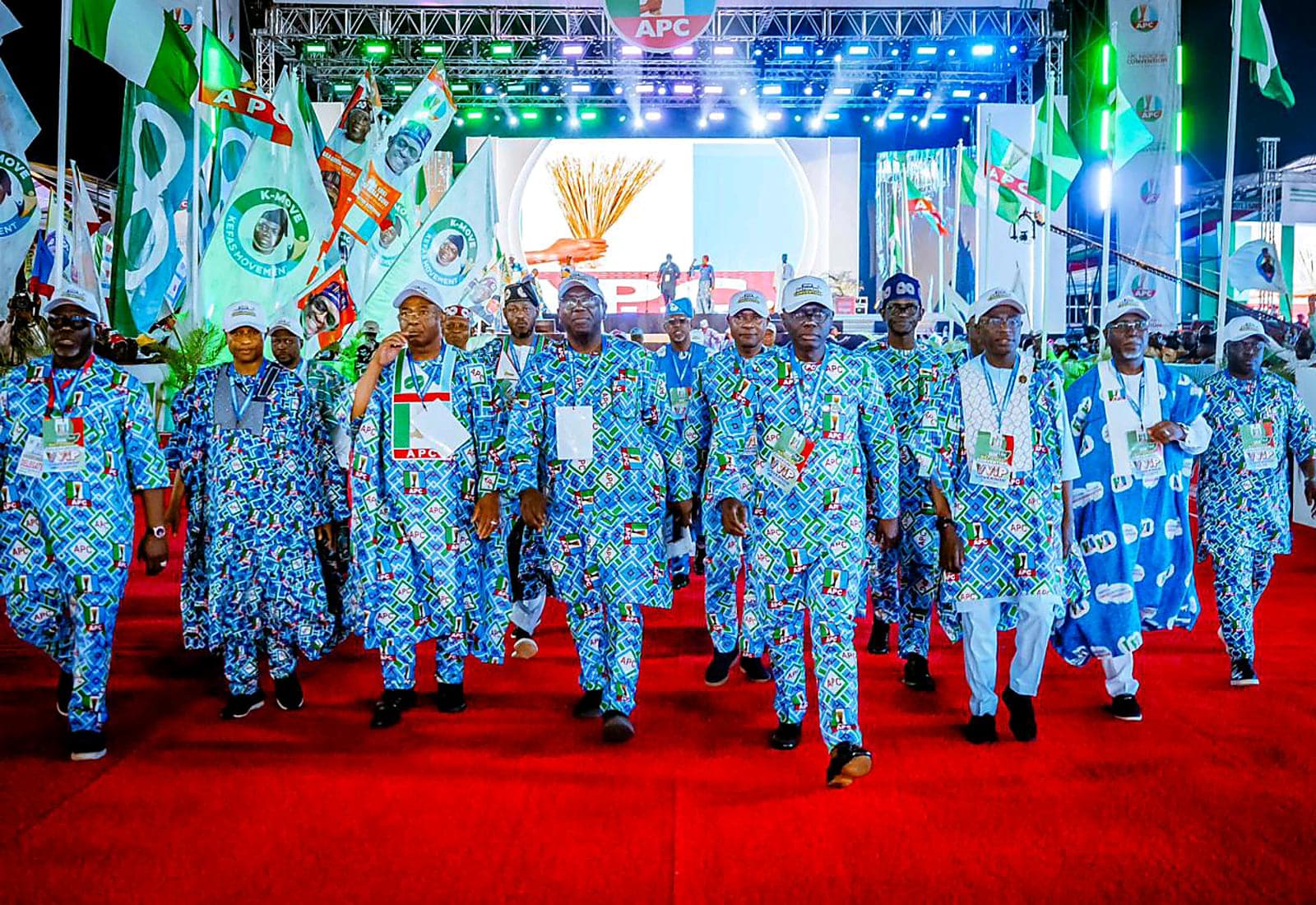
Nigeria's ruling All Progressives Congress completed one of its most consequential internal exercises in years on Thursday 21 May 2026, conducting direct governorship primaries across 23 states simultaneously. The results confirmed what many had expected: governors and presidential anointed candidates swept the tickets in virtually every state where primaries were held without dispute.
The exercise is significant beyond the individuals who won. It maps the APC's opening formations for the 2027 general elections and signals, more broadly, how much control President Tinubu's political machinery has consolidated over the party's candidate selection process less than 18 months before voters go to the polls.
Here is the full picture of what happened, who won, what the notable exceptions were, and what it all means for 2027.
Lagos: Hamzat Wins With 657,917 Votes
The most watched primary of the day was in Lagos, Nigeria's commercial capital and the political fortress that Tinubu built over two decades. Deputy Governor Obafemi Hamzat was declared the APC governorship candidate for the 2027 election after polling 657,917 votes, defeating Olanrewaju Jim-Kamal, who received a single vote.
 Deputy Governor Obafemi Hamzat was declared Lagos APC governorship candidate on 21 May 2026 after polling 657,917 votes in a direct primary conducted across all 245 wards in the state. Image: Tribune Online
The result was announced by Returning Officer General Jonathan Temlong, who described the exercise as peaceful across all 245 wards in the state, calling it a "family affair" marked by massive turnout.
In his acceptance speech, Hamzat expressed gratitude to President Tinubu, Governor Sanwo-Olu, and the Governance Advisory Council, before outlining a four-point agenda he described as "My Lagos Dream." The agenda covers service delivery, job creation, knowledge and skills development, and health and wellbeing.
"I will work for all Lagosians, the fisherman in Badagry and Epe, the trader in Oyingbo, Mile 12, and Balogun," Hamzat said, signalling an intention to extend the APC's appeal beyond the party faithful into the broader Lagos electorate.
Ogun: Adeola Polls 304,055 Votes in Landslide
In Ogun State, Senator Solomon Adeola, popularly known as Yayi and representing Ogun West Senatorial District, was declared the APC governorship candidate with 304,055 votes. His only opponent, Abayomi Hunye, scored zero votes from 305,287 accredited voters.
 Senator Solomon Adeola, known as Yayi, polled 304,055 votes to emerge as Ogun APC governorship candidate for 2027. He will be seeking to end nearly 50 years without a governor from Ogun West. Image: PM News Nigeria
Returning Officer Wale Ohu announced the result at the APC secretariat in Abeokuta, confirming Adeola's victory across all 20 local government areas. Governor Dapo Abiodun, who endorsed Adeola's candidacy, framed it in historical terms: Ogun West has not produced a governor in nearly 50 years. The primary was described by both Adeola and Abiodun as "unprecedented" in its peacefulness.
"By the grace of God, on May 29, 2027, I will be sitting side by side with you for a smooth transition of government," Adeola said in his acceptance speech.
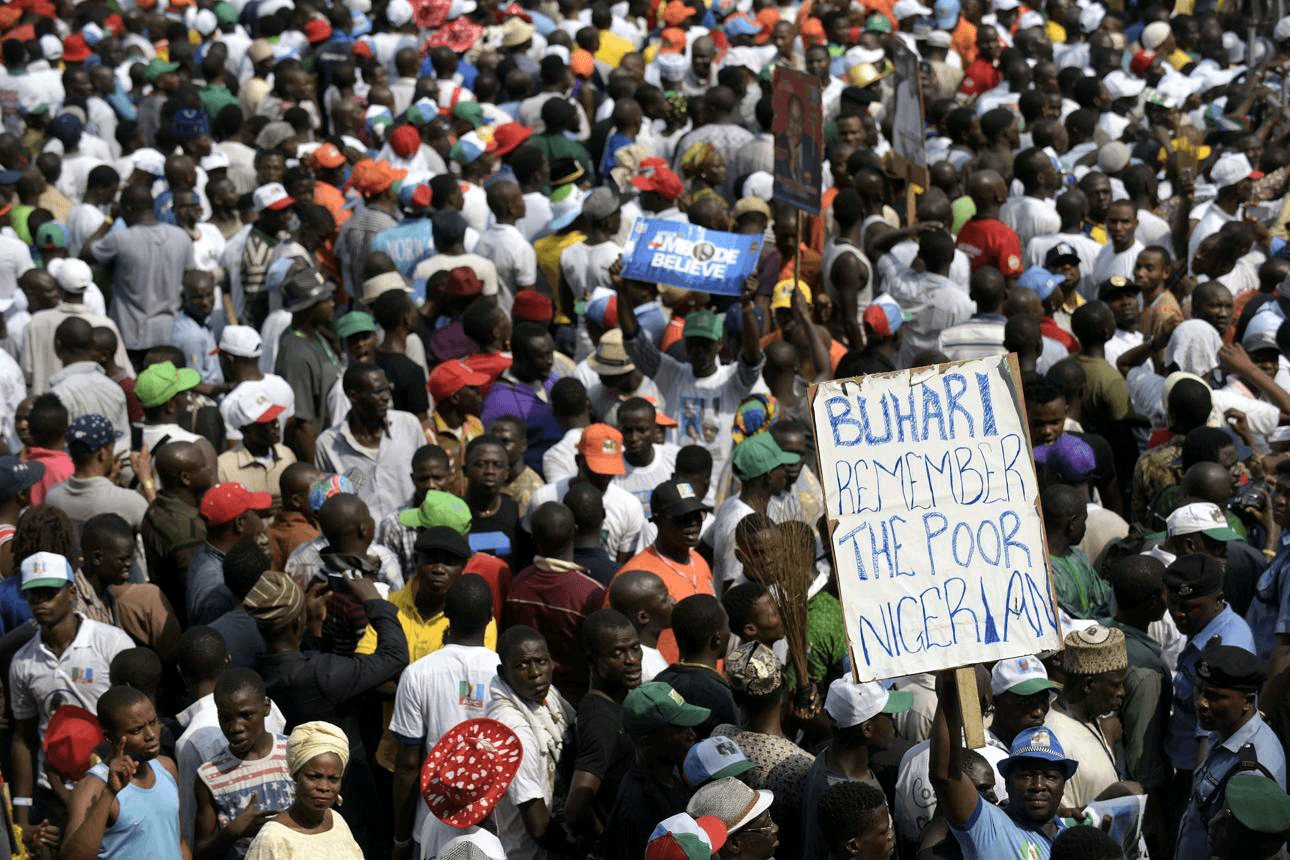
The Full List: 23 States, One Direction
Beyond Lagos and Ogun, the APC concluded primaries across 21 additional states on Thursday. The results, according to multiple field reports confirmed by Channels Television and ThisDay, show the following candidates emerging:
Jamilu Gwamna in Gombe, Sharafadeen Alli in Oyo with 578,143 votes winning all 33 local government areas, Kingsley Chinda in Rivers, Mustapha Gubio in Borno, Uba Sani in Kaduna, Mohammed Bago in Niger, Umar Namadi in Jigawa, Sheriff Oborevwori in Delta, Ahmed Aliyu in Sokoto, Nasir Idris in Kebbi, Dikko Radda in Katsina, Abba Yusuf in Kano, and Peter Mbah in Enugu.
The pattern is unmistakable. In virtually every state, the sitting governor or the president's preferred candidate won. The APC's primary process in 2026 functions less as a competitive election than as a formal ratification of decisions already made within the party's power structure.
The Exceptions: Kwara, Bauchi, and the Protests
Not everything went smoothly. Primaries were suspended in Kwara and Bauchi states due to what officials described as heightened tension and logistical challenges. The suspension delays those two states' processes and adds a note of uncertainty to the overall APC primary picture.
In Rivers State, the emergence of Kingsley Chinda came alongside reports of dissatisfaction from aspirants who felt the consensus process excluded genuine competition. Governor Siminalayi Fubara, who had been mentioned in connection with the Rivers primary process, withdrew from the proceedings. Former minister Isa Pantami protested his own state's outcome.
These protests are, for now, being directed toward the party's internal appeal committees. Whether they translate into more disruptive defections or legal challenges in the weeks ahead will shape the APC's ability to present a united front in those states come 2027.
What the Primaries Reveal About 2027
Three things emerge clearly from Thursday's exercise.
 The APC's 2027 governorship primaries confirmed Tinubu's grip over the party's candidate selection process. Image: Tribune Online
First, the APC's candidate selection is centralised to a degree that the party's constitution barely accommodates. The consistency with which sitting governors and presidential endorsed candidates won across states that hold genuinely different political dynamics speaks to a coordinated top-down process rather than grassroots democratic competition.
Second, the party faces genuine internal tension in several states. Aspirants who were frozen out of the primary process through consensus arrangements do not simply disappear. They become potential defectors, potential spoilers, and potential opposition candidates. The APC has a record of managing these tensions through patronage and negotiation, but the 2027 cycle is more competitive at the national level than 2023 was, and the opposition's fragmentation does not guarantee APC victory in every state.
Third, the APC presidential primaries are scheduled for 23 May 2026, two days from today. The party has released the procedure for what is widely expected to be President Tinubu's formal confirmation as the 2027 presidential candidate. That exercise will be the most watched internal event in Nigerian politics since the 2022 presidential primary that produced Tinubu's initial candidacy.
Common Misconceptions About Party Primaries in Nigeria
Many Nigerians treat party primaries as irrelevant because the outcomes are predictable. That reading misses the importance of the process.
Primaries determine who carries the party's ticket into the general election. In states where the APC is the dominant party, the primary winner is effectively the state's next governor unless the opposition produces an extraordinary alternative. The primary result in Lagos, for example, is in practical terms the most consequential political decision in that state before 2027.
Understanding who won, how they won, and who lost matters enormously for understanding what governance in each state will look like after 2027.
Conclusion
The APC's governorship primaries on 21 May 2026 confirmed Hamzat in Lagos, Adeola in Ogun, Chinda in Rivers, and 20 other candidates across the country. The exercise was largely peaceful, largely predictable, and largely a confirmation of existing power structures rather than an expression of genuine internal democratic competition.
The presidential primary on 23 May will complete the picture. Nigeria's 2027 general election campaign, for all practical purposes, has now begun.
No comments yet. Be the first to spark the conversation.