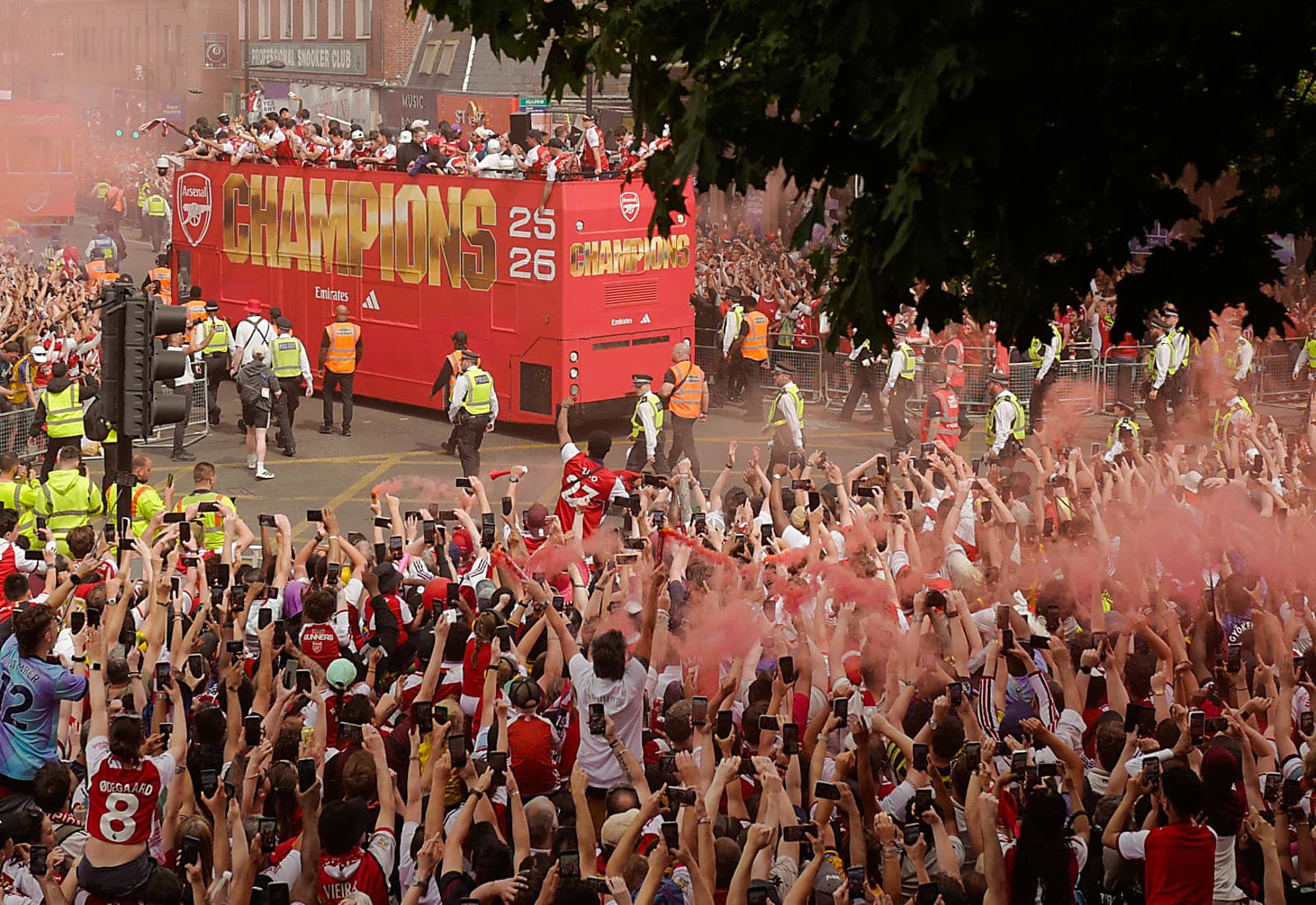
According to a report from SuperSport, Arsenal's title-winning season ended with a victory parade through north London that turned celebration into spectacle. For many readers, that may look like a familiar football moment: an open-top bus, red shirts in the streets, players saluting supporters and a club enjoying the release that comes after a long wait. But the bigger story is what the parade says about Arsenal's place in global football and why events like this resonate so strongly in countries far from the stadium route.
In Nigeria, Arsenal are not followed as a distant European club. They are part of everyday football conversation. Matchdays shape social plans, online debate, betting activity, fan content and local business decisions. So when Arsenal celebrate a title in London, the emotional and commercial aftershocks are felt in Lagos, Abuja, Port Harcourt and everywhere else Premier League support has become part of youth culture and media life.
Why this story matters
Victory parades can look like the easy, glamorous part of sport, but they reveal something important about the modern football economy. A title is not only a sporting achievement. It is also a branding event, a fan-retention moment and a reminder of how deeply clubs are woven into communities across continents.
That matters for Nigerian readers because the Premier League is not consumed in Nigeria as background television. It is followed with intensity. Fans invest time, loyalty, money and identity in clubs that operate thousands of miles away. When a club such as Arsenal finally reaches a major milestone, the celebrations become global content. The parade then stops being just a London event and becomes a digital event, a media event and, in some cases, a small business opportunity.
Context and background
SuperSport's report framed the parade as the closing image of Arsenal's first Premier League title in 22 years. That alone explains the emotional weight behind the moment. A generation of supporters had spent years watching near misses, collapses, rebuilds and renewed hope. By the time the parade arrived, the celebration was not simply about one afternoon on the streets. It was about the release of long-stored expectation.
Arsenal's support in Nigeria helps explain why the story travelled quickly. English football has built one of its deepest overseas audiences in West Africa, and Arsenal remain one of the clubs with enduring recognition among Nigerian fans. That support base has grown across television eras, from satellite sports coverage to streaming platforms and social media. It now lives across WhatsApp groups, sports blogs, betting communities, TikTok clips and post-match reaction videos.
So while the parade took place in north London, the audience for it was never only local. It was always going to be shared, clipped, debated and absorbed by millions of fans elsewhere.
What happened
According to reports, Arsenal's players and staff took part in a title parade through north London as supporters lined the route to celebrate the club's achievement. The visual language of the event was classic football pageantry: shirts, scarves, flares, songs, buses and mobile-phone footage spreading across the internet almost in real time.
The parade worked as a final public performance of the season. It gave the club a way to turn success into a collective memory, not just for ticket holders or stadium regulars, but for the wider fan base that had followed the campaign from afar. That matters because football clubs increasingly live through images and shareable moments as much as results. A parade like this becomes archive material, recruitment material for new fans and proof to existing supporters that their emotional investment has been rewarded.
Why Arsenal's parade matters beyond London
For clubs with global reach, the parade is not only ceremonial. It is strategic. It reinforces the scale of the fan base and helps convert sporting success into renewed attention ahead of the next season.
Arsenal's title celebration matters beyond London for at least four reasons.
First, it confirms how much emotional capital elite clubs build over time. The parade was powerful because the title had been delayed for so long. Supporters did not only celebrate winning. They celebrated the end of waiting.
Second, it shows how football content now travels. In previous decades, fans abroad might have seen a highlight package later in the evening. Today, they participate in the moment through live streams, clips, memes and instant reaction culture.
Third, it strengthens the club's commercial visibility. Success on the pitch makes everything around the club more valuable: sponsorship attention, shirt demand, documentary-style content, fan podcasts and international marketing campaigns.
Fourth, it reminds rivals and neutrals that football attention is not limited to matchday. The afterlife of a title can dominate conversation for days, particularly when a club has a passionate global following.
Why Nigerian readers should pay attention
The Nigerian relevance is not artificial here. It is direct.
Arsenal's success becomes part of local football conversation almost immediately. Fan hubs, barber shops, campuses, viewing centres and online communities all feed on these moments. Clubs with a strong Nigerian following do not disappear when the final whistle goes. Their stories continue through transfer rumours, pre-season planning, celebration culture and arguments about what the title means for the next campaign.
There is also a media and entrepreneurship angle. Nigerian creators who cover football often move fastest when a global club has a major moment. Reaction videos, newsletters, podcasts, supporter spaces and fan pages all become busier. Retailers selling jerseys and football gear also benefit from heightened interest, even if the gains are uneven and hard to measure precisely from outside.
What matters is not a dramatic claim about massive profits. It is the simpler point that big football moments create attention, and attention creates opportunity for people who know how to package it well.
Deeper analysis: what the parade says about the modern football club
One useful way to read the parade is to see it as a test of how football clubs now operate as cultural institutions. Arsenal did not merely win matches and then disappear into the off-season. The club turned success into a public story with emotional symbolism, digital reach and commercial afterglow.
That is now normal at the elite end of football. The strongest clubs are not only teams; they are media brands with constant narrative output. A title parade extends the season into a new phase. It helps supporters relive the win. It keeps the club central to online discussion. It gives sponsors and broadcasters more material to work with. And it prepares the ground for the next cycle of anticipation.
For Nigerian readers, this is worth understanding because it explains why European football can feel so present in local life. It is not accidental. Clubs invest in visibility, storytelling and emotion because those things sustain fan attachment between matches.
The more professional the storytelling, the easier it becomes for a club to deepen loyalty abroad. Arsenal's parade was a celebration, but it was also a reminder that global fandom is maintained through recurring shared moments, not just league tables.
What to watch next
The key question after any title celebration is whether the club can turn a successful season into a durable era rather than a one-off peak. The parade closes one story, but it also opens another.
Supporters will now watch several things closely: recruitment, contract decisions, tactical continuity and whether the squad can absorb the pressure that comes with being champions. Celebration can quickly harden into expectation. Once a club has won, it is judged differently.
For Nigerian fans, the next phase will probably be just as active as the parade itself. Online debate will shift from celebration to whether Arsenal can defend the title, strengthen intelligently and manage the emotional hangover that sometimes follows a breakthrough season.
There is also a broader question about safety and crowd management at events of this scale. Reports after the parade underlined that major public celebrations can bring policing and public-order challenges alongside joy. That does not erase the football story, but it does remind readers that mass fandom now sits inside a wider urban and security reality.
Final takeaway
Arsenal's victory parade mattered because it showed that a title is never only about the trophy lift. It is about what success unlocks: memory, identity, attention and renewed belief.
For supporters in London, the parade was the physical release of years of waiting. For supporters in Nigeria, it was another reminder of how deeply elite football lives inside everyday life, media culture and fan identity. The event may have happened in one city, but its meaning travelled much further.
That is the real significance of the story. Arsenal's parade was not just a celebration of what the club achieved. It was evidence of how modern football turns local triumph into global participation.
Continue reading
- Eberechi Eze Shrugs Off Critics as Arsenal Targets Champions League Glory
- Champions League Title Race Update: Key Contenders Revealed
- Bayern vs PSG: Everything Set for a Decisive Allianz Arena Showdown
No comments yet. Be the first to spark the conversation.