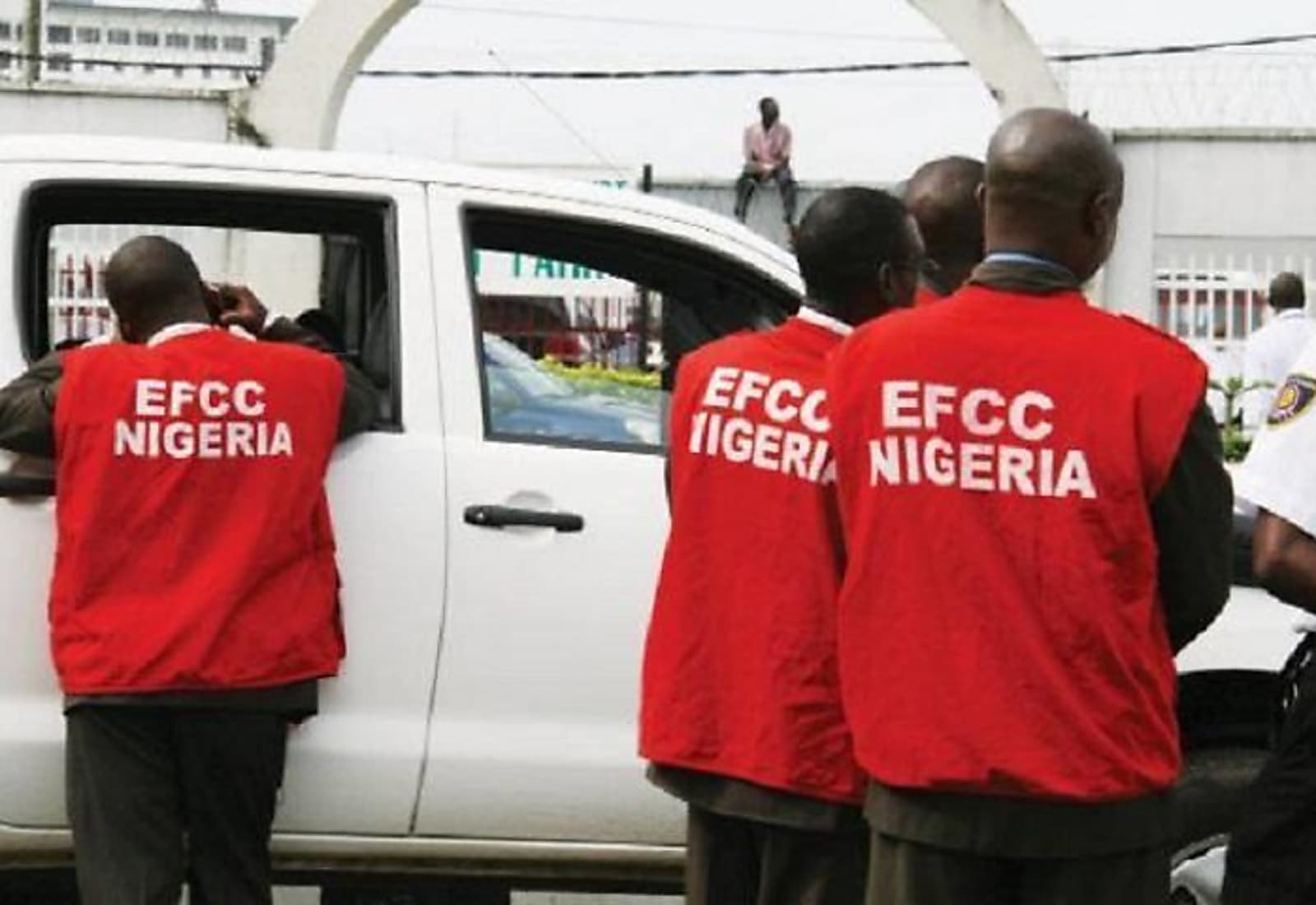
On the morning of Tuesday, 13 May 2026, armed operatives of the Economic and Financial Crimes Commission arrived at the University of Uyo Teaching Hospital in Akwa Ibom State. They came in two salon cars and a tinted bus. Some wore masks. Some wore EFCC-branded jackets.
By the time they left, a professor of cardiothoracic surgery had been arrested, teargas had allegedly been fired within the hospital premises, phones had been seized from staff trying to record the incident, patients and workers had fled their wards in panic, and surgeries had been disrupted.
Two days later, the Nigerian Medical Association in Akwa Ibom State declared an indefinite strike.
Nigeria is furious. And the story is more complicated than the headlines suggest.
Background: What the EFCC Says It Was Doing
The EFCC's position is clear, and it is important to state it fully.
A suspect is currently standing trial before Justice M.A. Onyetunu at the Federal High Court in Uyo over alleged fraud involving several microfinance banks, including the University of Uyo Microfinance Bank. The suspect presented a medical report to the court. The EFCC needed to verify whether that report was genuine.
The commission says it wrote two letters to the hospital management requesting authentication of the document, one dated 11 March 2026 and another dated 20 April 2026, and received no response to either. After a follow-up visit by an investigating officer also yielded no result, operatives were sent to the hospital on 13 May as what the EFCC described as a last resort.
The commission also denies the assault allegations. In a statement from its Head of Media and Publicity, Dele Oyewale, the EFCC claimed its operatives visited the Chief Medical Director's office, were met with a false alarm, and were then subjected to an unprovoked attack by staff members who pelted them with stones and other objects. The commission also alleged that hospital management ordered the facility's gates shut to prevent the operatives from leaving.
That is one version of events.
What the Hospital Says Happened
The account from UUTH management and medical staff differs significantly.
Professor Eyo Ekpe, Deputy Chairman of the Medical Advisory Committee and a Professor of Cardiothoracic Surgery, told a press conference that he had just returned from an officially approved trip to conduct national postgraduate medical examinations when he was assigned to handle the EFCC's verification request.
He prepared a draft response on 11 May 2026, confirming that the medical report in question was indeed fake. He informed EFCC operatives who came to collect the document that it still required the Chief Medical Director's approval and official stamp before it could be released. "I showed them the draft and explained that it still had to be presented to the CMD before it could be signed officially," he said.
Shortly after the operatives left his office, he alleged they returned with an additional armed officer and placed him under arrest. He told them he had not issued the report, his name was not on it, and it did not originate from his unit. They arrested him anyway. He and four other hospital staff members were taken away.
The Chief Medical Director, Professor Ememabasi Bassey, confirmed that no prior notification was given to hospital management before the operation. No arrest warrant was shown. Operatives went directly to Ekpe's office without passing through the CMD, the Deputy CMD, or the Director of Administration. "At no point did they come to look for the CMD, the CMAC or the Director of Administration. They simply went to his office," Bassey said.
Witnesses told Premium Times that operatives arrived in what they described as a "commando-style" operation. Videos shared online showed patients, visitors, and workers running from the premises after teargas was allegedly discharged within the hospital compound. Some phones were seized from staff attempting to record events. Labour unions directed workers to vacate wards over safety concerns, shutting down clinical activities across multiple departments.
On the EFCC's claim about the March letter, the CMD was categorical: "I stand here boldly to say that we only received one letter, dated 21st of April. The letter dated 11th of March, we never received it."
The Medical Report at the Centre of It All
Both sides agree on one key fact: the medical report in question was fake.
The CMD confirmed that the letterhead used on the document was an outdated version of the hospital's official stationery. "UUTH letterhead is present in every plaza. If you go to every plaza, you will see it. We have seen lots of fake medical reports purportedly issued from this hospital, which we have always said are not true," Bassey said.
He added that the hospital's authentic verification, confirming the report was forged, was being processed through the correct institutional channels when the EFCC operatives arrived and escalated the situation. He also raised the possibility that persons within the hospital may have collaborated with outsiders in producing the fake document, a point he said required further investigation.
The Consequences: An Indefinite Strike
The Nigerian Medical Association in Akwa Ibom State declared an indefinite strike following an emergency virtual congress held in the days after the incident.
In a communiqué signed by State Chairman Professor Aniekan Peter and Secretary Dr. Ighorodje Edesiri, the NMA described the operation as "barbaric" and a violation of the sanctity of the hospital environment. The Medical and Dental Consultants Association of Nigeria and the Association of Resident Doctors, UUTH chapters, joined the condemnation in a separate joint communiqué.
Their combined demands include:
- Disciplinary action against all operatives involved
- Medical treatment and compensation for workers injured during the incident
- A public apology from the EFCC published in two national newspapers
- Repair of all property damaged during the operation
- Legal action seeking ₦1 billion in damages from the EFCC
The strike means patients at UUTH are not receiving the care they need. For a state like Akwa Ibom, where UUTH is one of the primary referral hospitals, that is not an administrative inconvenience. It is a health crisis.
The Bigger Issue: Institutional Boundaries and the Rule of Law
The EFCC has broad powers under Nigerian law. Anti-corruption enforcement is critical, and fake medical reports submitted to courts are a serious criminal matter that undermines the justice system.
But those powers are not unlimited, and the manner of their exercise matters enormously.
Hospitals occupy a unique position in civil society. They are not hiding places for criminals. They are places where the critically ill receive treatment, where surgeries are performed, where premature babies are kept alive. An operation that fires teargas within hospital grounds, causes patients to flee, and disrupts emergency care crosses a line that no enforcement mandate can fully justify.
The absence of an arrest warrant, the failure to notify hospital management through proper channels, the use of masked armed operatives in a clinical environment, these are not procedural technicalities. They are the difference between lawful enforcement and lawless conduct wearing a government badge.
Nigerian commentators on X captured this clearly. One user wrote: "A hospital is not a criminal hideout. Medical institutions have protocols, patient privacy obligations and security procedures. Staff reacting to unidentified masked men within hospital premises is not surprising."
Another asked a harder question: when the EFCC struggled to find CBEX officials who allegedly defrauded close to one million Nigerians, yet mobilised armed operatives to storm a teaching hospital over a document verification dispute, what does that say about institutional priorities?
Common Misconceptions to Clear Up
"The doctor arrested was the one who forged the report." Professor Ekpe was not the author of the fake report. He was the official assigned to verify its authenticity on behalf of the hospital. The report did not come from his unit.
"The hospital refused to cooperate with the EFCC." The CMD says the hospital received only one letter, dated 21 April. The verification process was delayed by weekends, a public holiday, and Ekpe's officially approved travel for professional examinations. A draft confirming the report was fake was already prepared when the operatives arrived.
"The EFCC was just doing its job." Verifying a medical report is a legitimate duty. Arriving with masked armed operatives, allegedly firing teargas inside a hospital, arresting a professor without a warrant, and seizing phones from hospital staff is not a proportionate or lawful method of document verification.
Conclusion
The EFCC versus UUTH confrontation is not a simple story of law enforcement versus criminals. It is a story about how power is exercised, whether institutions respect each other's boundaries, and what happens when the bluntness of enforcement meets the delicate environment of a working hospital.
The medical report was fake. That is not in dispute. Whoever submitted it to court should face the full consequences. But the manner in which the EFCC conducted itself at UUTH has left doctors on strike, patients without care, and a nation asking questions about accountability that no press statement has yet answered.
Getting the result right is important. Getting the method right is not optional.
No comments yet. Be the first to spark the conversation.