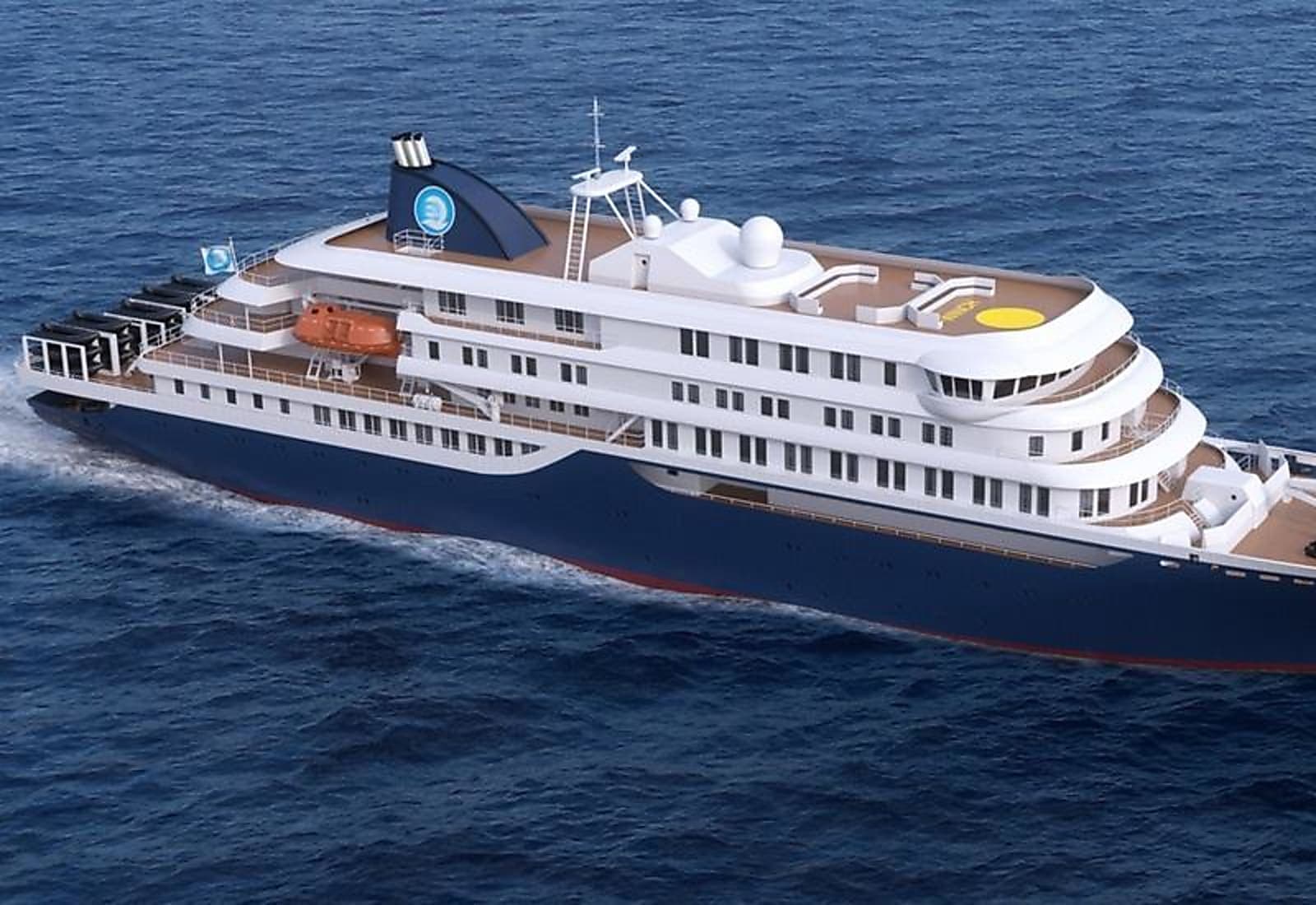
A Dutch cruise ship carrying 149 people is anchored off the coast of Cape Verde in the Atlantic Ocean - refused entry to port, its passengers unable to disembark, its crew racing to contain a deadly viral outbreak that has already claimed three lives.
The MV Hondius, operated by Dutch expedition tour company Oceanwide Expeditions, set sail from Ushuaia in southern Argentina more than a month ago on a voyage through some of the world's most remote ocean territories. Somewhere along that journey, passengers began falling ill with a rapidly progressing respiratory illness. By the time the ship anchored off Praia, the capital of Cape Verde, on Sunday 3 May 2026, hantavirus had been confirmed in at least two cases, with five more suspected.
Three people are dead. Two crew members are in critical condition. And 149 people remain on board a ship that no port will accept.
This is the full story of what happened, what hantavirus actually is, and what health authorities are now doing.
The MV Hondius: What Happened on This Voyage
The MV Hondius is a Dutch-flagged passenger expedition vessel that specialises in remote ocean voyages, including Antarctica, the Arctic, and Atlantic island chains. It departed Ushuaia, Argentina in late March 2026 and made stops in Antarctica before returning briefly to Ushuaia and departing again on 1 April.
 The MV Hondius operates expedition voyages through some of the world's most remote ocean territories, including Antarctica. Image: Polar Cruises
From there, the vessel headed north through the South Atlantic, stopping at Saint Helena - a remote British overseas territory in the mid-Atlantic - before continuing toward Cape Verde. According to the MarineTraffic ship-tracking platform, passengers during this voyage visited wildlife-rich remote islands where they would have encountered whales, dolphins, penguins, and seabirds.
According to the World Health Organisation, all cruise ship victims became ill between 6 and 28 April, reporting symptoms including fever, gastrointestinal problems, rapid progression to pneumonia, acute respiratory distress syndrome, and shock.
The first confirmed death was a Dutch national. Two Dutch nationals are among the confirmed dead, according to the Dutch Ministry of Foreign Affairs. On 2 May, a German national died on board. Her cause of death has not yet been formally established but is being treated as a suspected hantavirus case. A British national on board fell ill on 27 April and is now in a critical condition at a private medical facility in Johannesburg, South Africa. He is the second confirmed case.
Two crew members - one British and one Dutch - are currently experiencing acute respiratory symptoms requiring urgent care. Hantavirus has not been confirmed in either crew case.
Where the Ship Is Now
The MV Hondius is currently anchored off Praia, the capital of Cape Verde, an archipelago nation off the west coast of Africa.
The MV Hondius is anchored off Praia, Cape Verde's capital, after being refused entry to the port. Image: Wikimedia Commons
Cape Verde has refused the ship entry to port. This is a standard public health precaution in outbreak scenarios: preventing a vessel carrying a potentially infectious illness from disembarking its passengers reduces the risk of community spread in a country with limited healthcare infrastructure.
Oceanwide Expeditions confirmed there is no plan yet for disembarking the remaining passengers, and the company is currently considering sailing on to Spain's Canary Islands, which offers superior medical facilities and closer proximity to the Netherlands and other European home countries of the passengers.
Two Irish nationals are confirmed to be among the 149 people on board, according to Irish national broadcaster RTÃ. Contact tracing has been initiated for those who shared a flight to Johannesburg with the Dutch woman who later died after leaving the ship.
What Is Hantavirus?
Hantavirus is a rodent-borne illness that does not spread easily between humans - which is why health authorities have stressed that this outbreak does not represent a broader public health threat.
A transmission electron micrograph of the Sin Nombre hantavirus, similar in type to the strain affecting MV Hondius passengers. Image: CDC / Wikimedia Commons
The virus is primarily spread through contact with infected rodents or their droppings, urine, or saliva. Human infection typically occurs through inhalation of aerosolised particles in environments contaminated by rodents. The illness progresses rapidly once symptoms begin, which explains the severity of the cases observed on the MV Hondius.
There is only one type of hantavirus known to be capable of person-to-person transmission: the Andes virus, which is primarily found in Chile and Argentina - the very region where the MV Hondius originated. This is significant. If the strain on board is confirmed as the Andes virus, the risk profile of the outbreak changes considerably from what is assumed with standard hantavirus cases.
The WHO confirmed seven cases on board as of Monday 4 May: two confirmed and five suspected. Hans Kluge, WHO's regional director for Europe, stated clearly: "There is no need for panic or travel restrictions." The organisation has, however, confirmed active monitoring and contact tracing given the Andes virus possibility.
It is currently unclear how the infections occurred. The Ministry of Health of Argentina's southern Tierra del Fuego province, where Ushuaia is located, stated that there has never been a previously reported case of hantavirus in the province - adding to the mystery of the outbreak's origin.
The Human Reality: Stranded at Sea
Beyond the virology and the logistics, there are 149 people on a ship that no port will admit, watching their fellow passengers be airlifted to hospitals, uncertain when they will go home.
One passenger described their situation to CNN: "We're people, people with families, with lives, with people waiting for us at home. There's a lot of uncertainty, and that's the hardest part."
Dutch authorities have confirmed they are actively preparing to evacuate two symptomatic crew members and an individual associated with the passenger who died on 2 May. The logistics of medical evacuation from a ship anchored in open water off a small Atlantic island nation are significant: aircraft range, port access, and receiving hospital capacity all affect how quickly and safely people can be moved.
For those on board who are healthy and showing no symptoms, the situation is one of enforced waiting - confined to a ship while authorities and tour operators negotiate the next steps.
What Health Authorities Are Saying
The WHO's messaging has been consistent and deliberate: this is a serious situation for those directly affected, but it is not a public health emergency of international concern.
Key points from health authorities as of 4 May 2026:
The outbreak is being actively monitored. Contact tracing has been initiated for people who may have had contact with confirmed cases after leaving the ship. The Andes virus's potential for person-to-person transmission is being taken seriously as a possibility but has not been confirmed as the strain involved. Hantavirus has no specific antiviral treatment - medical management is supportive, focused on managing respiratory distress and preventing organ failure.
For the general public, including Nigerians who frequently travel internationally or whose family members travel on cruise ships, the WHO guidance is clear: this is not a reason to avoid travel, and the outbreak does not represent community spread risk.
What Happens Next
The immediate priority for Oceanwide Expeditions and Dutch authorities is the evacuation of the two critically ill crew members. Once that is resolved, the question of what to do with the remaining 147 passengers becomes the primary challenge.
The Canary Islands option would provide the best medical infrastructure for any passengers who develop symptoms, and the proximity to European airports would facilitate the fastest path home for the majority of passengers.
Health authorities will continue monitoring for any additional cases among the 149 people on board over the coming days. The incubation period for hantavirus ranges from one to eight weeks, meaning new cases could still emerge from exposures that occurred weeks ago during the voyage.
Common Questions About This Outbreak
Can I catch hantavirus from another person? Standard hantavirus strains cannot be transmitted person-to-person. Only the Andes virus, found in southern South America, has documented person-to-person transmission, and this has not been confirmed as the strain involved.
Is cruise ship travel now unsafe? No. This outbreak is linked to specific environmental exposures during a remote expedition voyage, not to cruise ship conditions generally. Standard ocean cruises carry no elevated hantavirus risk.
Should Nigerians in the UAE or South Africa be concerned? No. Hantavirus is not circulating in West Africa, the Gulf, or Southern Africa. The WHO has explicitly stated no travel restrictions are required.
Conclusion
Three people are dead. Two are in critical condition. And 149 people are anchored off Cape Verde, unable to go home.
The hantavirus outbreak on the MV Hondius is a human tragedy unfolding in slow motion in the middle of the Atlantic Ocean. It is also, according to every health authority monitoring it, a contained situation that does not represent a broader public health threat.
What it does represent is a reminder that the world's most remote places - the places expedition cruise ships go specifically because they are untouched - carry biological risks that are not always predictable or visible until they are already inside the walls of the ship.
The MV Hondius will find a port. Its passengers will eventually go home. The investigation into how this outbreak started will take months. And the three people who did not survive will not be forgotten in the meantime.
All facts sourced from CNN, NL Times, RTÃ, WHO statements, and Oceanwide Expeditions. All information correct as of Monday 4 May 2026.
No comments yet. Be the first to spark the conversation.