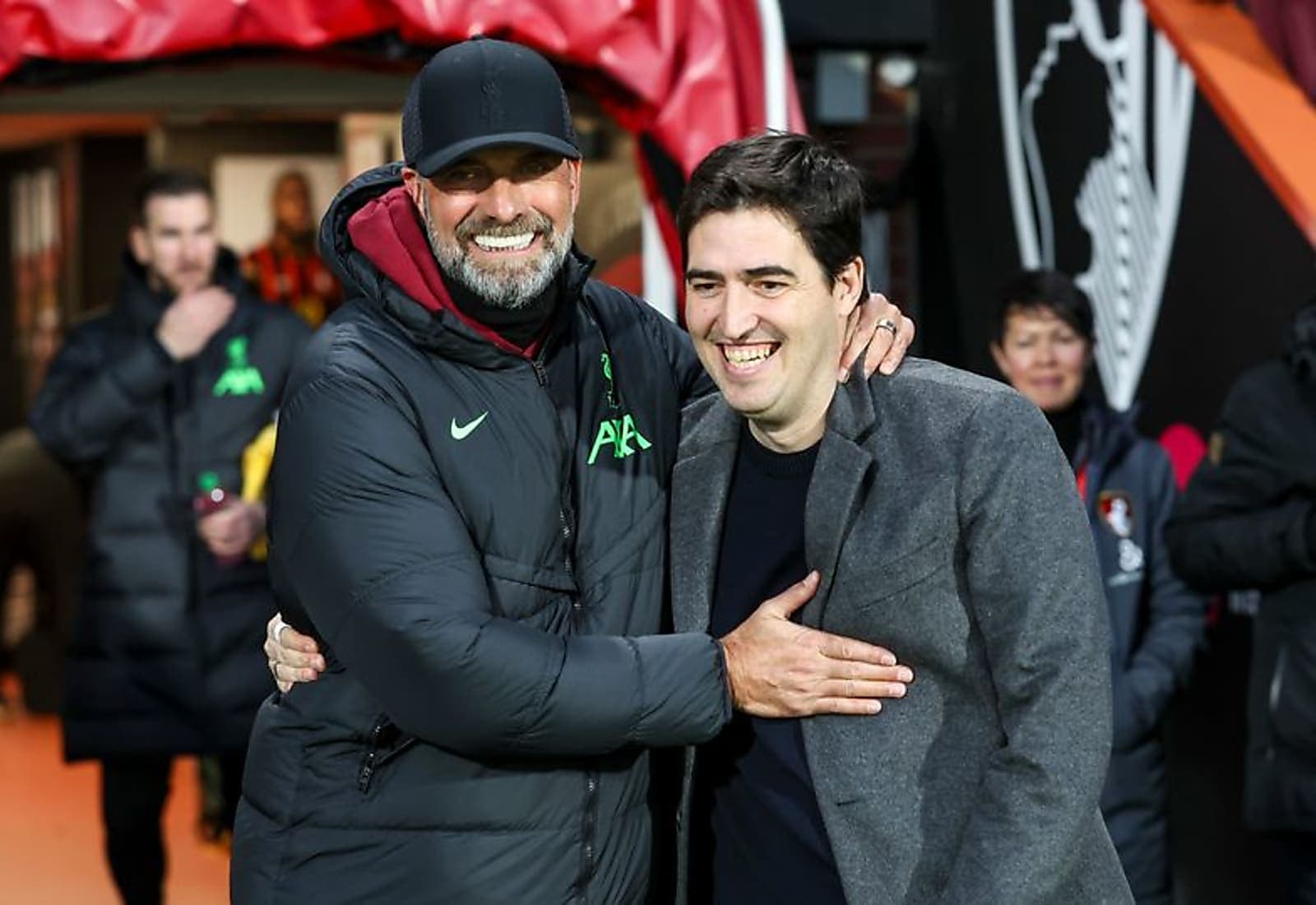
Managerial succession stories are often reported like popularity contests, but the most useful clues usually come from how respected coaches talk about another manager's actual work. That is why the resurfacing of Jurgen Klopp's earlier praise for Andoni Iraola matters. According to the Yahoo Sports UK report, Liverpool are considering their next managerial move and Iraola has emerged as a leading candidate after a shock change at Anfield. The most interesting part of the story is not simply that Klopp liked him. It is what Klopp liked: the structure of his team, the direction of their football, the compactness of their defending and the way he used a striker such as Dominic Solanke. Those details tell us far more about why Iraola is being discussed than any simple rumour about who is fashionable.
Why this story matters
This story matters because Liverpool are not choosing a public personality. They are choosing the tactical and cultural shape of the next phase of the club. At elite level, a managerial appointment is rarely only about charisma or résumé. It is about whether a coach can build a system that fits the squad, improve key players and carry the pressure of a club where expectations are immediate.
Klopp's older remarks matter because they focus on precisely those coaching details. He did not praise Iraola in vague terms. He praised the actual construction of Bournemouth's football: the mixture in the team, the timing of their play, their use of Solanke and their compact defensive work. Those are not courtesy compliments. They are observations from a coach noticing serious structure.
For readers in football-heavy countries such as Nigeria, that makes the story more useful than ordinary succession gossip. Supporters often debate manager appointments through trophies, personality or sentiment. But clubs usually win or lose these transitions based on fit, clarity and whether the next coach can organise talent into a recognisable idea. That is the real significance of Iraola's name entering the conversation.
Context and background
According to the Yahoo Sports UK report, Liverpool are again in the market for a head coach after a dramatic turn involving Arne Slot, and Iraola is being strongly linked with the role. The report says attention has shifted quickly toward the Bournemouth manager, with discussion focusing on whether his style could suit the demands of Anfield.
The article also points back to Iraola's earlier Premier League work at Bournemouth, which is where Klopp's comments originally came from. Klopp admitted he did not know much about Iraola at first, especially when results were not immediately strong. But once Bournemouth turned things around, Klopp said that was "real coaching". He highlighted how Iraola found a way to set the team up, how they found direction in the right moments, how well they used Solanke and how compact they were defensively.
Those specifics matter because they move the conversation away from broad reputation and toward repeatable coaching traits. Liverpool do not need only a new face. They need a coach whose principles can survive scrutiny from supporters, players and the broader Premier League environment. Iraola's case rests on the suggestion that he can build a side with clear attacking relationships and strong collective shape.
What happened
The immediate development in the report is that Klopp's past comments have re-entered the public conversation because Iraola is being presented as a credible Liverpool candidate. In that sense, the story is partly about timing. Words that once sounded like admiration from one manager toward another now sound like indirect evidence in a high-profile succession debate.
The report also raises the attacking question that often shapes big managerial decisions: can the next coach make Liverpool's centre-forward play more effective? It references the idea that a striker such as Alexander Isak, or any leading No. 9 in a similar profile, could benefit from a system that gives the central forward more support from runners, wide players and surrounding structure. That argument comes directly from the aspect of Iraola's work that Klopp had singled out years earlier.
This is why the story has traction. Liverpool are not simply looking for a coach with energy or personality. They are being linked with a manager whose supporters say he can improve the functioning of the whole attacking unit, especially through better use of the central striker and more coherent relationships across the pitch.
Why it matters now
It matters now because big clubs can easily make succession decisions too emotionally. A famous club identity, a recent title or the memory of a beloved manager can all distort what the next appointment actually requires. Liverpool's challenge is not to find "the next Klopp" in personality. It is to find the coach who best fits the squad's present needs and future direction.
It also matters because the Premier League is increasingly unforgiving toward tactical vagueness. Clubs at the top need coaches who can improve players through structure, not only through intensity. If Iraola's strongest case is that he creates direction, compactness and a more supported role for centre-forwards, then his candidacy becomes serious for football reasons rather than trend-based reasons.
Supporters should also note the pressure of timing. A new manager at Liverpool is not entering a quiet rebuilding job. The club will still be judged by title standards, Champions League expectations and the ability to keep major players operating near their best. That means the next appointment has to offer more than promise. It has to offer a believable football logic.
Deeper analysis
The most revealing part of Klopp's praise is the phrase "real coaching". That phrase matters because it suggests improvement that comes from teaching, structure and problem-solving rather than luck or short-term emotion. When an experienced elite coach talks that way, he is usually pointing to the invisible work underneath a team's results.
In Iraola's case, the report suggests three coaching arguments in his favour. The first is attacking clarity. If a coach can create better support around a striker, then the team becomes less dependent on isolated moments and more capable of sustaining pressure. The second is defensive compactness. A big club cannot dominate the ball and still be sloppy without it. The third is directional play. Klopp's old remarks imply that Iraola's teams know when to move the ball with purpose rather than possession for possession's sake.
This is why managerial searches should be read through system questions. Can the coach improve the players already there? Can he organise the team without losing aggression? Can he build a style that survives bad afternoons as well as good ones? These are the real questions behind the Liverpool link.
For Nigerian readers used to intense debate around European football, there is also a practical lesson here. Fan conversation often centres on famous names, but the clubs that get these decisions right usually do so because they identify the right football problem first. If Liverpool believe they need a coach who can sharpen structure and support their attacking core more efficiently, then a coach like Iraola becomes easier to understand.
What happens next
The next step is whether the interest turns into formal movement and whether Liverpool decide that the tactical case for Iraola is stronger than alternatives with different profiles. If the discussion continues, attention will move quickly from old quotes to deeper questions about recruitment, training methodology and how his style would scale at a club with far greater pressure.
Supporters should also watch how the striker discussion evolves. When reports emphasise how a coach uses central forwards, that usually signals something important about how decision-makers view the current squad. It suggests the club is thinking not only about results but about maximising the players around whom the next phase will be built.
If Iraola does become a serious finalist or eventual appointment, Klopp's comments will continue to follow the story. But the real test will not be whether Klopp liked him. It will be whether Iraola can translate the coaching qualities Klopp noticed into life at one of the biggest clubs in England.
Final takeaway
Klopp's earlier praise for Andoni Iraola matters because it highlights substance rather than hype. It points to a coach whose appeal lies in structure, direction, compact defending and better use of attackers, not just in novelty.
That is why the story deserves attention. Liverpool's next appointment has to be a football decision before it becomes a public-relations one, and Klopp's old words are valuable because they explain the football case more clearly than the speculation around it.
No comments yet. Be the first to spark the conversation.