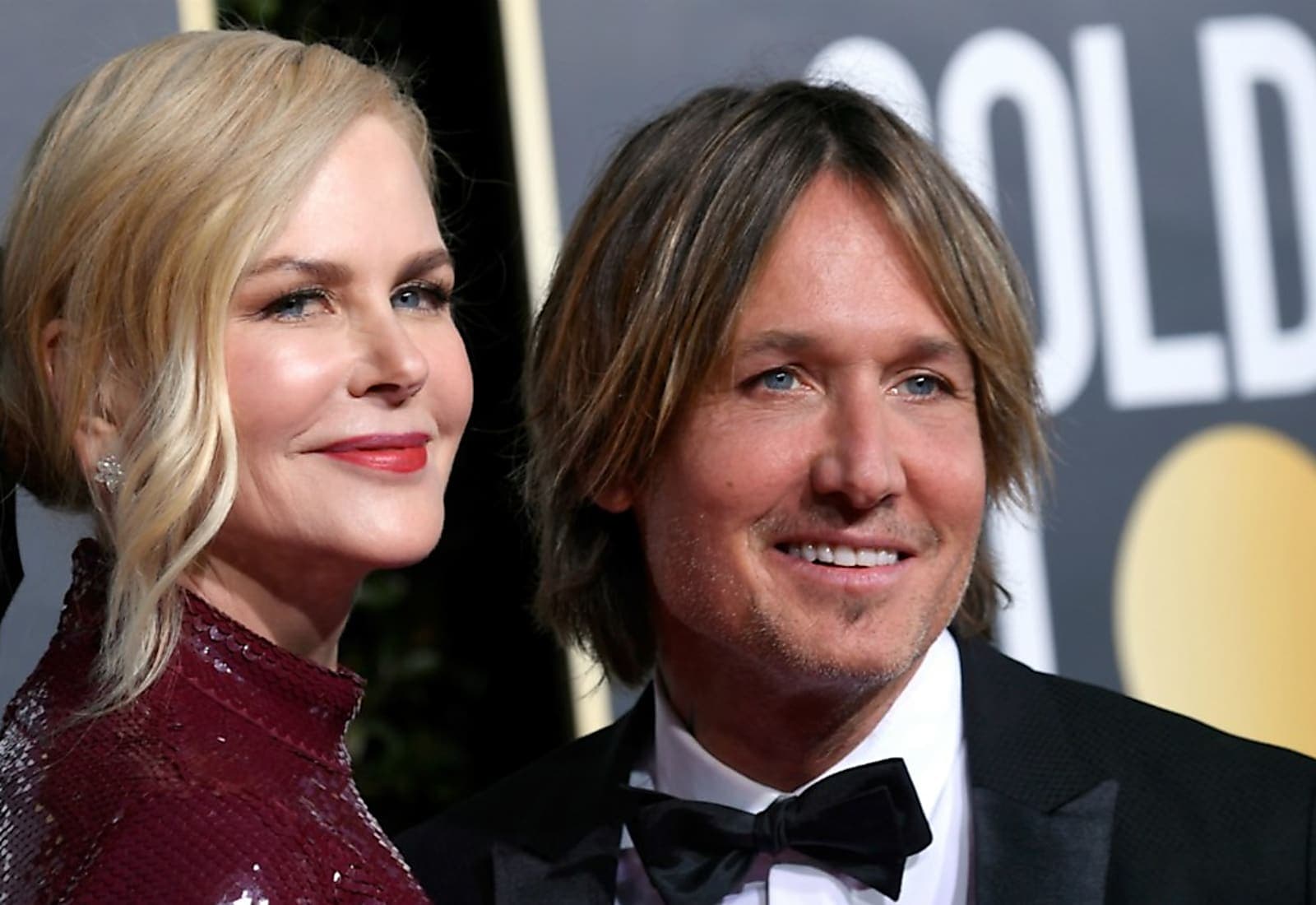
Celebrity stories become noisy very quickly, especially when audiences are trying to decode every post, caption and silence. That is why the recent exchange involving Keith Urban and Nicole Kidman drew attention beyond the actual words used. According to Nine, Urban shared a public birthday message to Kidman, and Kidman later posted a Father's Day tribute that included Urban alongside a photograph of her own father. On the surface, these were small social-media gestures. In practice, they became a lesson in how famous people try to manage privacy, respect and family image after a highly visible separation.
Why this story matters
This story matters because celebrity breakups are no longer covered only through interviews, red-carpet appearances or tabloid leaks. They are increasingly shaped through small digital actions that audiences interpret in real time. A birthday message, a repost, an Instagram Story or a family photograph can all become signals that the public tries to read as reconciliation, conflict, maturity or strategy.
Urban and Kidman's case is especially notable because both are globally recognised figures whose marriage lasted for years and whose public image had been built partly around stability. When a relationship like that ends, people do not stop watching. They simply change what they watch for. That is why even restrained posts can become headlines.
For readers outside Hollywood, including in Nigeria, the wider relevance is straightforward. Public figures everywhere now live in an environment where silence can be interpreted as hostility and a brief message can be treated as a major statement. The story is therefore less about gossip than about how digital culture pressures people to perform emotional clarity even when the facts are limited.
Context and background
According to the Nine report, Urban and Kidman split in September 2025 after nearly two decades of marriage, and their divorce was finalised in January 2026. Since then, public interest has remained high, not only because of their celebrity status but also because of their family life and the way audiences tend to project meaning onto famous couples.
The same report notes that Kidman and Urban share two daughters, Sunday Rose and Faith Margaret. It also says that rumours had circulated about possible tension between Urban and his daughters, with a People source later cited to push back against the idea that he was cut off from them. That detail matters because it shows how quickly family-related speculation can develop once a couple separates publicly.
The social-media posts therefore landed in an atmosphere that was already primed for interpretation. Urban's birthday message to Kidman was treated as his first public message to her since the divorce. Kidman's later Father's Day Story, featuring Urban with their daughters, was framed as her own first public acknowledgement of him after the split. Whether or not the posts were intended as statements, they became public events because the audience around them was already looking for clues.
What happened
Nine reported that Urban used Instagram Stories to mark Kidman's birthday with a short message that read, "Happy birthday Nicole Mary!" The use of her middle name was treated as a personal detail, but the post itself remained brief. There was no long caption, no interview and no obvious attempt to turn the moment into a broader public conversation.
Kidman then followed with a Father's Day post on Instagram Stories. According to the report, she shared a black-and-white image sequence that included a photograph of Urban with their daughters when they were younger and another image of her own father. Her caption was simple: "Happy Father's day to all the fathers." Again, the point was not elaboration. It was a minimal public gesture that still carried symbolic weight because of the timing.
These posts became news largely because they arrived after a period of relative public distance. Each one could be read as civil, respectful and family-aware without offering the public much else. That is precisely why the coverage intensified. In a celebrity media economy, the absence of extra explanation often invites more interpretation rather than less.
Why it matters now
It matters now because public culture increasingly trains audiences to over-read tiny pieces of information. Social-media platforms compress communication, but media coverage expands it again. A short Story can become a long chain of commentary in which timing, tone, family context and even punctuation are analysed for hidden meaning.
This case also matters because it shows a more restrained model of public post-divorce behaviour. Neither figure appears to have used the moment to score points, invite sympathy or tell a confessional version of events. That restraint is significant in an era when platforms reward emotional oversharing and conflict. A brief message can still be strategic, but it can also be a way of keeping the public at a distance while acknowledging an important date.
There is also a wider cultural point. Celebrity couples often become symbols that audiences use to test ideas about maturity, co-parenting and dignity after separation. That can be unfair, because the public usually sees only fragments. Still, those fragments influence conversation, especially when the people involved are internationally famous and widely recognisable across film, music and popular culture.
Deeper analysis
The most useful reading of this story is not that it proves reconciliation, hidden drama or a sudden shift in family dynamics. The source does not establish any of those things. A better reading is that it shows how public boundaries are negotiated after divorce when the people involved cannot fully disappear from public view.
Urban's birthday message and Kidman's Father's Day acknowledgement both sit inside a middle zone between total silence and total access. They are visible enough to communicate respect, but limited enough to avoid becoming full explanations. That middle zone matters because it is how many public figures now manage personal life online. They offer just enough to prevent complete vacuum, but not enough to settle public curiosity.
This dynamic is familiar far beyond Hollywood. Nigerian entertainers, athletes and influencers face similar pressure to turn private transitions into public narratives. Audiences often expect quick clarity after breakups, family disputes or friendship fallouts. When that clarity does not come, speculation grows. One practical lesson from the Urban-Kidman story is that minimalism can be an intentional communication style, even if it does not stop interpretation.
Another point worth noting is how children and co-parenting optics enter celebrity coverage. Once a couple has children, public posts are rarely read only as messages between two adults. They are also read as signals about family harmony, access, responsibility and emotional stability. That can make even a neutral Father's Day post feel loaded, whether or not the person posting it intended such weight.
The story therefore tells us as much about media behaviour as it does about the celebrities themselves. It reveals how little raw material is needed to produce a large public narrative, especially when the figures involved are already embedded in global fame.
What happens next
The most likely next step is not a dramatic revelation but more selective public visibility. If Urban and Kidman continue mentioning each other only occasionally, those mentions will probably keep drawing attention because audiences will treat each one as meaningful evidence of the state of the relationship.
Readers should watch with caution. Future coverage may continue to lean on timing, body language, reposts or unnamed sources. Some of that may prove accurate, but much of it will remain interpretation layered on top of a limited factual base. That is why it is worth distinguishing between what has been publicly shown and what outside commentary assumes.
For media consumers, the practical takeaway is simple: celebrity updates work best when read as fragments, not full explanations. A Story post can signal civility or shared family respect, but it does not automatically reveal the private quality of a relationship. The public often wants a complete narrative when only a partial one is available.
Final takeaway
Keith Urban and Nicole Kidman's recent posts became news because they sat at the intersection of fame, family and digital interpretation. The gestures were small, but the public meaning attached to them became much larger.
What the story really shows is not the secret truth of a former marriage. It shows how carefully public figures now have to move when personal life and audience expectation overlap online. In that sense, the posts were less a dramatic development than a reminder that in celebrity culture, even restraint becomes a headline.
No comments yet. Be the first to spark the conversation.