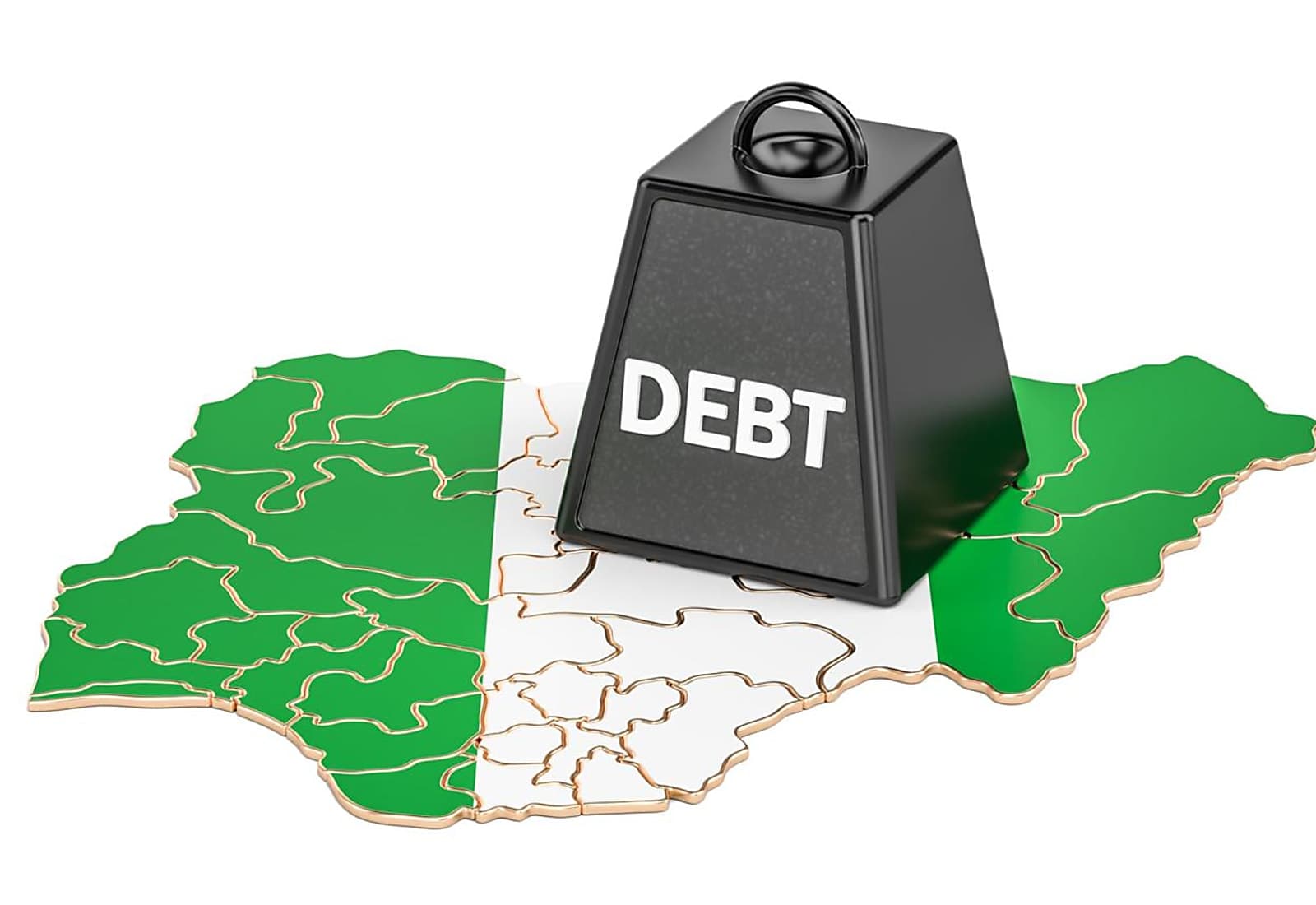
Nigeria's national debt has reached ₦159.28 trillion. That is not a typo.
To put it in terms that land closer to home: at the current exchange rate, that figure translates to roughly $94.2 billion. Divided across Nigeria's population of approximately 220 million people, it represents a debt burden of about ₦724,000 per Nigerian citizen. Every man, woman, and child, including the newborns and the unemployed.
And the government is borrowing more.
President Bola Tinubu's administration is currently pursuing a fresh $1.25 billion loan from the World Bank, titled "Nigeria Actions for Investment and Jobs Acceleration." At the current exchange rate, that translates to approximately ₦1.70 trillion. If approved at the World Bank board meeting scheduled for 26 June 2026, Nigeria's total public debt will cross ₦160 trillion.
The question Nigerians are asking, quietly in some places and loudly in others, is a simple one: what exactly are we borrowing for, and who is going to pay all of this back?
How Did We Get Here?
Nigeria's debt did not reach ₦159 trillion overnight. The growth has been steep and consistent, and much of it has happened in the last three years.
When President Tinubu assumed office on 29 May 2023, Nigeria's total public debt stood at approximately ₦97 trillion. By the end of 2024, it had risen to ₦144.67 trillion. By December 2025, it had reached ₦159.28 trillion. That is a ₦62 trillion increase in just over two years, driven by new borrowings, the naira's significant depreciation against major currencies, and ongoing fiscal deficits.
The Tinubu administration has racked up ₦71.82 trillion in new debt between June 2023 and December 2025 alone. That represents 45% of the country's entire current public debt stock. In other words, nearly half of everything Nigeria owes today was borrowed in the last two and a half years.
The single largest multilateral lender remains the World Bank. Nigeria's debt to the institution rose by $2.08 billion in 2025 to reach $19.89 billion by December 31, 2025. If the current $1.25 billion facility is approved, total World Bank lending to Nigeria under Tinubu would reach approximately $10.6 billion since 2023.
What Is the New Loan For?
The proposed $1.25 billion facility, formally titled the Nigeria Actions for Investment and Jobs Acceleration, is described by the government as a mechanism to accelerate investment and stimulate job creation.
It would be the second-largest single World Bank facility secured under Tinubu, behind only the $1.5 billion RESET loan, which stands for Reforms for Economic Stabilisation to Enable Transformation, approved in June 2024.
Between June 2023 and May 2026, the World Bank has approved approximately $9.35 billion in loans and credits to Nigeria across multiple sectors, including power, healthcare, education, agriculture, social protection, and renewable energy.
The government's position is that these borrowings are investments in reform and recovery, not simply consumption. Nigeria's Accountant-General, Shamseldeen Ogunjimi, has even pushed back against World Bank processing timelines, warning that if approvals take more than six months, Nigeria may decline the facilities altogether. The message is clear: the government sees these loans as necessary and time-sensitive tools for economic development.
Critics see it differently.
The Case Against the Borrowing
The African Democratic Congress, one of the main opposition parties, described the government's approach in terms that have resonated widely: a Ponzi economy, where new loans are taken to service old debts rather than to generate new value.
Their concern is backed by a specific number. President Tinubu has publicly stated that Nigeria will spend $11.6 billion on debt servicing in 2026 alone. That is more than ₦15 trillion that will go directly to creditors, not to roads, hospitals, schools, power, or job creation. And that figure is up from $5.2 billion in 2025, more than double in a single year.
In 2025, the government also recorded a revenue shortfall of ₦30 trillion. The gap between what the government earns and what it owes is not narrowing. It is widening.
The opposition framed it directly: "At this point, Nigerians must ask a simple question. If this government keeps borrowing trillions of naira every few months, why are Nigerians getting poorer, and why is life getting harder for the majority?"
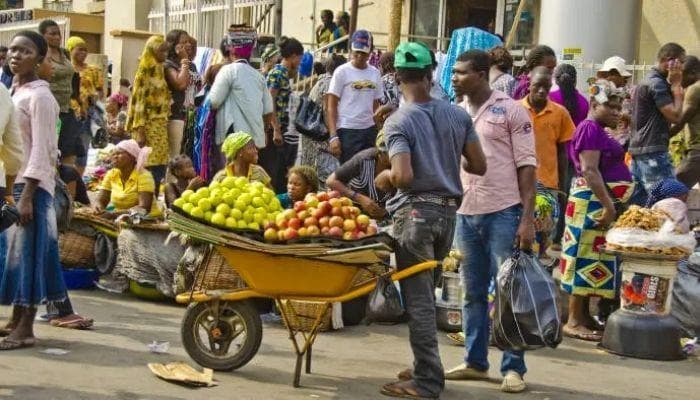
That question has no comfortable answer in the current data.
What This Means in Real Life
Abstract figures rarely move people. But the consequences of Nigeria's debt trajectory are visible in daily life across the country.
When ₦15 trillion goes to debt servicing in a single year, that is money not building the roads that would reduce transport costs, not funding the hospitals that would stop Nigerians dying of preventable diseases, not subsidising the power infrastructure that would let small businesses stay open without spending a third of their revenue on diesel generators.
The government removed fuel subsidy, devalued the naira, and raised electricity tariffs, all within the first year of Tinubu's administration. These were presented as necessary short-term sacrifices in exchange for long-term structural stability. More than two years on, inflation remains elevated, food prices have continued to rise, the naira remains under pressure, and millions of young Nigerians remain unemployed.
Meanwhile, the borrowing continues.
For Nigerian entrepreneurs and business owners, the debt picture creates a specific concern. High debt servicing crowds out government investment in infrastructure. Poor infrastructure, from unreliable power to bad roads, raises the cost of doing business. Higher business costs reduce competitiveness and compress margins. The debt crisis and the business environment crisis are not separate conversations. They are the same conversation.
Is Any of This Sustainable?
A group of analysts reviewing Nigeria's fiscal trajectory in early 2026 concluded that the country's debt-to-revenue ratio remains deeply problematic. The concern is not the debt-to-GDP ratio, which is relatively modest by global standards at around 40%. The concern is debt-to-revenue, which reflects how much of what the government actually collects is consumed by repayments.
When a significant portion of every naira Nigeria earns goes straight back to creditors, the government's capacity to invest in growth, stability, and services is fundamentally constrained. That is the structural trap Nigeria currently faces.
It is also worth noting, for balance, that not all of the World Bank lending has been unproductive. Facilities covering health systems strengthening, education support, and renewable energy development have created real infrastructure in specific sectors. The challenge is that the volume of borrowing has outpaced the demonstrable impact on the broader economy and the daily experience of ordinary Nigerians.
Common Misconceptions to Clear Up
"Nigeria's debt-to-GDP ratio is low, so the debt is not a problem." Debt-to-GDP is one metric. Debt-to-revenue is a more pressing concern for Nigeria. When revenue collection is weak and debt servicing obligations are rising sharply, the government's operational capacity shrinks regardless of how the debt compares to the size of the economy.
"World Bank loans are safe because they come with low interest rates." World Bank loans do carry concessional or near-concessional rates. But they still require repayment in foreign currency, which creates exposure when the naira is weak. A loan taken at $1 to ₦800 becomes significantly more expensive to service when the rate is $1 to ₦1,600.
"The government has a plan, so borrowing is fine." Every government has a plan. The question is whether the plan is working, and for whom it is working. When debt servicing costs more than double in a single year while living conditions for the majority remain stagnant or worsen, the plan requires scrutiny, not deference.
Conclusion
Nigeria's ₦159 trillion debt is not simply a number on a government spreadsheet. It is a structural constraint that shapes what schools get built, what hospitals get funded, what roads get fixed, and what opportunities exist for the next generation of Nigerians.
The government argues that borrowing is a necessary bridge to reform and recovery. Critics argue that the bridge is growing longer while the destination remains unclear.
What is not in dispute is this: $11.6 billion in debt servicing in 2026 is real money leaving Nigeria's economy. Money that will not be spent on the citizens who need it most.
Every Nigerian carries a share of this debt. Every Nigerian deserves a clear account of where it is going.
No comments yet. Be the first to spark the conversation.