
Nigeria's trade account has quietly delivered one of its strongest months in years.
The Central Bank of Nigeria's January 2026 Monthly Economic Report, published this week, shows Nigeria recorded a $480 million trade surplus in January, a 220% jump from the $150 million surplus recorded in December 2025. Export receipts hit a record $4.68 billion, driven primarily by petroleum products. And the broader picture, when placed in the context of Nigeria's multi-year economic reform trajectory, tells a story that deserves more attention than it is getting.
This is a full breakdown of what the numbers say, what is driving the improvement, where the vulnerabilities still lie, and what ordinary Nigerians should understand about what a trade surplus actually means for their daily lives.
The Numbers at a Glance
The CBN's January 2026 Monthly Economic Report confirmed the following:
Trade surplus for January 2026: $480 million Trade surplus for December 2025: $150 million Month-on-month increase: 220%
Total export receipts for January 2026: $4.68 billion (a record high) Total import bills for January 2026: $4.77 billion (a 3.0% increase)
Oil and gas products as a share of total exports: 83.12%
Crude oil production in January 2026: 1.46 million barrels per day Crude oil exports in January 2026: 1.01 million barrels per day Crude oil price in January 2026: approximately $68.05 per barrel
The headline figure, a $480 million trade surplus, is the result of export receipts growing faster than import bills in the same month. When a country earns more from what it sells to the world than it spends on what it buys, it runs a trade surplus. That surplus feeds into the current account, supports foreign reserve accumulation, and reduces pressure on the currency.
What Drove the Surge: Petroleum Products Take Centre Stage
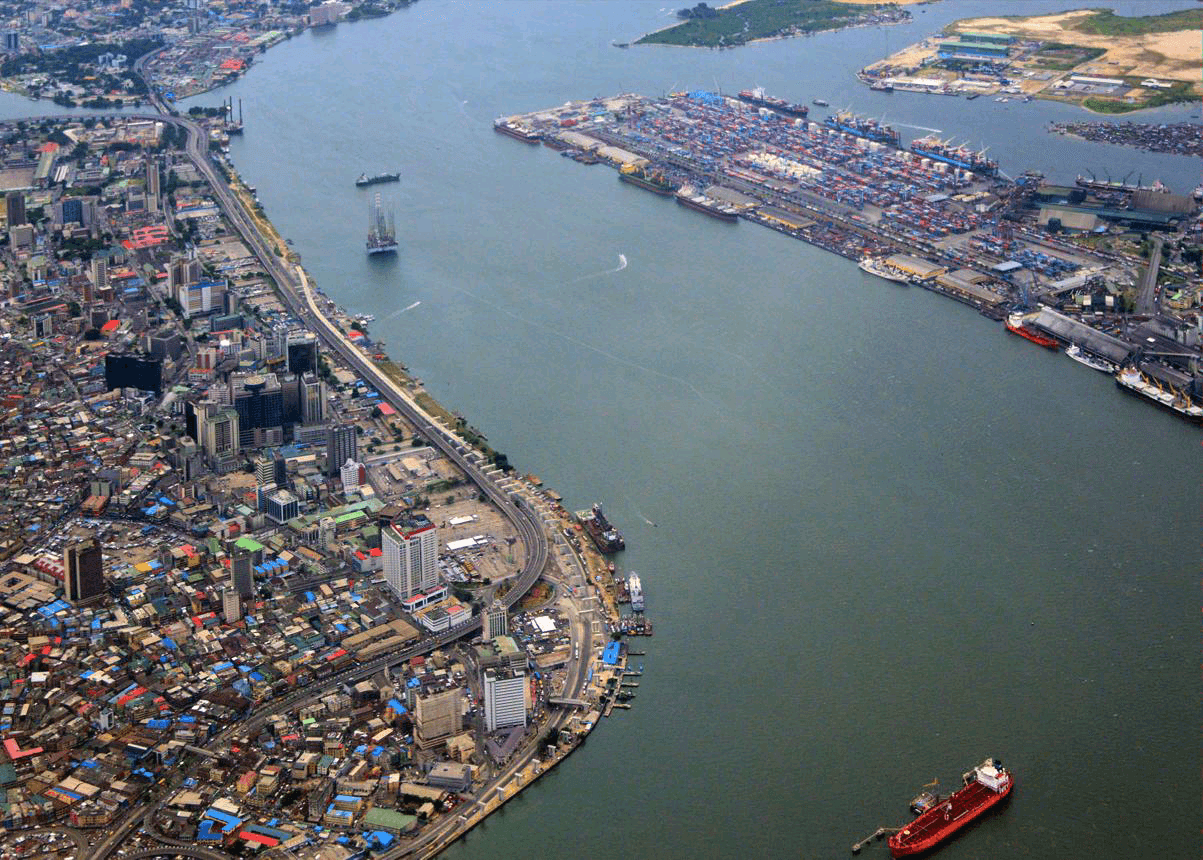
 Nigeria's record January 2026 export receipts of $4.68 billion were driven primarily by petroleum products, with oil and gas accounting for 83.12% of total exports. Image: BusinessDay NG
The CBN's statement is direct: "The higher surplus was driven by the 4.46% increase in export to $4.68 billion, following the increase in the export of petroleum products."
Petroleum products here refers not just to crude oil but increasingly to refined outputs. This is the Dangote Refinery effect beginning to show up in the national trade statistics. The refinery generated $5.85 billion in refined petroleum exports across all of 2025, a line item that barely existed before the refinery reached meaningful output. Its contribution to January 2026 export receipts continues that trajectory.
The distinction matters enormously. When Nigeria exports crude oil, it sells a raw material at whatever the global market dictates. When it exports refined petroleum products, it captures the additional value created by domestic processing, the so-called value-added component. The shift toward refined product exports, still modest relative to overall volumes but growing, represents a structural improvement in the quality of Nigeria's export earnings.
The Contradiction: Record Exports, Falling Crude Production
 The Dangote Refinery's refined petroleum exports are increasingly visible in Nigeria's trade statistics, though the facility continues to face feedstock supply challenges. Image: BusinessDay NG
The January trade data contains an important contradiction that honest analysis cannot skip.
While export receipts hit a record, crude oil production in January 2026 was not at a historic high. Production averaged 1.46 million barrels per day, and by February that figure had dropped to 1.31 million barrels per day. The surge in export value was driven significantly by price: crude prices climbed from approximately $68 per barrel in January to $126.71 per barrel by April 2026, largely reflecting the US-Iran war's impact on global energy markets.
This creates a familiar Nigerian paradox. The headline numbers look strong, but the underlying production dynamics remain fragile. Revenue growth driven by price rather than volume is not structurally sustainable. If global oil prices moderate, Nigeria's export receipts will fall even if production stays constant.
The Dangote Refinery has also faced its own contradiction. Nigeria simultaneously exported 55.39 million barrels of crude in the first two months of 2026 while the refinery complained of inadequate feedstock supply. The refinery has been sourcing crude from the United States and other countries because enough Nigerian crude is not being directed to it, forcing it to import the raw material it was built to process domestically.
The Broader Context: A Country Whose Trade Position Has Transformed
To understand what January's $480 million surplus means, it helps to see the longer arc.
Nigeria's balance of payments swung to a $4.23 billion surplus in 2025, powered by Dangote Refinery exports and surging diaspora remittances. The current account posted a surplus of $14.04 billion across 2025. Foreign reserves reached $50.45 billion as of February 2026, the highest level in thirteen years.
 Nigeria's gross external reserves reached $50.45 billion in February 2026, the highest in thirteen years, supported by the improving trade position. Image: BusinessDay NG
The January 2026 data continues this trajectory. A $480 million monthly trade surplus, sustained across multiple months, is the kind of performance that supports a stronger naira, lower import costs, and greater fiscal space for the government.
Nigeria's external reserves providing 9.68 months of import coverage as of February 2026 is another significant marker. Three years ago, reserve coverage was measured in weeks in some market analyses. The improvement in import cover is one of the most practically significant indicators of improved economic stability for businesses that depend on dollar-denominated supply chains.
What This Means for Ordinary Nigerians
Trade statistics can feel abstract. Their consequences are not.
A sustained trade surplus means Nigeria is earning more dollars than it is spending on imports. That puts upward pressure on the naira and reduces the foreign exchange shortage that has driven prices of imported goods, from food to electronics to pharmaceuticals, sharply higher over the past three years.
The improvement is not yet being felt evenly. Food inflation in April 2026 hit 16.06%, overtaking the headline rate for the first time since August 2025. For households spending the majority of their income on food, the macro improvement in the trade account has not yet translated into meaningful relief at the market.
The transmission from trade surplus to consumer price relief takes time, typically six to twelve months as importers clear existing stock bought at older rates before repricing. The January surplus data is important for where Nigeria is going. It does not describe where the kitchen table is today.
The Risks That the Surplus Cannot Hide
Honest analysis of Nigeria's trade position in 2026 must account for the structural risks that accompany the improvement.
Oil price dependency remains the defining vulnerability. With oil and gas accounting for 83.12% of total exports, Nigeria's trade position is essentially a function of global energy market conditions. The US-Iran war has pushed prices to extraordinary highs, nearly $127 per barrel in April. Any ceasefire, any demand slowdown, or any significant increase in global oil supply would compress Nigeria's export receipts sharply.
Non-oil export diversification is improving but slowly. Gas exports grew, non-oil exports grew, and the Dangote Refinery's refined product exports represent a genuine structural addition. But 83% oil and gas dependence is a fragile base for a trade position that is expected to support 220 million people's economic stability.
The import bill also rose 3.0% to $4.77 billion in January. Nigeria still imports more than it exports, in dollar terms. The surplus exists because of an extraordinary month for oil prices and refined petroleum exports. Whether it persists depends on factors largely outside the CBN's control.
Common Misconceptions About Trade Surpluses
"A trade surplus means the economy is healthy." A surplus means exports exceeded imports in a given period. It says nothing directly about unemployment, poverty, food prices, or income distribution. Countries can run trade surpluses while their citizens face worsening living standards.
"The surplus will immediately strengthen the naira." Exchange rate movements reflect multiple factors beyond the trade account, including capital flows, investor sentiment, monetary policy, and global risk appetite. The naira's performance in coming months will be shaped by all of these, not just trade data.
"Nigeria has solved its export dependency problem." Eighty-three percent oil and gas dependency in January 2026 is lower than historical peaks but still represents extreme concentration. Diversification is happening, but it is incremental, not transformative, yet.
Conclusion
Nigeria's $480 million trade surplus in January 2026 is a real and meaningful improvement. It reflects the Dangote Refinery's growing contribution to export earnings, higher global oil prices, and the gradual payoff of the FX reforms that have improved Nigeria's external position over the past three years.
It is not a problem solved. It is a trajectory confirmed. The gap between Nigeria's improving macroeconomic indicators and the lived experience of its citizens remains wide. Closing that gap requires the trade surplus to sustain itself over time, diversify beyond oil, and translate into the kind of investment, employment, and price stability that households can actually feel.
The CBN's numbers are pointing in the right direction. The distance still to travel is significant.
No comments yet. Be the first to spark the conversation.