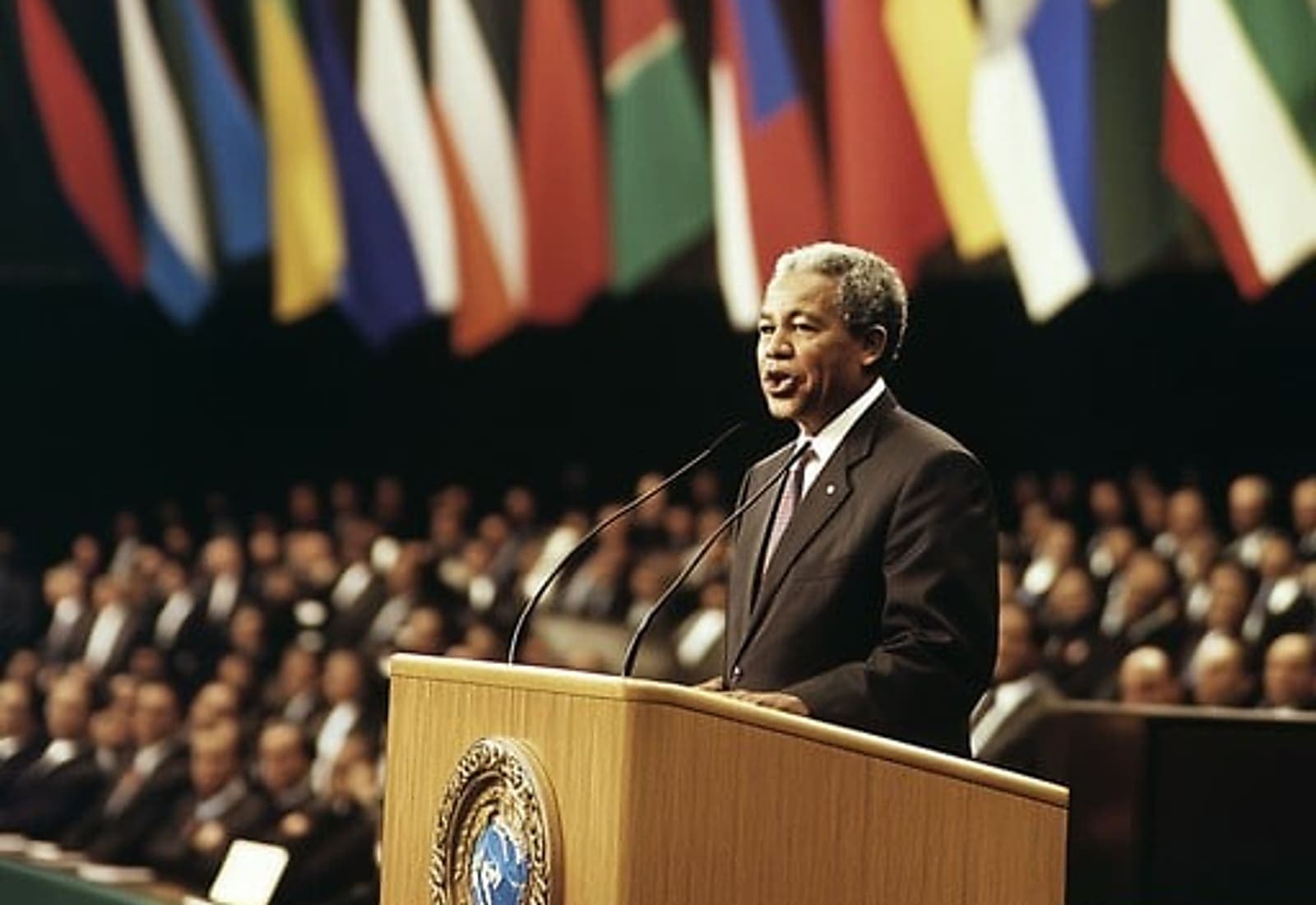
For the third time in less than a decade, Nigeria has been forced to summon South Africa's envoy over the killing of its citizens.
On Monday 4 May 2026, South Africa's acting High Commissioner to Nigeria, Bobby Moroe, was called to the Ministry of Foreign Affairs headquarters in Abuja for urgent talks. The summons followed a fresh wave of xenophobic violence in South Africa that has killed at least two Nigerians and four Ethiopians, forced Nigerian-owned businesses to close, and seen protesters attempt to block children of foreign nationals from entering schools.
Nigeria has described its response as conveying "profound concern." For the Nigerians living in South Africa who are watching their neighbourhoods burn and their businesses ransacked, the diplomatic language feels insufficient. But it is, for now, the official response.
This is the full story of what is happening, why it keeps happening, and what Nigeria's diplomatic intervention means in practical terms.
What Has Happened in South Africa
The current wave of anti-foreigner violence in South Africa is part of a recurring pattern, but its recent intensity has alarmed regional observers and diplomatic missions across the continent.
 Anti-foreigner demonstrations have intensified across multiple South African cities in recent weeks. Image: Wikimedia Commons
Over recent weeks, protests driven by anti-immigration sentiment have swept through multiple South African cities, including Pretoria and areas of KwaZulu-Natal. The demonstrations have moved beyond marches into documented violence: Nigerian-owned businesses have been ransacked and destroyed, foreign nationals have been physically attacked, and - most alarmingly - protesters have targeted schools, attempting to forcibly remove the children of foreign nationals from classrooms.
At least two Nigerians and four Ethiopians have been killed in the current cycle of violence. Reports from affected communities describe an atmosphere of profound fear, with families actively considering abandoning their businesses and livelihoods to relocate.
South Africa hosts approximately 2.4 million migrants, representing nearly 4% of its population. Many South Africans accuse foreign nationals of competing for scarce jobs and taking opportunities from local citizens. Labour experts, however, consistently note that even if all foreign nationals left immediately, there is no evidence the resulting jobs would go to South Africans who lack the skills those roles require.
Nigeria's Diplomatic Response
The Ministry of Foreign Affairs formally summoned South Africa's acting High Commissioner, Lindi Mminele, for a meeting on Monday 4 May 2026 at the Ministry's headquarters in Abuja.
Nigeria's Ministry of Foreign Affairs in Abuja coordinated Monday's diplomatic summons. Image for illustration
The summons was announced by Ministry spokesperson Kimiebi Imomotimi Ebienfa, who confirmed the meeting's purpose in precise diplomatic language: the government had documented "instances of mistreatment of Nigerian citizens and attacks on their businesses," and the discussion would focus on ongoing demonstrations by various groups in South Africa.
Ebienfa also stated that the federal government "implores the Nigerian public to remain calm" and reaffirmed its commitment to protecting the rights and welfare of Nigerians in South Africa through all necessary diplomatic channels.
Nigeria has become the latest regional power to confront South Africa over persistent xenophobic violence, joining Ghana in a high-level diplomatic push to protect West African nationals. Ghana's Foreign Minister separately summoned South Africa's acting High Commissioner in Accra after a Ghanaian migrant in KwaZulu-Natal was publicly confronted and told to leave South Africa and "fix his country."
South Africa's Position
South African President Cyril Ramaphosa has appealed for restraint. He called on foreign nationals to respect local laws while reaffirming his administration's commitment to the rule of law and human rights, saying: "No form of violence or vigilantism will be tolerated."
The South African government has defended its commitment to protecting all people within its borders while acknowledging what officials describe as the "legitimate concerns" of citizens about illegal immigration and employment competition.
The challenge for Ramaphosa is structural. Anti-foreigner sentiment in South Africa is not fringe - it draws from genuine economic frustration in a country with approximately 33% unemployment and deep post-apartheid inequality. Condemning violence while simultaneously validating the economic grievances that fuel it is a political balancing act that South Africa's government has consistently failed to resolve.
Why This Keeps Happening: The Structural Problem
Nigerian and broader African migrant communities in South Africa have been targeted repeatedly across multiple cycles of xenophobic violence since 2008.
The current violence is not South Africa's first cycle of xenophobic attacks, and without structural intervention it is unlikely to be the last. Major waves of anti-foreigner violence occurred in 2008, 2015, 2017, and 2019. Each cycle produced diplomatic protests, official condemnations, and promises of action. Each was followed, eventually, by another cycle.
The underlying conditions have not changed. South Africa's unemployment rate remains among the highest in the world for a middle-income country. The inequality between its wealthiest and poorest citizens is extreme. And the presence of millions of foreign nationals - many from Zimbabwe, Mozambique, Nigeria, Ethiopia, and other countries - provides a visible, politically convenient target for frustration that has deeper, structural causes.
Nigeria has recalled its ambassador twice before in response to xenophobic violence. Both times, the relationship eventually normalised without producing substantive changes in South Africa's ability or willingness to protect African migrants.
The question this time - as it has been every time - is whether diplomatic pressure translates into concrete, lasting protection on the ground, or whether this, too, becomes another cycle.
The 130 Nigerians Registered for Voluntary Repatriation
Beyond the diplomatic manoeuvring, 130 Nigerian nationals have registered with the Nigerians in Diaspora Commission for voluntary repatriation flights. That number is small relative to the estimated 30,000 to 40,000 Nigerians believed to be living in South Africa, but it signals something important: some Nigerians in South Africa have reached the conclusion that no diplomatic intervention will make them safe enough to stay.
For those who have built businesses, raised families, and invested years of their lives in South Africa, the decision to register for repatriation is not a small one. It is the abandonment of a life, made under conditions of fear.
Common Misconceptions About This Crisis
"This is just about illegal immigrants." Many Nigerians affected by the violence are legal residents and registered business owners who have operated in South Africa for years. The attacks do not discriminate between documented and undocumented migrants.
"Diplomacy will fix it." Three prior cycles of diplomatic summoning have not produced a durable end to xenophobic violence. What would require fixing is structural: South Africa's unemployment crisis, its inequality, and the political use of anti-immigration sentiment as an outlet for economic frustration.
"Nigeria should just bring everyone home." Forced mass repatriation is logistically impossible and would set a precedent that undermines the free movement principles the African Union has been working toward for decades. The right answer is protection on the ground, not evacuation.
Expert View: What Nigeria Should Demand
Beyond diplomatic language, analysts following the Nigeria-South Africa relationship consistently point to three demands that would represent substantive progress:
Specific criminal prosecutions of individuals responsible for deaths and property destruction, with publicly reported outcomes. A dedicated South African police protection framework for migrant communities in high-risk areas. A formal bilateral agreement between Nigeria and South Africa on the rights and protections of each country's nationals, with enforceable terms.
Without these specifics, the Monday meeting in Abuja risks producing a joint statement that satisfies diplomatic protocol without protecting a single Nigerian on a South African street.
Conclusion
Nigeria summoned South Africa's acting High Commissioner on 4 May 2026. Two Nigerians are dead. Businesses have been destroyed. Children have been turned away from schools. And 130 Nigerians have registered to come home.
The diplomatic summons is the correct initial response. It signals seriousness and forces the South African government to formally acknowledge Nigeria's concerns. What it cannot do on its own is stop the next attack.
Whether this moment produces something more durable than its predecessors depends on what Nigeria demands from Monday's meeting, whether South Africa commits to specific and enforceable protections, and whether the African Union treats this recurring cycle as the continental governance failure it actually is.
The Nigerians living in South Africa are not waiting for a communiqué. They are watching their doors.
All facts sourced from Vanguard Nigeria, BusinessDay NG, The Sun Nigeria, West African Pilot News, and GBC Ghana Online. All details correct as of 4 May 2026.
No comments yet. Be the first to spark the conversation.