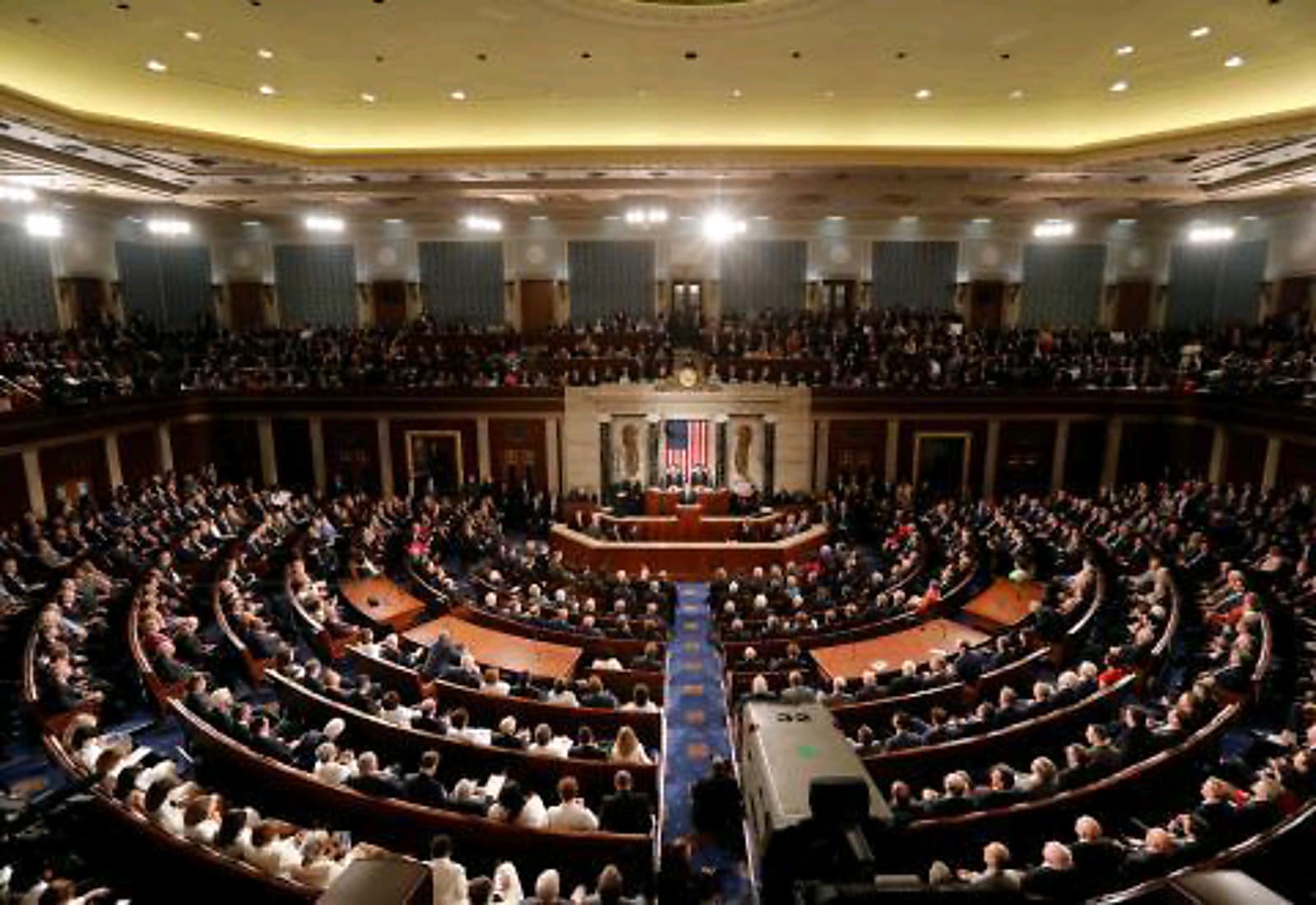
Thursday 21 May 2026 was supposed to be the day House Republicans voted down yet another Democratic attempt to end Donald Trump's war with Iran. It did not go that way.
Instead, Republican leaders cancelled the vote entirely after it became clear they no longer had the numbers to defeat the resolution. The Democratic-backed war powers bill, which would compel Trump to withdraw US forces from the conflict unless Congress explicitly authorises the war, was pulled from the floor schedule to avoid the embarrassment of it passing on the House floor.
The vote has been pushed to June, after lawmakers return from their Memorial Day recess. But the delay does nothing to solve the underlying problem: a growing number of Republicans are no longer willing to give President Trump a blank cheque for a war he launched nearly three months ago without congressional approval, as the conflict continues to push US gas prices to painful highs and stall diplomatic progress in the Strait of Hormuz.
What Happened on Thursday
The House had scheduled a vote on a war powers resolution introduced by Democrats. The resolution, backed by House Minority Leader Hakeem Jeffries, directs the president to remove US Armed Forces from hostilities in Iran unless Congress explicitly authorises the use of military force.
 House Republicans cancelled a scheduled war powers vote on 21 May 2026 after it became clear the resolution had enough support to pass. Image: Rep. Chellie Pingree's office
Republican leaders, recognising they did not have the votes to defeat it, declined to hold the vote at all. House Republican Leader Steve Scalise told reporters the delay was to give absent lawmakers an opportunity to vote. Speaker Mike Johnson did not answer questions from reporters as he exited the chamber.
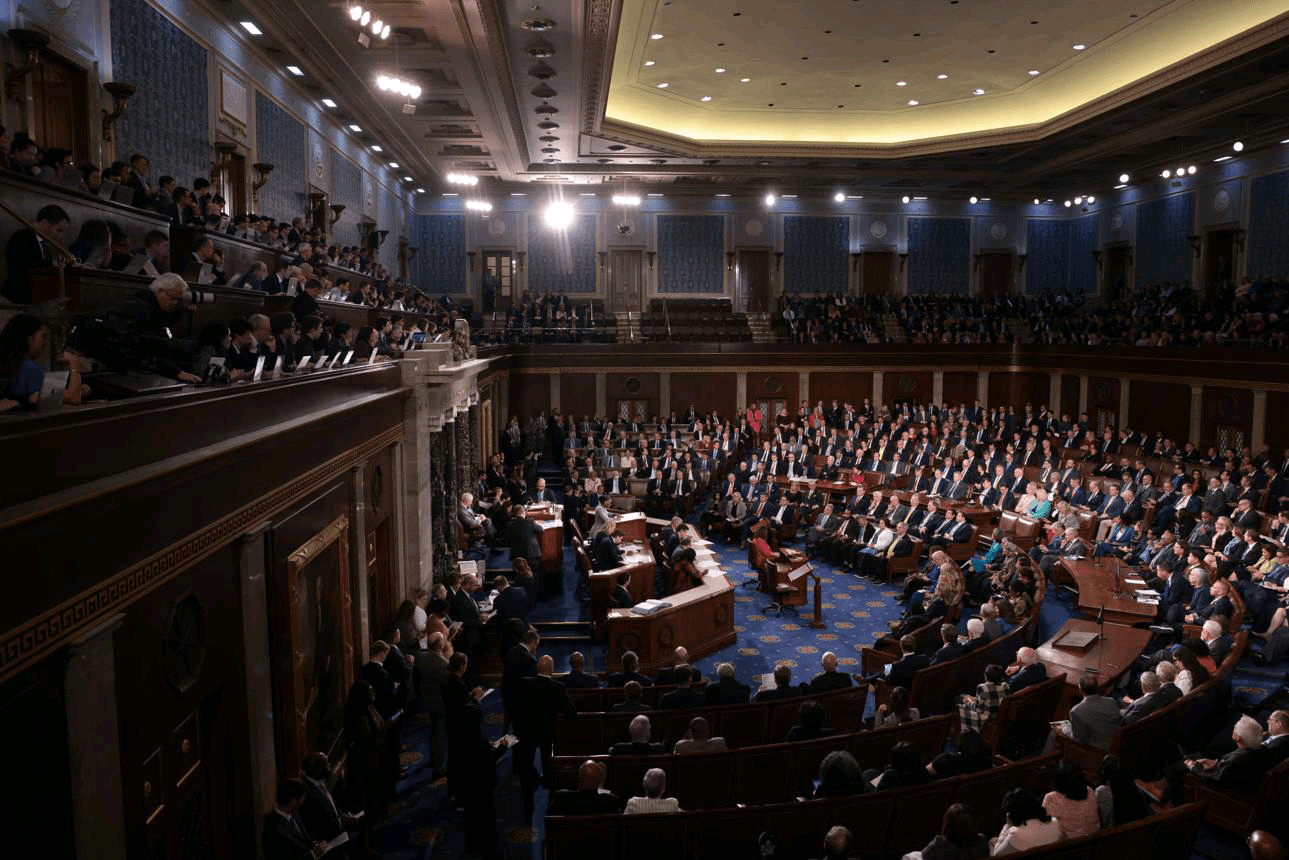
Democratic Rep. Gregory Meeks, ranking member of the House Foreign Affairs Committee, was blunt: "We had the votes without question and they knew it, and as a result they are playing a political game."
How We Got Here: The War Powers Act and the 60-Day Clock
The legal framework driving this crisis is the War Powers Resolution of 1973, a law passed in the aftermath of the Vietnam War to prevent future presidents from waging open-ended wars without congressional approval.
Under that law, a president can deploy US forces into combat, but Congress must either declare war or authorise the use of military force within 60 days. If it does not, the president must withdraw the forces. Trump launched military operations against Iran on 28 February 2026. The 60-day clock expired in late April. The war is still ongoing.
Trump has argued that ceasefire days in the conflict do not count toward the 60-day window, a creative legal interpretation that his own party's lawyers have struggled to defend convincingly. The Constitution, as Republican Rep. Brian Fitzpatrick of Pennsylvania stated plainly on Thursday, does not support that reading.
"We are past 60 days so it has got to be brought to us to vote on. We are following the law," Fitzpatrick said, adding that he planned to vote for the war powers resolution when it eventually reaches the floor.
The Senate Side: A Historic Procedural Victory for Democrats
While the House drama unfolded, the Senate produced its own significant development earlier this week.
The Senate voted 50-47 to advance a war powers resolution introduced by Democratic Senator Tim Kaine of Virginia. The resolution states that Congress directs the president to remove US Armed Forces from hostilities within or against Iran unless explicitly authorised. Four Republican senators voted in favour of advancing the measure.
 House Speaker Mike Johnson did not answer questions as he left the chamber after the vote was pulled. The delay reflects deepening Republican fractures over the Iran war. Image: Fox News
The procedural advance marked the eighth attempt by Democrats to move an Iran-related measure forward in the Senate, and their first success. The measure still faces significant obstacles before it could reach the president's desk, including a final Senate vote and passage through the Republican-controlled House. Even if it passes both chambers, Trump would almost certainly veto it. Overriding a presidential veto requires a two-thirds majority in both chambers, a threshold that remains out of reach for now.
But the procedural vote matters symbolically. It confirms that Republican support for the war is fraying at a pace that Washington did not anticipate when the conflict began in late February.
Senator Bill Cassidy of Louisiana, who had lost his primary election over the weekend, voted in favour of advancing the Senate resolution for the first time, flipping his position. "Until the administration provides clarity, no congressional authorisation or extension can be justified," he said.
Why Republican Support Is Slipping
Understanding why Republicans are breaking with Trump on the Iran war requires understanding what the war is costing Americans at home.
US national average gas prices have been hovering above $4.40 per gallon since early May, up nearly 50% from pre-war levels. The disruption to shipping in the Strait of Hormuz, through which roughly 20% of global oil supplies pass, has created sustained upward pressure on energy prices that affects every American household regardless of political affiliation.
 US gas prices have remained above $4.40 per gallon since early May 2026, nearly 50% higher than before the Iran war began, creating growing political pressure on Republican members of Congress. Image: AAA Gas Prices
The war also has no clear end state that Republicans can campaign on. Trump launched the conflict with the stated goal of preventing Iran from acquiring nuclear weapons and stopping its destabilising regional activities. Nearly three months into the conflict, neither goal has been definitively achieved, Iran has not surrendered, and the Strait of Hormuz remains contested.
Republican members of Congress from swing districts, those most at risk of losing their seats in the November 2026 midterm elections, are hearing from constituents who are angry about gas prices and sceptical about the war's purpose. The political calculation is shifting.
What Happens in June
When lawmakers return from Memorial Day recess, the war powers vote will eventually have to happen. Republican leadership cannot postpone it indefinitely. The 1973 War Powers Resolution has procedural mechanisms that limit a speaker's ability to simply never schedule a vote.
The critical variable is whether the absent Republicans who were not present for Thursday's cancelled vote will return and vote to sustain the war, or whether some will join the growing number willing to defy the president on this issue.
Last week, a war powers resolution in the House fell on a 212-212 tie, with three Republicans voting in favour. The next vote will determine whether that number grows. A majority in favour would mark the first time either chamber has voted to end the Iran war, a historic rebuke of a sitting president's military authority that would reshape the political landscape for the remainder of 2026.
Even if the resolution passes both chambers, Trump's veto remains a near-certainty. The real significance of these votes is not their immediate legal effect but their political one: each Republican vote in favour of ending the war is a data point about how much of his own party's support the president has lost on the issue that he put at the centre of his second term.
What This Means Beyond America's Borders
For Nigeria and other oil-dependent economies, the congressional dynamics around the Iran war matter for a straightforward reason: they affect how long the conflict lasts and therefore how long global energy markets remain disrupted.
A war powers resolution that reaches Trump's desk, even if vetoed, creates political pressure to either seek congressional authorisation or move toward a negotiated settlement. Either path would reduce the uncertainty that has been keeping oil prices elevated and global shipping routes destabilised since late February.
Nigeria's January 2026 trade surplus of $480 million was driven partly by higher oil prices that the Iran conflict has produced. If the war ends and oil prices normalise, that surplus could narrow. If it continues and prices remain elevated, Nigerian oil export revenues benefit but import costs rise alongside, creating a mixed picture.
The Strait of Hormuz crisis is not Nigeria's war. But its resolution or continuation will show up in Nigeria's import bills, export revenues, and the naira's performance in the months ahead.
Common Misconceptions About the War Powers Act
"Congress can stop the war immediately." The War Powers Resolution gives Congress the authority to direct the president to withdraw forces, but the president retains the veto power. Overriding that veto requires two-thirds majorities in both chambers, which the current alignment of Congress cannot produce. The law creates political leverage, not an automatic brake.
"Republicans who vote for the resolution are opposing Trump personally." Several of the Republicans supporting the resolution, including Fitzpatrick, have framed their vote in legal rather than political terms. The 60-day clock has expired. They are voting to uphold the law, not necessarily to end the war.
"The war will end if the resolution passes." A passed resolution would direct the president to withdraw. Trump would veto it. The war would continue unless the veto is overridden or Trump chooses to negotiate. The resolution's power is political, not mechanical.
Conclusion
House Republicans cancelled the Iran war powers vote on Thursday 21 May 2026 because they did not have the votes to defeat it. That fact, stated plainly, is the most consequential sentence in American politics this week.
A president who launched a war without congressional approval nearly three months ago is now watching members of his own party prepare to vote against him on the floor of the House of Representatives. The vote has been delayed to June. The underlying political fracture has not been delayed at all.
When Congress returns from Memorial Day, the vote will happen. What it produces will tell us something important about whether Trump still has the political authority to wage this war on his own terms, or whether the cost of doing so has finally begun to exceed what even his allies are willing to absorb.
Republicans Pull Iran War Vote After It Became Clear They Would Lose matters because international developments can shape diplomacy, markets, migration, security, or public opinion far beyond the country where the story began. That broader lens helps readers understand why the headline deserves attention locally too.
The next meaningful updates around Republicans Pull Iran War Vote After It Became Clear They Would Lose will usually come from official statements, confirmed follow-up reporting, and the practical response of the people or institutions involved. Readers should watch for what changes after the first reactions, not just the first reactions themselves.
What is this world article about?
House Republicans cancelled Thursday's vote on a war powers resolution that would end Trump's Iran war after it became clear the bill would pass. Here is the full story.
Why does this story matter?
Republicans Pull Iran War Vote After It Became Clear They Would Lose matters because international developments can shape diplomacy, markets, migration, security, or public opinion far beyond the country where the story began. That broader lens helps readers understand why the headline deserves attention locally too.
When was this article published or updated?
It was published on 22 May 2026 and last updated on 23 May 2026.
Does this page include source references?
Yes. Source links or source details are shown on this page.
Where can readers find related Century Blog coverage?
Readers can continue with related coverage in the same topic area, including Discipline and Due Process Collide at New Zealand's Waiouru Military Camp - Global Implications and What "The Thing About You" Says About Cousinhood, Queer Identity and Growing Apart.
No comments yet. Be the first to spark the conversation.