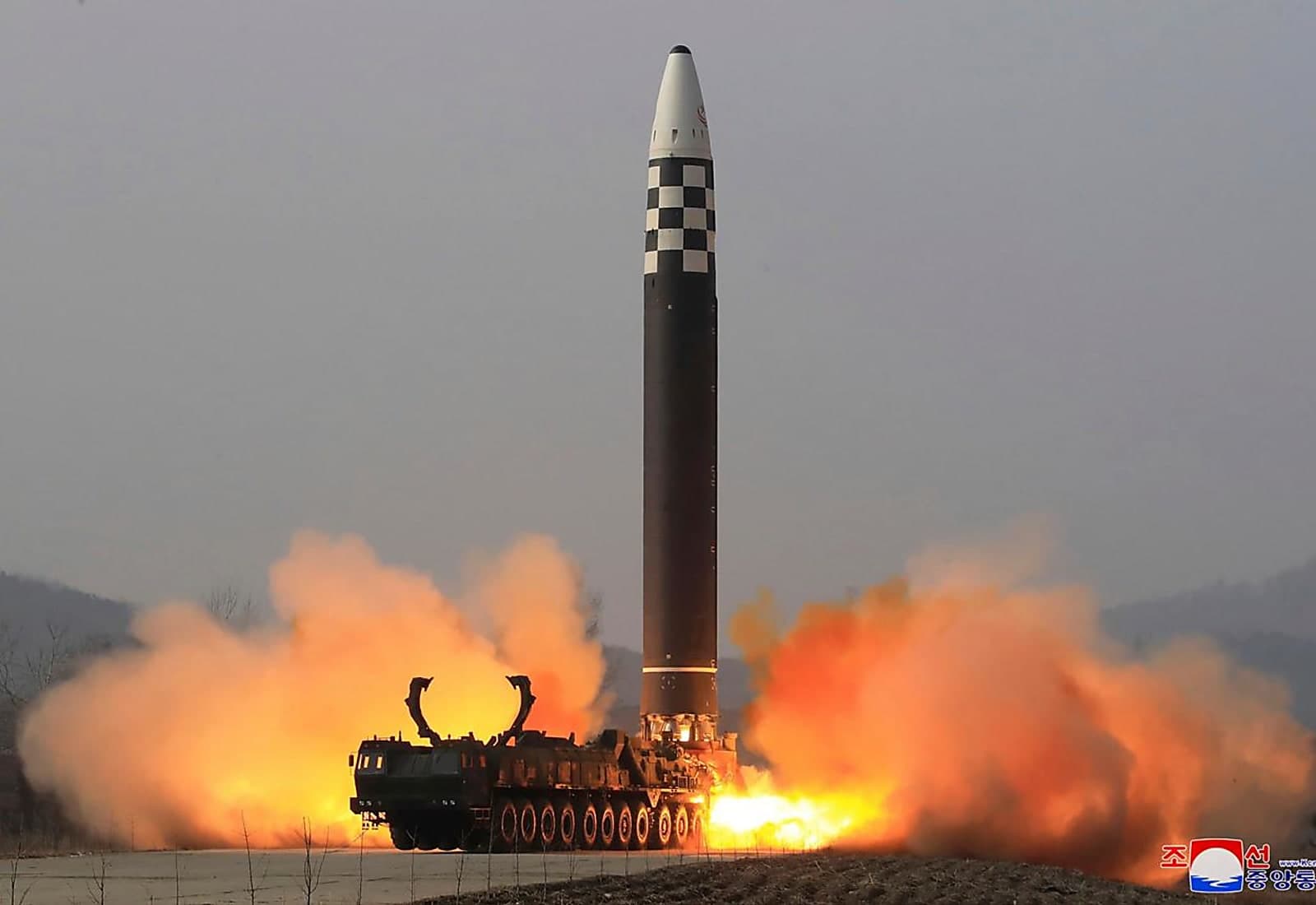
On the morning of Tuesday, 12 May 2026, Russia launched a missile. Not a battlefield weapon. Not a strike on a military target. A full test of the RS-28 Sarmat, a nuclear-capable intercontinental ballistic missile that Russia's own president described as the most powerful missile in the world.
The launch took place at 11:15 a.m. Moscow time at an undisclosed location. Colonel General Sergei Karakayev, commander of Russia's Strategic Missile Forces, reported directly to President Vladimir Putin via video link from the Kremlin: "The launch was successful, and the mission objectives were achieved."
Putin's response was immediate. The Sarmat, he announced, would enter full combat service before the end of 2026.
This is not the kind of news that stays in Moscow. When the world's largest nuclear power successfully tests a missile it claims can outperform any Western equivalent by a factor of four, everyone needs to understand what just happened.
Background: What Is the Sarmat?
The RS-28 Sarmat, known in Western military circles as "Satan II," has been in development since the late 2000s. It is a three-stage, liquid-fuelled, silo-based intercontinental ballistic missile built entirely within Russia, designed to replace the ageing Soviet-era Voyevoda missiles that have formed the backbone of Russia's land-based nuclear deterrent for decades.
Putin first publicly unveiled the Sarmat in 2018 alongside a suite of new weapons systems, describing them as a direct response to the United States withdrawing from the Anti-Ballistic Missile Treaty in 2001 and expanding its missile defence shield.
The missile's development was not smooth. Its programme suffered repeated delays throughout the 2010s. A catastrophic silo explosion during a failed test in late 2024 set the programme back significantly. Tuesday's launch was only the second known successful test in the missile's history.
But it cleared the critical threshold. The first Sarmat-armed regiment is now confirmed for deployment at Russia's Uzhur missile division in the Krasnoyarsk region by the end of this year.
What Makes This Missile Different
The Sarmat is not just another update to Russia's nuclear arsenal. Several of its technical characteristics set it apart from anything currently deployed by any other nation.
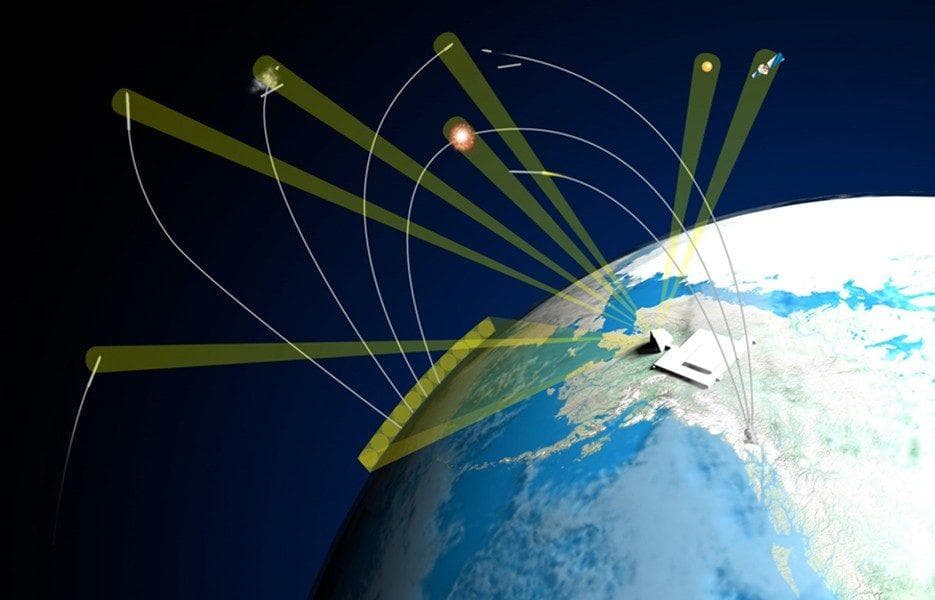
Range and reach. Western analysts estimate the Sarmat's operational range at approximately 18,000 kilometres. Russian claims put it considerably higher. At either figure, the missile can reach virtually any target on Earth from its launch site in Russia, including by flying a trajectory over the South Pole to approach the United States from the south, effectively bypassing northern missile defence systems entirely.
Warhead capacity. The Sarmat is built to carry between 10 and 14 independently targeted thermonuclear warheads, each estimated at around 750 kilotons. To put that in perspective, the bomb dropped on Hiroshima in 1945 had a yield of approximately 15 kilotons. A single Sarmat warhead represents roughly 50 times that destructive power. Putin claimed the missile's combined warhead yield is more than four times that of any Western equivalent.
Speed and evasion. According to Russian state sources, the Sarmat reaches high speed rapidly and burns its engines out earlier than traditional ICBMs, reducing the window during which infrared satellites can detect and track it. Its trajectory also allows it to carry hypersonic glide vehicles that manoeuvre unpredictably on final approach, making interception by existing missile defence systems extremely difficult.
Accuracy. The missile is reported to achieve a probable circular error of no more than 150 metres at intercontinental range. For a weapon of this destructive capacity, that is extraordinary precision.
Why the Timing Matters
Putin's decision to announce a successful Sarmat test on 12 May 2026 was not random. Consider what surrounded it.
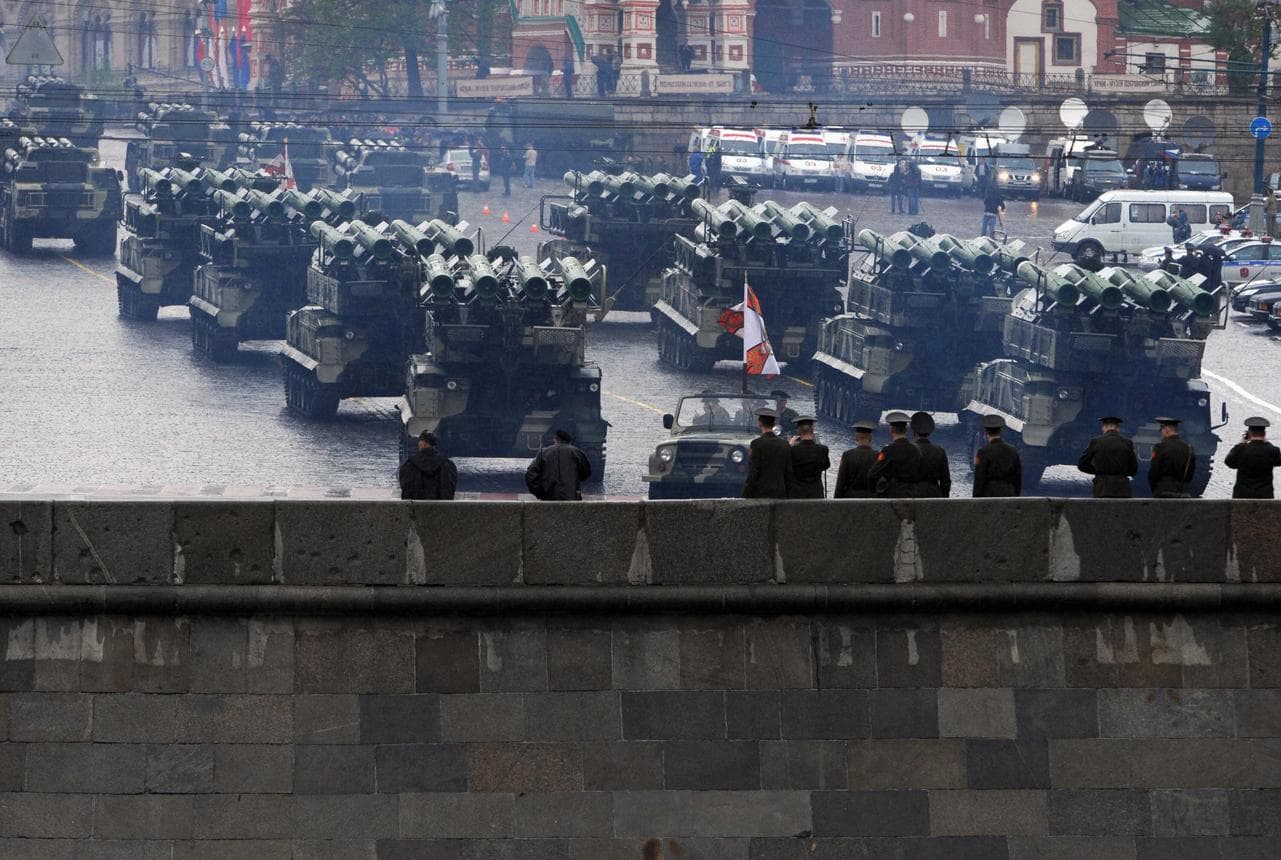
Just days earlier, Putin oversaw Russia's Victory Day parade on Red Square, during which he declared that the conflict in Ukraine is "nearing an end." The parade, notably, featured no heavy weapons for the first time in nearly two decades, a choice widely interpreted as a diplomatic signal rather than a display of restraint.
The Sarmat test followed immediately, sending a very different kind of signal.
And it arrived against the backdrop of a deeply unstable arms control environment. New START, the last remaining nuclear arms reduction treaty between Russia and the United States, expired in February 2026. For the first time in more than half a century, the world's two largest nuclear powers have no formal agreement capping their strategic warheads and delivery systems. There are no constraints in force. No caps. No verification protocols.
Russia has also recently commissioned the Oreshnik intermediate-range ballistic missile, capable of reaching any target in Europe, and used its conventionally armed version twice in Ukraine. Putin has additionally announced that Russia is in the final stages of developing the Poseidon nuclear-armed underwater drone and the Burevestnik nuclear-powered cruise missile.
The Sarmat test was not an isolated event. It is part of a deliberate and sustained pattern of nuclear modernisation and signalling.
What This Means for Global Security
The implications extend well beyond Russia and the United States.
The end of meaningful arms control. With New START expired and no successor treaty in sight, there is now no international framework constraining either superpower's nuclear build-up. Both sides have accused the other of non-compliance with New START's provisions. Neither side has shown meaningful appetite for a new agreement. The world is now in genuinely uncharted territory in terms of nuclear risk management.
Pressure on NATO and Europe. The Oreshnik missile, already deployed and used, can reach any European capital. The Sarmat adds a further dimension: a weapon that can bypass existing European and North American missile defences. This changes the strategic calculus for NATO members and creates new pressure on Western governments to accelerate their own defensive and deterrent capabilities.
The nuclear arms race is no longer theoretical. Russia's effort to modernise has already pushed the United States to launch a costly and comprehensive overhaul of its own nuclear arsenal. China is rapidly expanding its nuclear forces. Three major nuclear powers are simultaneously building and upgrading their arsenals with no arms control framework in place. That is a situation the world has not faced since the height of the Cold War.
What Nigeria and Africa Need to Understand
Nuclear weapons are often perceived as a distant problem in African public discourse. They are not.
A significant escalation involving Russia, the United States, or any nuclear-armed state would have immediate consequences for global trade, energy markets, food systems, and international institutions that Africa depends on.
Nigeria's economy is already under strain from the US-Iran conflict's disruption to oil markets. A further deterioration in great-power relations, accelerated by unconstrained nuclear competition, raises the probability of exactly the kind of prolonged global instability that hits developing economies hardest.
The Sarmat test is a reminder that the choices made in Moscow, Washington, and Beijing carry consequences felt in Lagos, Abuja, and across the African continent, whether or not Africa has a seat at the table.
Common Misconceptions to Clear Up
"This is just propaganda. Russia always exaggerates its weapons." Some of Putin's specific claims, particularly regarding range and yield, should be treated with scepticism. Western analysts consistently offer more conservative estimates. But the successful test itself is verified. The missile exists, it flew, and it is being deployed. The threat is real even if specific numbers are disputed.
"Nuclear weapons have never been used since 1945, so this is not a real risk." The absence of nuclear use since Hiroshima and Nagasaki is not a guarantee. It reflects a specific set of political, strategic, and institutional conditions, many of which are currently under strain. Treating nuclear escalation as impossible is precisely the kind of complacency that arms control treaties were designed to prevent.
"New weapons mean a new war is inevitable." Military modernisation does not cause wars automatically. But it does raise the stakes of miscalculation, increases the pressure on adversaries to respond, and reduces the margin for diplomatic error. That is why this matters.
Conclusion
Russia's successful test of the Sarmat on 12 May 2026 is not simply a military technical achievement. It is a political statement, delivered at a carefully chosen moment, in a world that has just lost the last formal constraints on nuclear competition.
The missile is powerful. The context is more worrying.
A world in which the two largest nuclear arsenals operate without any treaty framework, in which new weapons are being deployed faster than diplomacy can respond, and in which geopolitical tensions are simultaneously spiking across multiple theatres is a world carrying more nuclear risk than it has in decades.
The Sarmat's first combat deployment is scheduled for the end of 2026. The question of what comes after that has no clear answer.
No comments yet. Be the first to spark the conversation.