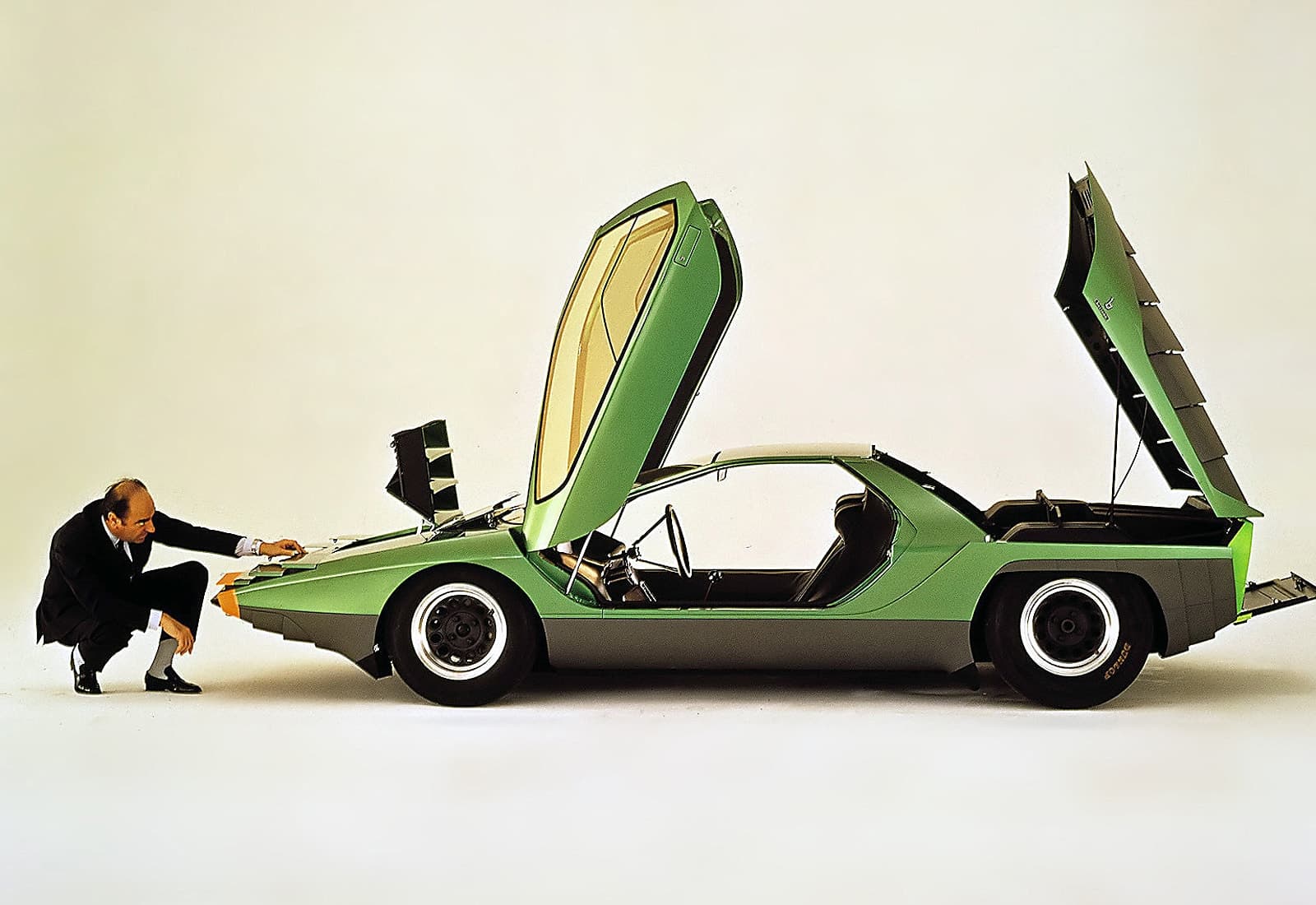
Concept cars are easy to dismiss because many of them never become production vehicles. They appear on brightly lit stages, generate headlines, then disappear into automotive memory. But the best way to read them is not as promises. It is as signals. The most important concept cars tell us what manufacturers are experimenting with, what they fear, what they want investors and consumers to imagine, and where the business of mobility may be heading next.
Why this story matters
This story matters because concept cars often show the auto industry's thinking before the wider market fully catches up. They can reveal shifts in powertrains, design language, materials, software, ownership models or user experience long before those ideas become standard. Even when a concept never reaches the showroom intact, the lessons from it can influence product planning, supplier investment and corporate strategy.
In other words, concept cars are not only design theatre. They are part prototype, part marketing device and part strategic communication. Companies use them to test reactions, frame future ambitions and place themselves inside the next phase of competition.
For Nigerian readers, the topic matters because the global automotive industry does not evolve in isolation. Changes in electric mobility, supply chains, fleet economics and design priorities eventually affect vehicle imports, assembly ambitions, transport costs, skills demand and industrial policy in markets like Nigeria too.
Context and background
The role of concept cars has changed over time. In earlier eras, manufacturers often used them to express bold engineering fantasies or styling extremes that would never survive regulation, cost control or mass production. They existed partly to create wonder and partly to demonstrate technical confidence.
Today, concepts still serve that purpose, but they also do more. They are used to preview electrification strategies, autonomous systems, subscription models, software-driven cabins and sustainability claims. They can help investors understand direction, suppliers understand coming demand and consumers understand how a brand wants to position itself in the future.
That is why it is useful to treat important concept cars as industry documents rather than just pretty objects. They often capture the strategic mood of a particular period. One era's concepts may obsess over power and speed. Another era may focus on efficiency, digital interfaces or circular materials. Looking at them closely tells you how the industry's priorities are shifting.
What happened
The current article attempts to turn a list of famous concept cars into a business explainer. That is the right instinct, but the stronger version of the story is not really about identifying the single greatest prototypes. It is about understanding why certain concepts mattered beyond their appearance.
The most influential concepts tend to do one of four things. They introduce a technology that later spreads more widely. They help reframe what a brand stands for. They signal a commercial transition, such as the move toward electrification or software-based revenue. Or they change how competitors think about the future.
This means a concept does not need to enter production exactly as shown to be important. It only needs to push the industry conversation forward.
Why it matters now
It matters now because the car business is once again in a period of deep transition. Electrification, battery strategy, supply-chain realignment, mobility services, software platforms and climate regulation are all changing what automakers prioritise. In moments like this, concept cars become more revealing because they show what companies want the next normal to look like.
That matters for investors, suppliers and governments. If a brand repeatedly uses concept vehicles to emphasise digital dashboards, battery architecture or subscription-style ownership, it is saying something about the business model it sees ahead. If concepts shift toward rugged electric fleets or urban micro-mobility, that also signals where demand may be heading.
For countries such as Nigeria, which still have long-term interests in transport infrastructure, local assembly, import economics and industrial capability, these global signals matter more than they might first appear. The future of mobility affects not only what people drive, but how cities plan, how jobs evolve and what kinds of technical skills become valuable.
Deeper analysis
The deeper reason concept cars matter is that they compress industry ambition into visual form. A production model has to answer to cost, regulation and volume. A concept can stretch further. That freedom makes it useful. It allows manufacturers to ask bigger questions in public: what if cabins become software spaces rather than mechanical ones? What if vehicle ownership becomes service-based? What if sustainability becomes a design language, not just a compliance target?
This is why some concept cars become historically important even if buyers never see them on a dealer floor. Their influence survives through ideas, not replicas. A battery layout, interface philosophy, material experiment or aerodynamic principle may spread quietly into future vehicles in diluted but commercially significant forms.
There is also a branding dimension. Auto companies use concepts to tell the market whether they are conservative, ambitious, premium, youthful, efficient or radical. In competitive periods, that signalling matters. Investors want direction. Consumers want imagination. Suppliers want clues about what parts and systems may matter next.
For Nigeria, the practical lesson is that mobility shifts begin upstream. If the world auto industry increasingly values electric platforms, smarter supply chains and more software-intensive vehicles, then countries hoping to participate in automotive growth need to think ahead about infrastructure, skills and industrial partnerships. Watching concept cars will not solve those challenges, but it can help reveal where the next pressures and opportunities may come from.
Another important point is that concepts can also mislead. Some are more about attention than intention. That is why the safest way to interpret them is not to ask, "Will this exact car be built?" but rather, "What business direction is this car trying to normalise?" That question produces better insight than design hype alone.
What happens next
The next generation of important concept cars will likely be shaped by electrification, software, materials and the economics of ownership. Readers should watch less for fantasy features and more for recurring patterns. If multiple brands keep signalling similar interior layouts, charging ecosystems, battery platforms or service models, that usually points to a real strategic trend.
It will also matter how policymakers and emerging markets respond. The future of mobility is not only about rich-country consumer taste. It is also about affordability, infrastructure, grid stability, fleet renewal and industrial adaptation. Countries that read these signals early may be better positioned to attract the right partnerships and investments.
For businesses, the practical takeaway is that concept cars can help identify where supplier demand may move next. For students and professionals, they can hint at which engineering, software and design skills are becoming more valuable. For consumers, they offer a preview of how brands want to reshape the relationship between driver, machine and digital service.
Final takeaway
The most important concept cars matter not because they are futuristic objects, but because they reveal how the car business thinks before the rest of the market fully sees the shift. They show where companies want to move, what technologies they are testing and what commercial future they are trying to make feel inevitable.
That is why concept cars deserve to be read as business signals as much as design experiments. Some fade quickly. Others quietly influence an entire generation of products, partnerships and mobility choices. The smart way to watch them is not as fantasy, but as early evidence of what the industry is preparing to become.
No comments yet. Be the first to spark the conversation.