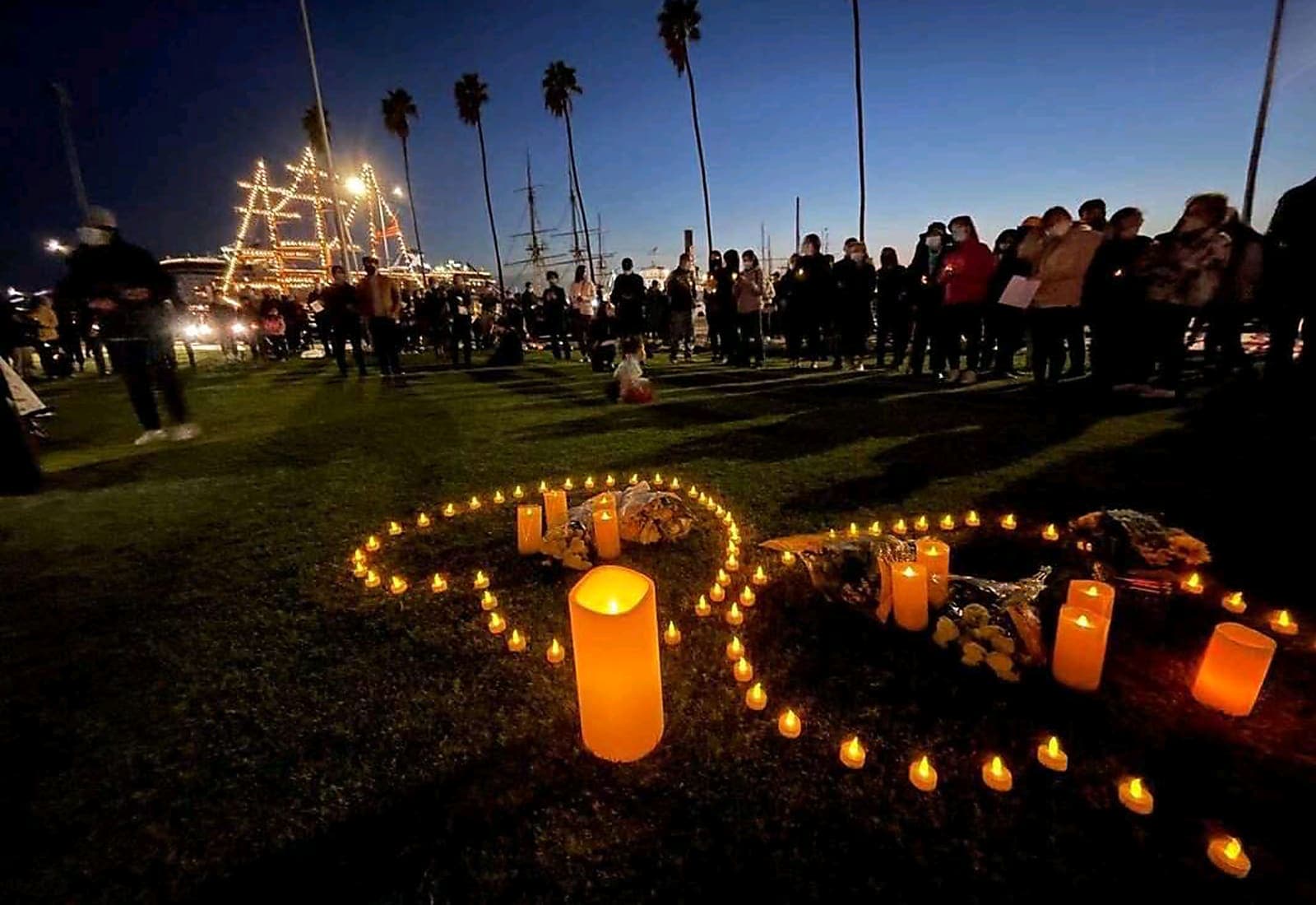
On the morning of Monday 18 May 2026, two teenage gunmen drove into the car park of the Islamic Center of San Diego and opened fire. Three people were killed. As many as 140 children were inside the building at the time.
That those children survived is because of what three men chose to do in the seconds after the shooting began.
This is the full story of the attack, the three people who gave their lives to stop it going further, the manifesto that investigators recovered, and the broader question that the attack has forced America to confront: whether the sharp rise in anti-Muslim rhetoric in political and media spaces has consequences that end in car parks and mosques.
What Happened: A Timeline of the Attack
The Islamic Center of San Diego is located in the Clairemont Mesa East neighbourhood of San Diego, California. It is the largest mosque in San Diego County, housing a lower school campus where children from pre-kindergarten through to third grade attend Bright Horizon Academy.
On the morning of Monday 18 May, two teenage suspects parked in the centre's car park and ran toward the building. Security guard Amin Abdullah, 51 years old, was the first person they encountered. He immediately recognised the threat, engaged the suspects in gunfire, and simultaneously reached for his radio to initiate lockdown protocols for the entire facility.
The suspects shot and killed Abdullah during the exchange. But his actions bought the time that saved lives. San Diego Police Chief Scott Wahl was direct in his assessment: "His actions, without a doubt, delayed, distracted and ultimately deterred these individuals from gaining access to the greater areas of the mosque, where as many as 140 kids were within 15 feet of these suspects."
After killing Abdullah, the suspects entered the building and moved through several empty areas and rooms before exiting through a side door into the car park, where they encountered Mansour Kaziha, 78 years old, and Nadir Awad, 57 years old. Both men were shot and killed. Both had positioned themselves in the car park in a manner that drew the suspects' attention away from the children still inside.
The suspects then fled in their vehicle into the surrounding neighbourhood, fired at a gardener who was uninjured, and shortly afterward shot themselves. They were found dead in the vehicle.
The Three Men Who Gave Their Lives
Amin Abdullah was a security guard who took his job with complete seriousness. His daughter, Hawaa Abdullah, spoke at a vigil the following evening through tears. Her father was "all about education" and had "dreamed more" for his children. He took his job so seriously that he sometimes skipped meal breaks out of fear that something bad would happen while he was away from his post. He stood against "any form of hate," she said. He was a loving father, husband, son, brother, and uncle.
Mansour Kaziha was 78 years old and a constant presence at the Islamic Centre. He was the mosque's shopkeeper, known among the community's children for letting them take candy for free without paying. He lived close by and was known to everyone.
Nadir Awad, 57 years old, also lived near the centre and was a familiar face to the community. He and Kaziha were together in the car park when the suspects turned on them.
All three are now being remembered publicly as heroes, a word that is sometimes overused but in this instance is accurate in the most literal sense. They confronted two armed gunmen in the moments that mattered most, and as a result, 140 children went home to their families that evening.
The Suspects: Teenagers Radicalised Online
The two suspects were teenagers. Law enforcement has not released their names due to their age, though investigators have confirmed several details.
The FBI and San Diego Police determined that the two suspects met online, discovered they both lived in San Diego, and exchanged radicalised ideology over a period of time before carrying out the attack. The guns used were not registered to either suspect. Investigators are still determining how they obtained them. One of the shooters took a firearm from his parents' house and left a suicide note.
Investigators recovered a manifesto. The document contained what the FBI described as "various ideologies outlining religious and racial beliefs of how the world they envisioned should look." Special Agent in Charge Mark Remily told reporters that "these subjects did not discriminate on who they hated." The manifesto contained hateful rhetoric directed at Jewish people, Muslims and Islam, the LGBTQ community, Black people, women, and both the political left and right.
Hate speech was written directly on at least one of the firearms used in the attack.
Three search warrants were executed at residences connected to the suspects. The searches yielded more than 30 guns and a crossbow, along with ammunition, tactical gear, and electronics. The scale of the weapons cache suggests the attack was planned with some degree of deliberation, not a spontaneous act of violence.
The incident is being investigated as a hate crime.
The Broader Pattern: A 1,450% Rise in Anti-Muslim Social Media Posts
The San Diego attack did not happen in a vacuum. Researchers and advocacy organisations have been tracking a sharp increase in anti-Muslim sentiment in public and political discourse throughout 2025 and the early months of 2026.
The Council on American-Islamic Relations and related research groups found that between February 2025 and March 2026, there was a 1,450% increase in the monthly average number of social media posts by Republican elected officials targeting Muslim Americans with bigotry and conspiracy theories.
That statistic is striking in its specificity. Raqib Naik, executive director of the Council on Safety and Oversight of Hate, connected the data directly to the San Diego attack: "When you try to put a target on one community and paint them as the other and paint them as the enemy, then you will have people who would take that at face value and do something that they think is right in their own sense."
The White House released a new document on rising domestic threats in the days following the attack. That document made no mention of right-wing extremist groups. The omission was noted by civil liberties organisations and Democratic lawmakers, who argued that the administration cannot credibly address the threat of far-right violence while simultaneously refusing to name it in official threat assessments.
The New York City Police Department announced the deployment of additional officers to mosques across the five boroughs in the immediate aftermath of the attack. Other cities followed with similar precautionary measures.
What It Means for Muslim Communities in America
The attack at the Islamic Center of San Diego is the latest in a documented pattern of violence targeting American mosques and Muslim community spaces. Each attack produces the same cycle: vigils, political statements, increased security at religious sites, and debates about the roots of radicalisation.
What is different in 2026 is the context. The United States is involved in a war with Iran, a Muslim-majority country. The political and media environment has produced what researchers describe as an unprecedented volume of anti-Muslim rhetoric in mainstream discourse. And two teenagers apparently processed that environment and decided to act on it at a mosque where 140 children were studying.
The victims' families and community leaders have been clear that they do not want the three men's deaths to become a footnote in a political argument. They want Amin Abdullah, Mansour Kaziha, and Nadir Awad remembered as the people they actually were, not just as symbols in a debate.
But the political argument is inseparable from the attack. Three people are dead because two teenagers walked into a car park and started shooting. Understanding why that happened, and whether the conditions that produced it are being addressed or worsened, is not optional.
Common Questions About the Attack
Were any children harmed? No children were harmed in the attack. The actions of the three victims, particularly Amin Abdullah's immediate initiation of lockdown protocols, kept the children inside the facility protected.
Were the suspects affiliated with any known organisation? Investigators have not identified affiliation with any specific organised extremist group. The manifesto suggests the suspects assembled a combination of ideologies individually, largely through online radicalisation.
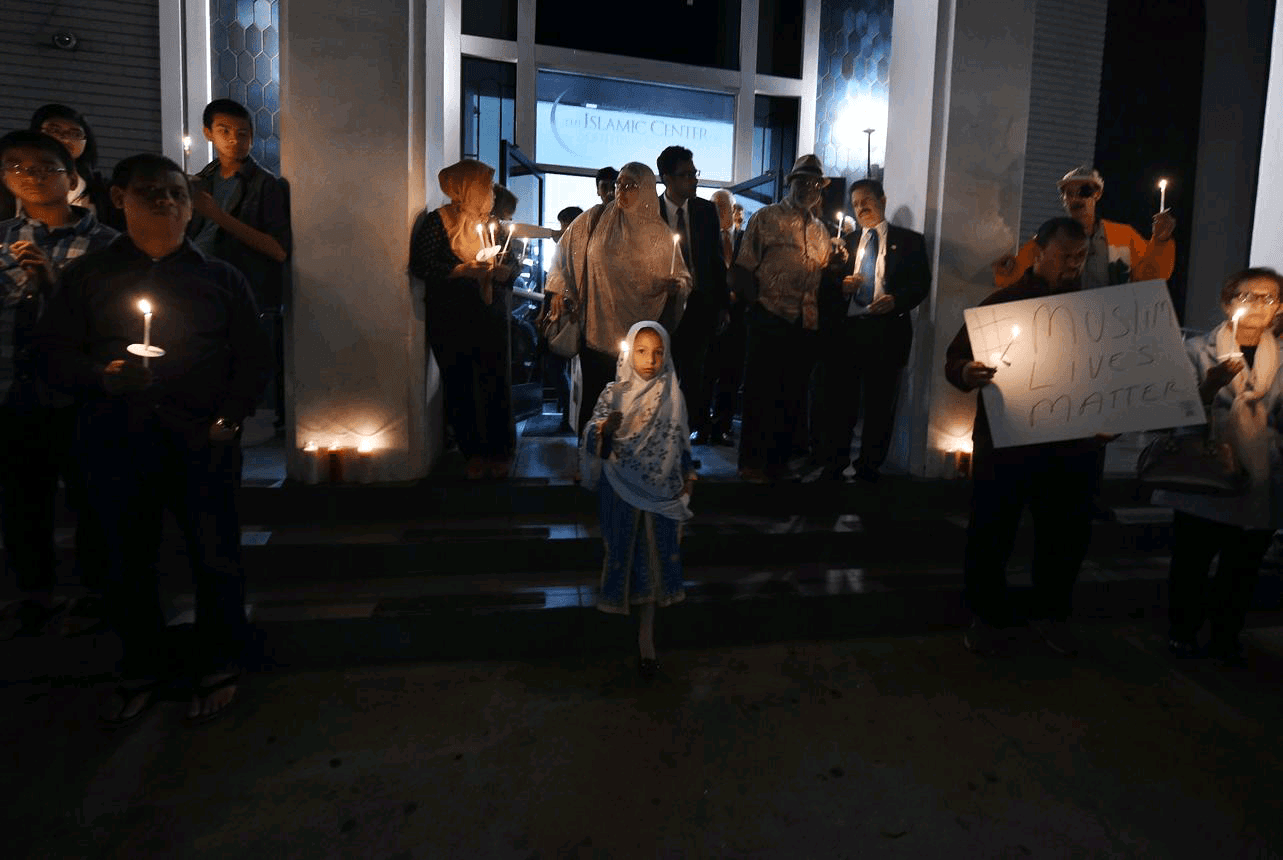
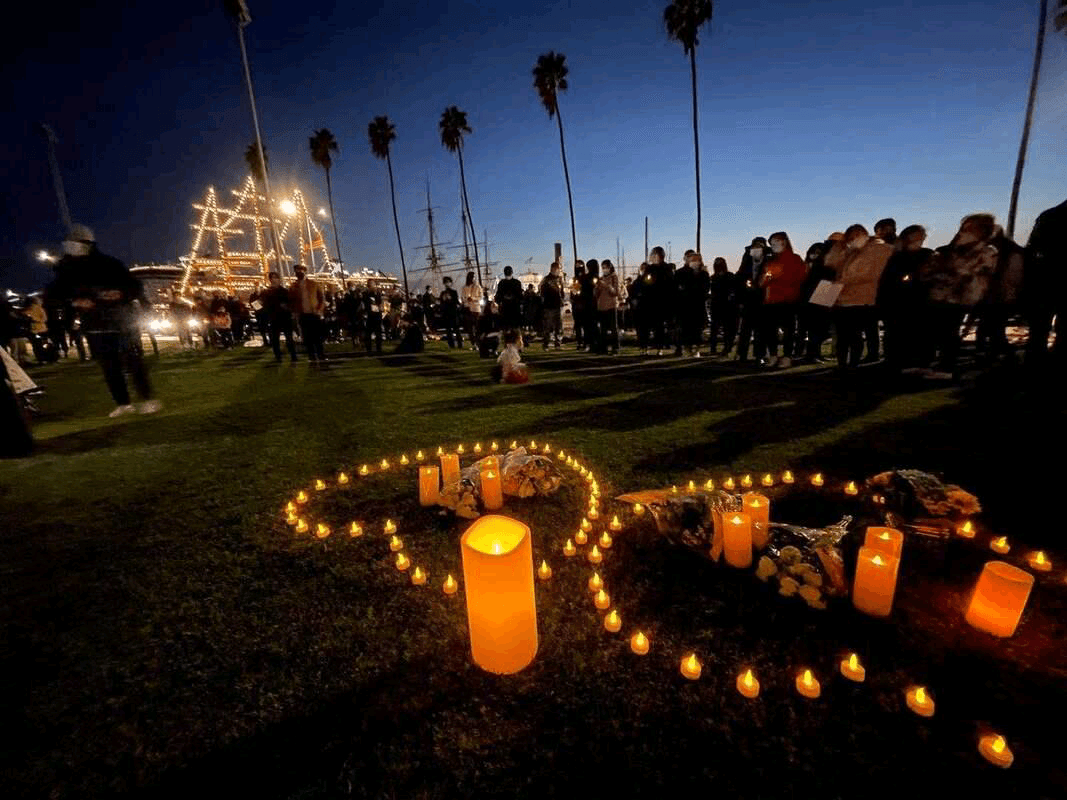
Is the mosque open? San Diego authorities and the Islamic Center's leadership have indicated the community intends to continue gathering. Community solidarity events were held in the days following the attack.
Conclusion
Amin Abdullah, Mansour Kaziha, and Nadir Awad went to the Islamic Center of San Diego on a Monday morning and did not come home. Between them, they confronted two armed teenagers long enough for 140 children to remain safe inside a building fifteen feet away.
The investigation into how this attack was planned and why two teenagers chose to carry it out is ongoing. The broader question of whether America's political environment is producing conditions in which attacks like this become more likely is not a question law enforcement can answer. It is a question that the country's political leaders, media institutions, and citizens must answer for themselves.
What is not in question is what Amin Abdullah, Mansour Kaziha, and Nadir Awad did. They ran toward danger, not away from it, and 140 children are alive because of them.
No comments yet. Be the first to spark the conversation.