Wars are often popular when they start. The flags come out, the rallies happen, and approval numbers rise. What comes after depends on what the war costs: in money, in lives, and at the fuel pump.
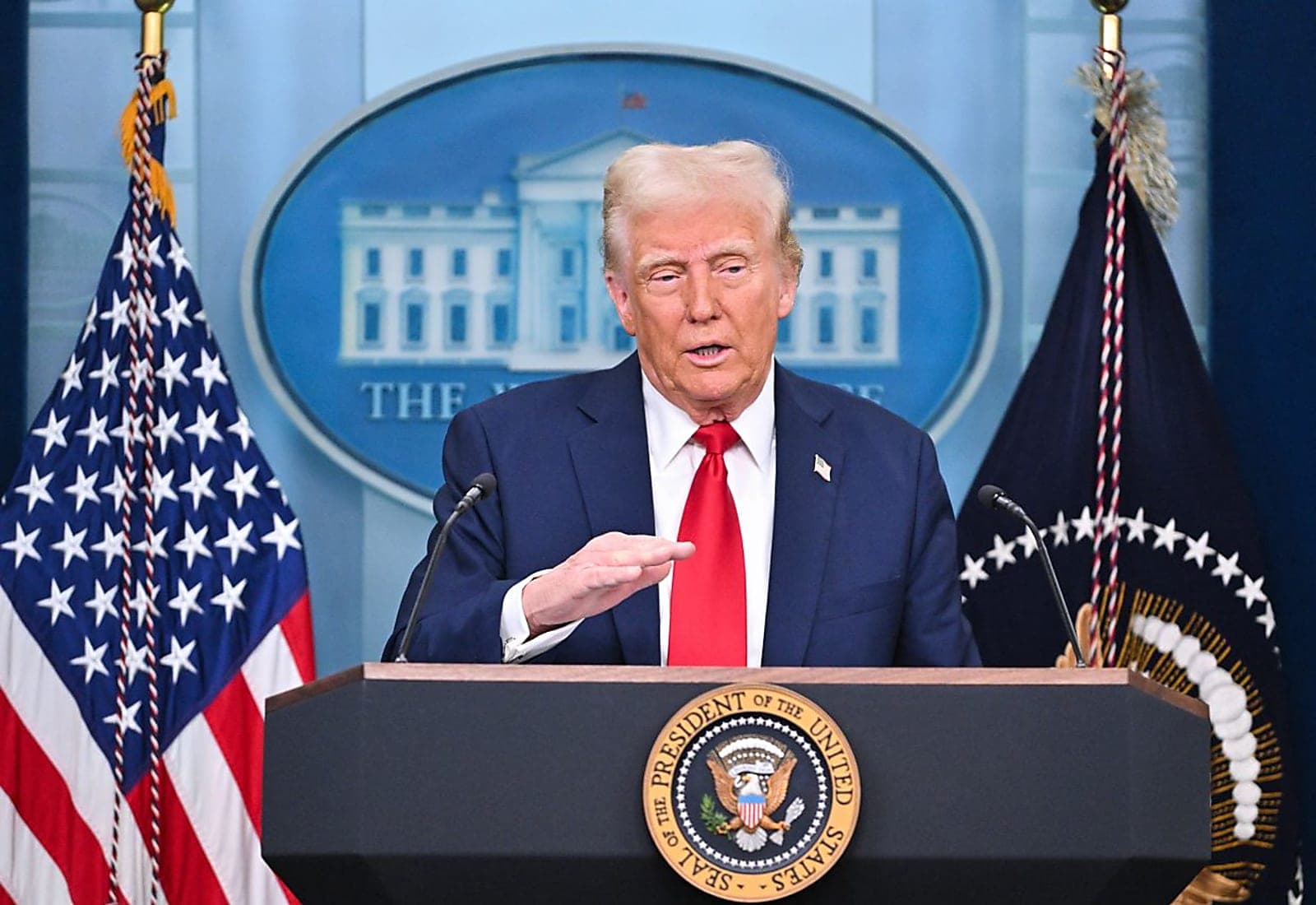
The US war with Iran, which began in late February 2026, is now costing Americans $4.45 per gallon of gas and an undisclosed but significant number of military deployments. And on Monday 4 May 2026, President Trump stood at a White House small business event and complained about a poll he called fake: 32% approval for the conflict.
He is not wrong that the number is bad for him. He may not be right that the poll is fake.
This is a full breakdown of what the approval numbers mean, why American public opinion has shifted this fast, and what the political consequences could be for Trump and for US foreign policy.
The Number: 32% and What It Means
A 32% approval rating for a military conflict is historically low in the early stages of a war. For context, the US invasion of Iraq in 2003 initially polled above 70% approval. The Afghanistan war had similarly high initial support. Public enthusiasm for military action typically erodes over time, as costs mount and the initial patriotic momentum fades.
For Trump's Iran war to be polling at 32% approval within its first two months is structurally unusual. It suggests the public did not experience the kind of rally-around-the-flag effect that typically accompanies new military action, or that it experienced that rally briefly and it has already collapsed.
The reasons are not difficult to identify.
Why American Public Opinion Has Shifted
The gas price. This is the single most politically powerful variable in Trump's approval problem. US national average gas prices hit $4.45 a gallon on Sunday 3 May, up nearly 50% since the conflict began in late February. For Americans across income levels, particularly working-class voters who were central to Trump's electoral coalition, the cost at the pump is tangible, immediate, and impossible to dismiss. Every fill-up is a reminder of what the war is costing.
Trump himself has acknowledged the economics, telling his audience: "I don't like it and I don't like war at all, but we're equipped better and we have the greatest military in the world." That formulation - "I don't like war" coming from a president who launched one - is a notable rhetorical posture that reflects how politically complicated the war has become even for its architect.
Ceasefire uncertainty. The US and Iran declared a ceasefire that both sides appear to be violating. When asked directly on Monday whether the ceasefire remains in place, Trump did not confirm it. Americans who were told the war was over or winding down are watching ships being struck in the Strait of Hormuz and Iranian missiles being intercepted by UAE air defences. The gap between official messaging and visible reality is a significant driver of public scepticism.
European ally friction. Trump has feuded publicly with European allies over their reluctance to support the Iran war. Germany's Chancellor Friedrich Merz and other European leaders have been cautious in their backing, and the withdrawal of 5,000 US troops from Germany has added to the sense of transatlantic strain. When America's traditional allies are not aligned with its military strategy, it reinforces domestic doubts about whether the strategy is sound.
No clear objective achieved. The initial stated objectives of the Iran conflict - preventing Iran from acquiring nuclear weapons and stopping what the US described as Iran's destabilising regional activity - have not produced visible, definitive outcomes. Iran is still firing missiles. The strait is still contested. There is no "mission accomplished" moment that would allow approval numbers to crystallise around a sense of successful conclusion.
Trump's Response: "The Polls Are Fake"
Trump's response to the 32% figure was characteristic and worth examining carefully.
"They give me fake polls. They did a poll on the war with Iran, and they said only 32% of people like it. Well I don't like it and I don't like war at all, but we're equipped better and we have the greatest military in the world," he said on Monday.
He went on to argue that polling questions were biased against him and suggested that pollsters should ask whether Americans believe Iran should be allowed to have a nuclear weapon, rather than whether they approve of the war. His argument is that the framing of poll questions distorts the results.
This is a claim Trump has made repeatedly throughout his political career. There are legitimate debates about how poll questions are framed and what they measure. There is no credible evidence that multiple independent polling organisations are systematically fabricating results to undermine the president.
What the polling pattern actually suggests is a president who started a war without securing the domestic political consensus to sustain it, and who is now managing the approval consequences of that decision.
The Political Consequences
A 32% approval rating for a major military engagement creates significant political difficulties, both immediately and in the medium term.
Congressional pressure. Members of Trump's own party, particularly those in districts where gas prices are a live political issue, are facing constituent questions they did not anticipate. The political incentive to distance from the war - or at minimum to push for faster resolution - grows with every week the approval numbers stay below 40%.
The 2026 midterms. The United States holds midterm elections in November 2026. Historically, high presidential disapproval on major policy issues translates into midterm losses for the president's party. A sustained war with below-40% approval, combined with elevated gas prices, creates a structurally difficult midterm environment for Republicans.
Diplomatic leverage. Presidential approval ratings affect diplomatic negotiations. When Trump's own public is not behind the conflict, the message it sends to Iranian negotiators is that the US president is under domestic pressure to resolve it. That perception can harden Iran's negotiating position, making a deal harder rather than easier to reach.
The "positive discussions" contradiction. Trump simultaneously says negotiations with Iran are going "very positively" and warns Iranian forces will be "blown off the face of the Earth" if they target US ships. These messages are being received in Tehran, by US allies, and by American voters simultaneously. The incoherence itself is a form of political cost, as it makes it difficult for anyone to know what US policy actually is.
What Nigerians Should Know About This Story
The US-Iran conflict has direct consequences for Nigeria that go beyond geopolitical interest.
Oil prices and the naira's performance are closely linked to what happens in the Persian Gulf. A prolonged conflict that keeps global oil prices elevated supports Nigeria's export revenue and fiscal position. A ceasefire and rapid normalisation would ease those oil price supports.
The US political dynamics around the war also affect how aggressively the conflict is prosecuted. A president at 32% approval on a war has political incentives to either escalate toward a quick resolution or to de-escalate to relieve domestic pressure. Both scenarios have different global energy market implications.
Nigerians in the US, particularly those in states with high gas prices, are also feeling the direct economic impact of the conflict at the pump alongside their American neighbours.
Common Misconceptions About Presidential Approval Polls
"One poll means nothing." A single poll is limited. A pattern across multiple polls showing the same range is significantly more meaningful. The 32% figure, if replicated across multiple methodologies, represents a real political problem.
"Trump's base will never abandon him." Base loyalty is real but not infinite. Even within Trump's core supporters, economic pain at the gas pump creates political tension that no amount of cultural loyalty fully insulates against.
"Low approval ratings mean the war will end." Not necessarily. Presidents have prosecuted unpopular wars for extended periods. Low approval creates political pressure, not automatic policy reversal.
Conclusion
The 32% approval rating for Trump's Iran war is a significant political data point that the president himself has acknowledged, even while dismissing it. The combination of elevated gas prices, ceasefire uncertainty, European ally friction, and no clear defined victory moment has produced an unusually rapid erosion of public support for a military engagement.
What happens next in the Strait of Hormuz, in US-Iran negotiations, and at American fuel pumps over the next 30 days will determine whether that 32% becomes 25% or recovers toward 40%. The political consequences of where it lands will shape American domestic politics for the remainder of 2026.
All polling references and Trump quotes sourced from CNN live coverage dated 4 May 2026. Historical polling comparisons based on Gallup and Pew Research historical records.
No comments yet. Be the first to spark the conversation.