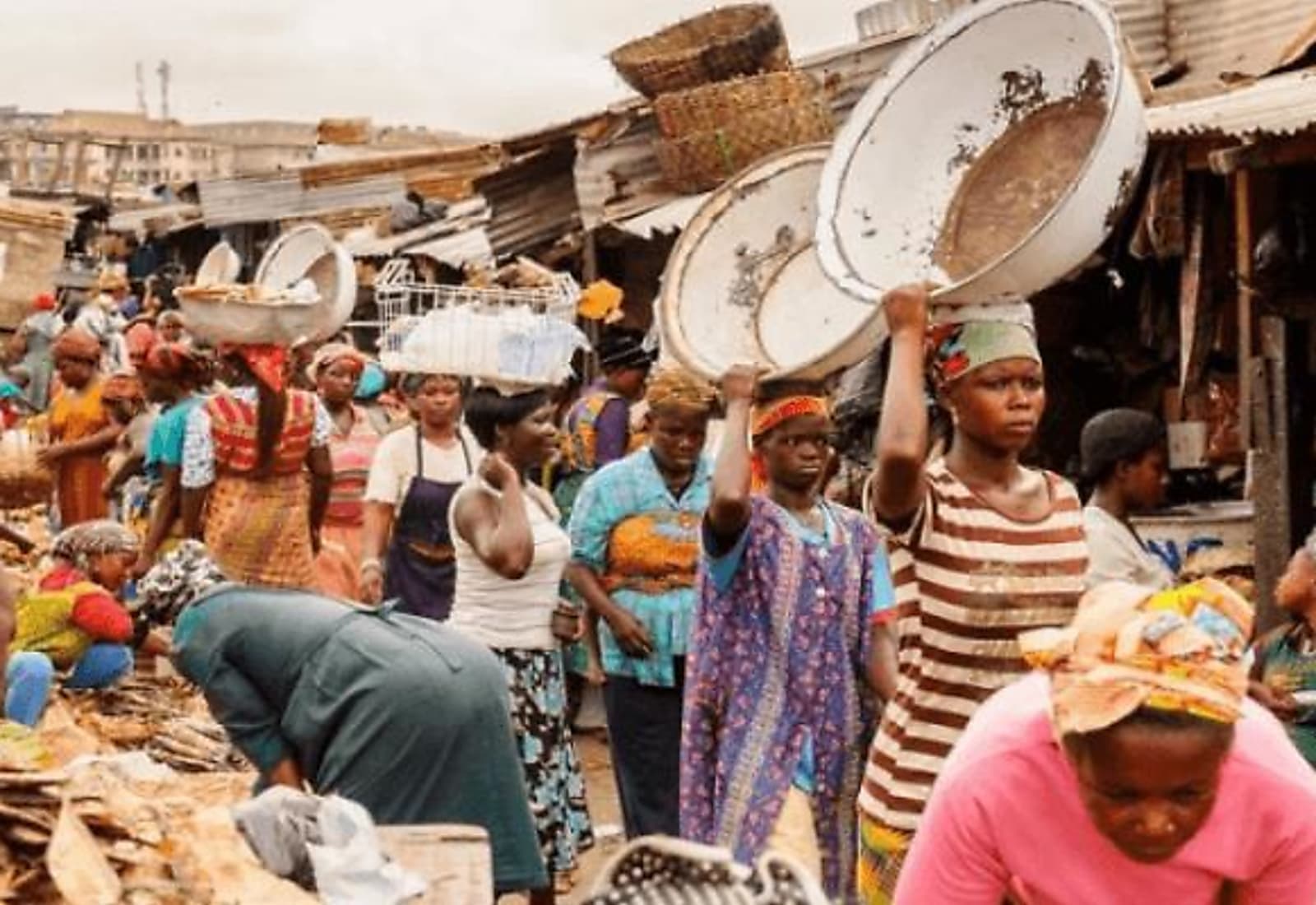
A Nigerian earning the national minimum wage of ₦70,000 per month can no longer afford a single 50kg bag of local rice.
That sentence carries the weight of the food crisis that is reshaping daily life across Nigeria in 2026. According to the National Bureau of Statistics March 2026 Selected Food Price Watch report, the average price of a 50kg bag of local short-grain rice rose by 20.5% in a single month, climbing from ₦92,946 in February to ₦112,000 in March. Imported foreign rice rose to ₦133,975 in the same period.
The numbers are striking. The reality behind them is harder.
This article explains what is driving Nigeria's food price surge, how it is hitting households across different parts of the country, and what practical steps families can take to manage their spending without abandoning nutrition.
The Numbers: What Food Actually Costs Right Now
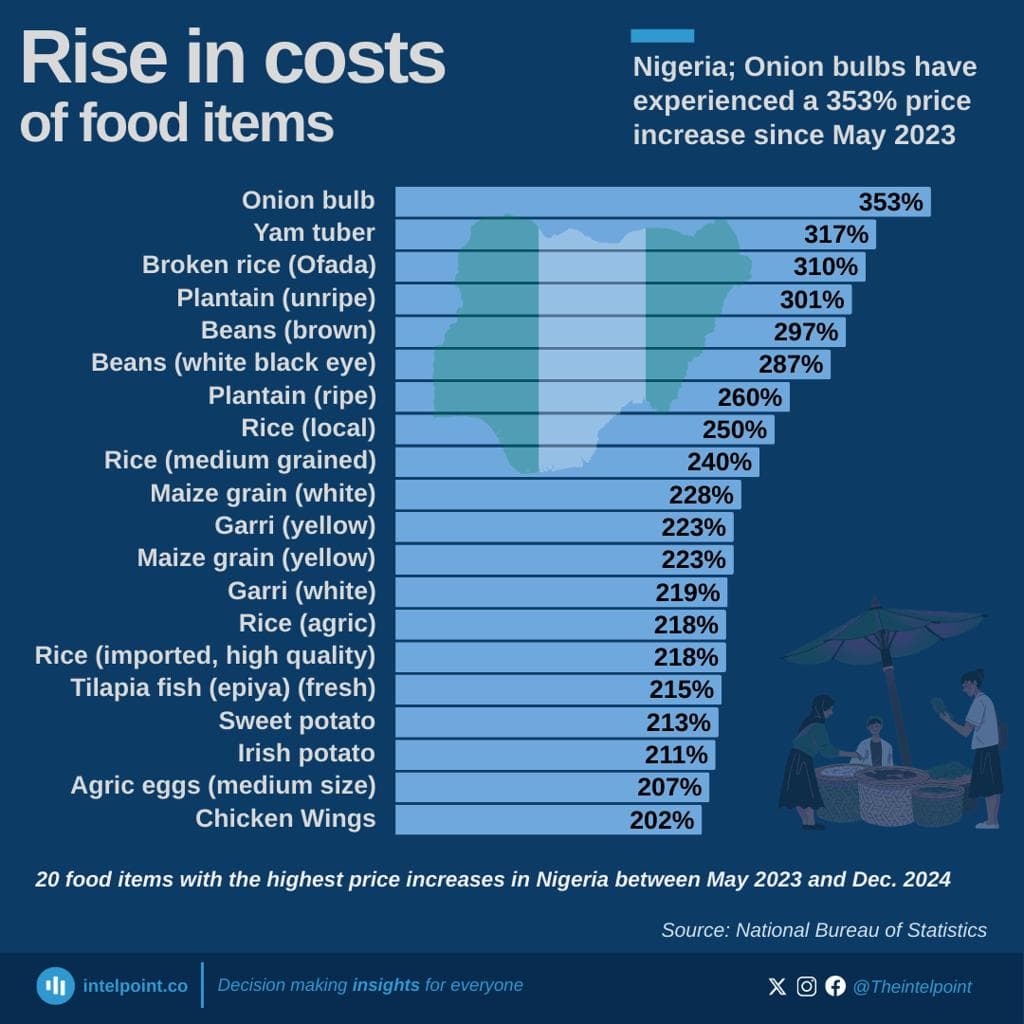
The rice figure is the headline, but the pressure extends across the entire food basket.
According to NBS data for March 2026:
- Brown beans (1kg): ₦1,325.85
- White garri, loose (1kg): ₦801.54
- Onion bulb (1kg): ₦1,153.14
- Fresh ginger (1kg): ₦5,541.25
- A crate of 30 eggs: up 2% month-on-month
In Lagos markets as of April 2026, frozen chicken was hovering around ₦6,000 per kilogram, while a medium-sized yam tuber was selling between ₦3,700 and ₦3,900. A paint bucket of garri was approximately ₦1,900.
The SBM Intelligence Jollof Index, which tracks the cost of cooking a pot of jollof rice for a family of five, reported that the average cost rose to ₦30,435 in the first quarter of 2026. That is a 19.4% increase over the six months to March.
It is worth noting that there is variation across markets and regions. Nairametrics market surveys conducted in May 2026 showed that a 50kg bag of rice was selling for as low as ₦53,000 to ₦55,500 in Abuja, while southern cities like Port Harcourt recorded higher prices in the ₦55,500 to ₦70,000 range. The NBS average of ₦112,000 reflects a national statistical mean that includes premium and wholesale pricing, and may not exactly match what you pay at a local market. However, the direction of the trend is clear regardless of which end of the price range applies to your area: food is more expensive in 2026 than it was in 2025, and significantly more expensive than it was two years ago.
Why Prices Keep Rising: The Real Causes
Understanding why food prices keep climbing matters because the solutions depend on the causes. There are five interconnected drivers at work.
Fuel prices and transport costs
This is the single most consistent driver. When fuel prices rise, the cost of moving food from farms in Kebbi, Benue, and Kogi to markets in Lagos, Abuja, and Port Harcourt rises with them. Petrol in major cities was trading above ₦1,300 per litre by early 2026, with diesel exceeding ₦1,500 per litre. Traders at Mile 12 Market in Lagos have been explicit: transport costs are passed on at every stage of the supply chain, from farm gate to wholesale to retail.
Food prices in Nigeria are, in significant part, a fuel problem wearing a food label.
The US-Iran conflict and global oil prices
Nigeria's food system is more connected to global events than most people realise. The US-Iran war has driven Brent crude oil above $110 per barrel, increasing fuel production costs and logistics expenses worldwide. SBM Intelligence's Jollof Index report explicitly links the Q1 2026 food price surge to global energy shocks from the Middle East conflict.
Naira depreciation and import costs
Nigeria imported N7.65 trillion worth of food in 2025. When the naira weakens against the dollar, every imported food item, from parboiled rice to vegetable oil to wheat, becomes more expensive at the point of entry. Even locally produced food is affected because fertilisers, pesticides, and farming equipment are largely imported and priced in foreign currency.
Abuja-based economist Ibrahim Yusuf put it plainly: "Exchange rate volatility has significantly increased the cost of imported food and agricultural inputs."
Insecurity and farming disruptions
In Nigeria's food-producing belt, including parts of the North-West, North-East, and Middle Belt, insecurity has disrupted farming activity for several years. Farmers who cannot access their land cannot harvest food. Fewer harvests mean lower supply. Lower supply pushes prices up. The connection is direct and persistent.
Local production challenges
Over 60 rice mills have reportedly closed as local producers struggle to compete with cheaper imports. Paddy prices collapsed by 51% to around ₦350,800 per tonne from a peak of ₦720,000 in 2025, making rice farming less profitable and causing many farmers to switch to other crops. A March 2026 USDA report projected that Nigeria's rice cultivation area would drop by 7% to 4.2 million hectares in the 2026/2027 season, down from 4.5 million hectares.
Cheaper imports provide short-term price relief but undermine the local farming base that provides long-term food security. Nigeria is running both problems simultaneously.
What This Looks Like in Real Households
The statistics tell one story. The people living inside those statistics tell another.
One respondent quoted in the SBM Jollof Index report summarised it this way: "We now eat when we are hungry. There is no 'can I have more?' You just manage the portion you are given."
Across urban Nigeria, families are making adjustments that are invisible in aggregate data: smaller portions, fewer protein sources, switching from rice to cheaper carbohydrates like eba or semo, skipping meals entirely on tight days, and stretching ingredients further than they should have to go.
A trader at Mile 12 Market, Odion Michael, described the situation with unusual clarity: "Consumers are happy when prices fall, but traders are weeping. We want prices to be stable, not jumping or falling suddenly. Price stability helps us plan our business." Stability is the word that appears nowhere in Nigeria's current food pricing landscape.
Practical Steps Households Can Take Right Now
No individual household can fix the structural causes of Nigeria's food inflation. But there are steps that help.
Buy in bulk where possible. For staples like rice, beans, and garri, buying in larger quantities when prices are momentarily lower saves money over time. Coordinate with neighbours or family members to split bulk purchases.
Diversify protein sources. Beans, eggs, and fish are generally more affordable than chicken and red meat. Rotating protein sources based on current market pricing reduces the weekly food bill without reducing nutritional quality significantly.
Shop at source markets. Prices at Mile 12, Oyingbo, and Bodija wholesale markets are almost always lower than neighbourhood retail shops. For families within reach of major food hubs, buying directly from distributors cuts out at least one markup.
Reduce food waste actively. Studies consistently show that a significant proportion of household food budgets are effectively wasted through spoilage, over-preparation, and poor storage. Investing in airtight containers, a small chest freezer, or proper food rotation reduces the effective cost of eating without requiring extra spending on food itself.
Track your food spending weekly. Many Nigerian households have no precise idea how much they spend on food per week. A simple notebook or phone note that records daily food purchases creates visibility that often reveals surprising areas for reduction.
Is There Any Relief in Sight?
The Central Bank of Nigeria's 2026 macroeconomic outlook, published in late 2025, projected that headline inflation would ease to approximately 12.94% in 2026, driven by falling food and fuel prices as supply conditions improve. That forecast assumed more stable security across food-producing regions, improved agricultural output from recent reform programmes, and continued naira stabilisation.
Some of those conditions have not fully materialised. The US-Iran conflict has kept global fuel prices elevated longer than most analysts expected at the start of the year. Food inflation stood at 14.31% year-on-year in March 2026, above the CBN's projected trajectory.
There are modest positive signals. Rice prices in some markets have moderated compared to early 2025 peaks. The Dangote refinery's increasing output is expected to reduce dependence on imported fuel over time, which should ease transport costs incrementally. And improved dry-season farming outputs in parts of the North have added some supply.
But structural relief, the kind that changes the underlying economics of food production and distribution in Nigeria, remains a medium-term project at best.
Conclusion
Nigeria's food crisis is not a single event. It is the accumulated result of fuel dependency, currency vulnerability, insecurity in farming regions, import dependence, and the ripple effects of global conflicts playing out on kitchen tables across Lagos, Kano, Enugu, and everywhere in between.
A bag of rice that costs more than a month's minimum wage salary is not a market quirk. It is a policy emergency that demands structural responses, not just short-term interventions.
For households navigating this reality today, the most useful tools are planning, flexibility, and community. The crisis will not resolve itself overnight.
But knowing what is driving it is the first step to managing it without being overwhelmed by it.
No comments yet. Be the first to spark the conversation.