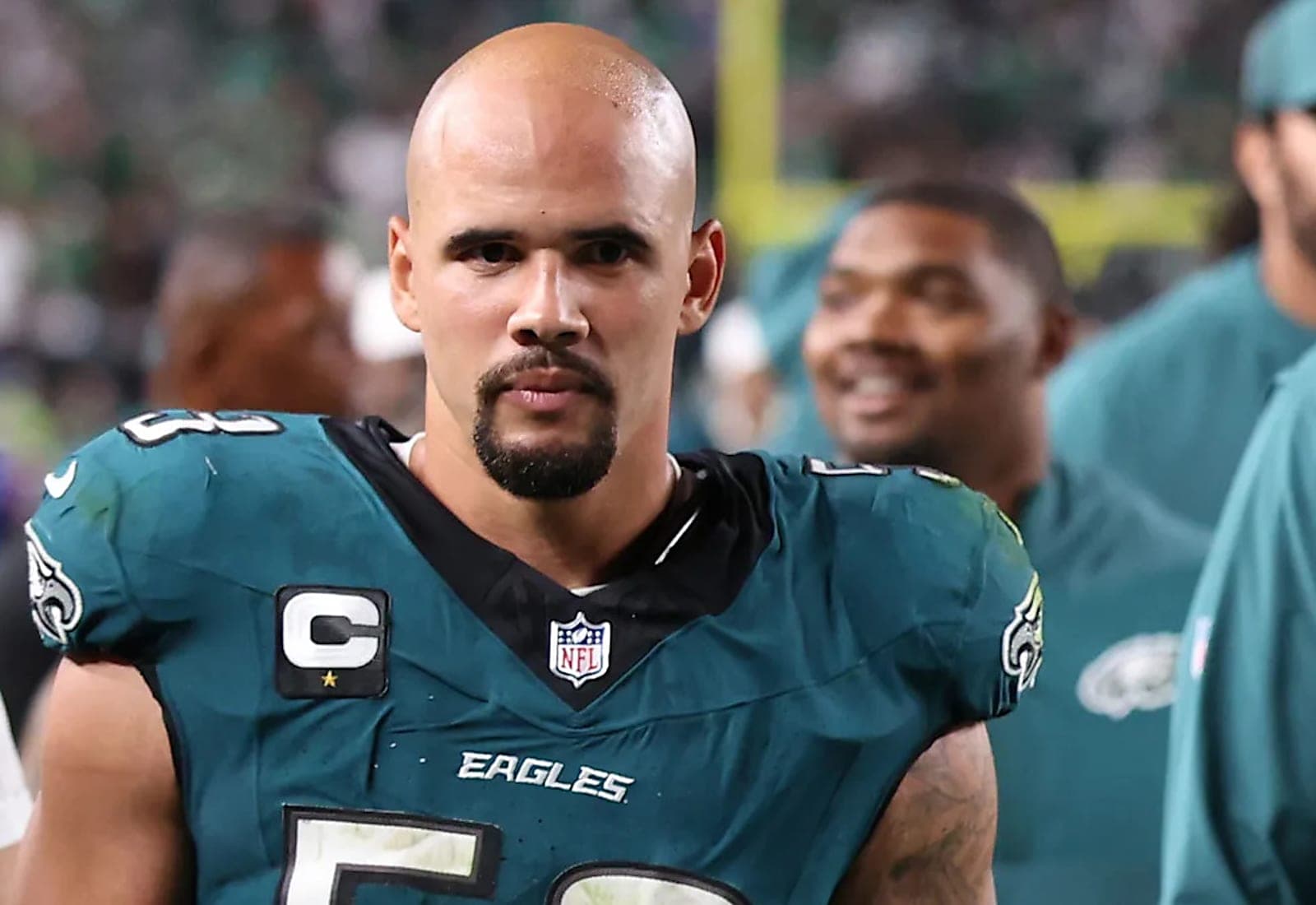
Zack Baun's latest comments about playing in Vic Fangio's defence sound modest on the surface, but they reveal something bigger about where he is in his career. According to NBC Sports Philadelphia, Baun says he now worries less about his assignment and can spend more time studying what the offence is doing, looking for ways to steal plays and influence the game beyond his basic responsibility. That shift matters because it usually marks the difference between a player who is surviving inside a system and one who has begun to master it. In Year Three, the challenge for Baun is no longer proving he belongs. It is proving he can turn understanding into leadership, consistency and even greater influence.
Why this story matters
This story matters because Baun's development is now central to what Philadelphia can expect from its defence. In his early NFL years, he was mostly known as a special teams contributor in New Orleans. In Philadelphia, under Fangio, he became something else: a full-time starter, a major playmaker and a trusted presence in the middle of a high-level unit.
What makes the moment interesting is that his next step is not simply statistical. Players can post big seasons without fully controlling the scheme around them. Baun's own words suggest he is now moving into a different phase, where instinct, communication and anticipation become as important as effort and physical ability. That is usually where good defenders separate themselves from genuinely important ones.
For readers outside the Eagles ecosystem, including in Nigeria where NFL interest continues to grow, the story offers a useful way to understand how elite American football players develop. Improvement in the NFL is rarely only about speed or strength. Often it is about mental processing, timing, communication and the trust a coaching staff places in one player to organise others.
Context and background
NBC Sports Philadelphia frames Baun's rise as one of the more striking success stories in Fangio's defence. Baun was not a full-time starter until he arrived in Philadelphia in 2024. Before that, his first four seasons in New Orleans had not established him as a headline linebacker. When he joined the Eagles, the expectations were far more modest than what followed.
Fangio saw inside-linebacker potential in him and was proved right. Baun became a full-time starter, reached All-Pro level and helped the Eagles win the Super Bowl. Even after that breakout year, there was still a natural question: was it a one-season leap, or the beginning of something durable? The 2025 season helped answer that. He was not named All-Pro again, but he remained a Pro Bowler and showed that the first big season had not been a fluke.
That context matters because Year Three is often where both players and coaches decide what a rise really means. A first great season can be surprising. A second strong season can confirm legitimacy. A third season becomes the point where responsibility deepens. In Baun's case, that deeper responsibility arrives just as the Eagles are adjusting to change around him.
What happened
The key details from the NBC report come from Baun's own reflections during organised team activities. He says he now understands the defence well enough to worry less about his basic task and focus more on what the offence is showing. He wants to find extra ways to make plays, whether that means jumping passing windows, tipping the ball or seeing opportunities before they fully open.
He also explains that his growth has gone beyond his listed position. He talks about communication, making sure messages move from safeties to outside backers to the defensive line when needed, and inserting himself into the organisational side of the scheme. That is a revealing detail because it shows a player beginning to think more like a traffic controller than a simple executor.
The report also places this in the context of change at linebacker. Nakobe Dean has left for the Raiders in free agency, and Baun speaks warmly about him, calling him a brother and crediting him with helping teach the system when he first arrived. Now the Eagles are looking to first-round pick Jihaad Campbell as Dean's replacement once he is healthy, which means Baun becomes even more important as a steadying presence.
Why it matters now
It matters now because the Eagles are not asking Baun to repeat the same story. They are asking him to lead the next version of the defence. The departure of Dean changes the emotional and organisational balance of the unit, and younger players will inevitably lean on veterans who understand the scheme deeply.
It also matters because Fangio's system rewards intelligence and coordination. This is not a defence where one player's athletic traits alone solve everything. Timing, spacing and communication matter constantly. When Baun says he is learning where the weaknesses of the defence are and how to connect information across the unit, he is describing the kind of knowledge that can stabilise a team over a long season.
There is also a wider NFL lesson here. Teams that remain strong defensively often do so by turning late bloomers or underused players into scheme-centred contributors. Baun's story is appealing not only because he improved, but because he improved through fit, coaching and understanding. That is a more repeatable model than relying on isolated athletic brilliance.
Deeper analysis
One of the most interesting parts of the report is Baun's emphasis on seeing the game more clearly rather than just playing harder. That is often the real sign of scheme maturity. Early on, many players spend so much energy making sure they are aligned correctly that they have less freedom to anticipate. Once the structure becomes second nature, attention can shift toward what the opponent is revealing before the snap and how to attack space more aggressively.
That is why Baun's comments about stealing plays matter. He is describing football vision, not freelancing. There is a difference between gambling and informed anticipation. Fangio's best defences have often depended on players who understand exactly when the structure allows them to be disruptive without breaking the scheme.
The leadership component is just as important. Dean's exit creates a vacancy not only in personnel but in familiarity. Younger linebackers and rotational defenders will need examples of how communication works in practice, not only in meetings. Baun appears to be moving into that role. His comments about making sure calls get through the defence suggest he now sees his job in collective terms.
For Nigerian readers who are newer to the NFL, this is a useful way to understand why some defenders become more valuable even when their headline numbers do not explode. A player can influence a defence by improving alignment, communication, confidence and reaction speed for everyone around him. Those contributions often matter as much as sacks or interceptions.
Baun's rise also says something about coaching. Fangio identified traits in him that previous usage had not fully unlocked. That is a reminder that player development is not always about discovering entirely new talent. Sometimes it is about placing a player in the right system and then giving him enough time to grow inside it.
What happens next
The next step is whether Baun can translate this deeper command into another high-level season while carrying more visible responsibility. The Eagles will need his production, but they will also need his calm, communication and ability to help integrate new pieces around him.
Observers should watch how he operates early in the season, particularly in moments when the defence has to adjust quickly or compensate for injuries and inexperience around him. If Baun continues to sound like a player who sees the whole picture, the real proof will be whether the Eagles look organised because he is helping hold that picture together.
There is also the Jihaad Campbell angle. As the younger linebacker grows into a larger role, Baun's influence may become even more important off the stat sheet. Good defences need a bridge between coaching intention and on-field execution. Baun is increasingly positioned to be that bridge.
Final takeaway
Zack Baun's Year Three story is not simply about trying to repeat a breakout season. It is about what happens after a player proves he belongs and starts being asked to organise more of the game around him.
That is why his comments matter. They show a defender who is moving from responsibility to command, from production to leadership, and from system participant to system voice. For the Eagles, that shift may matter just as much as any box-score total.
No comments yet. Be the first to spark the conversation.