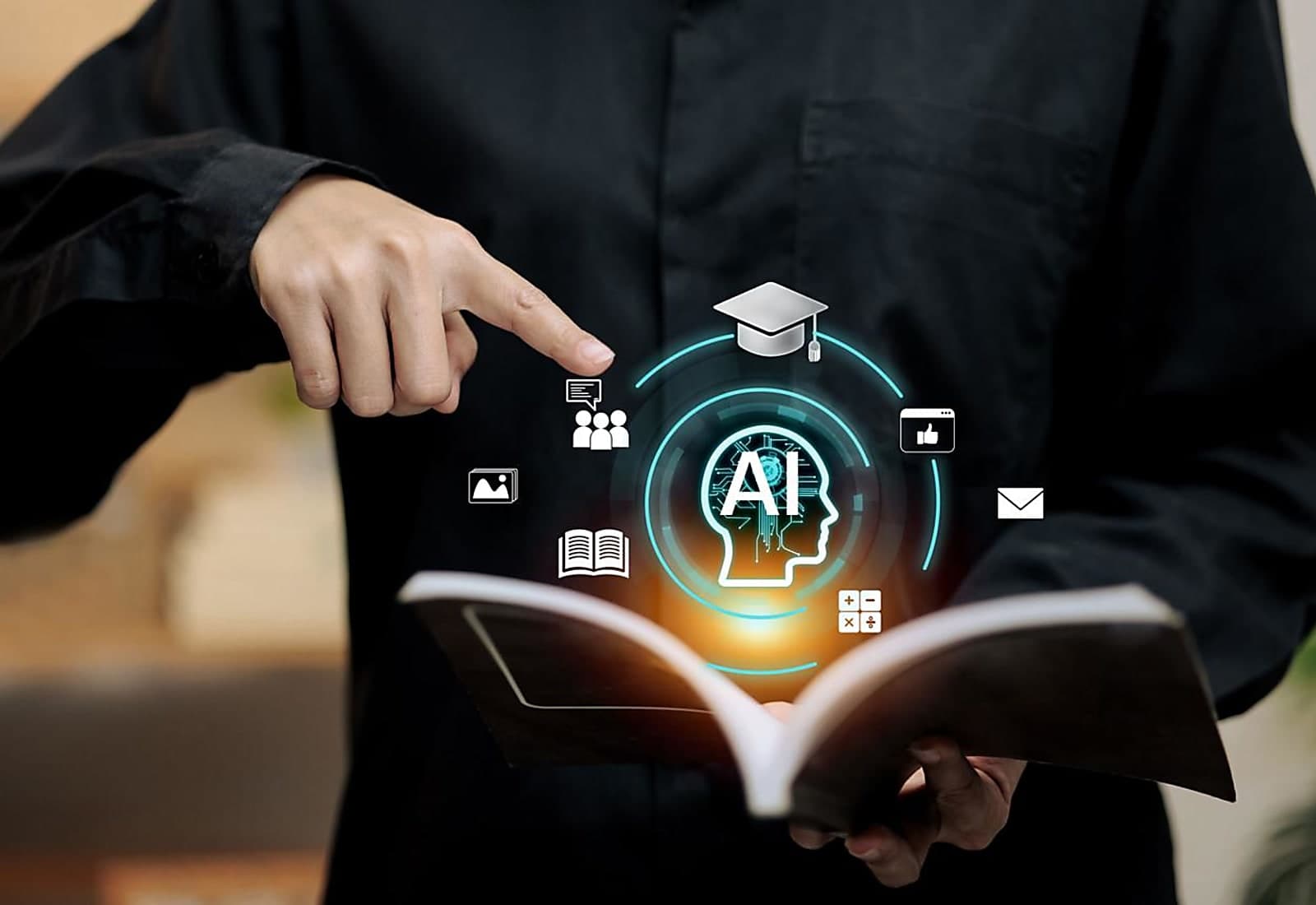
Artificial intelligence is quietly transforming modern education in ways many schools are only beginning to fully understand.
Across classrooms, universities, online courses, and private study environments, students are increasingly relying on AI tools to:
- summarise notes,
- solve assignments,
- explain difficult topics,
- generate essays,
- create presentations,
- write code,
- and prepare for exams.
For many students, AI has become something like a personal academic assistant available at any time.
But while the technology is improving learning efficiency for some students, it is also creating growing concern among teachers and institutions about plagiarism, dependency, academic dishonesty, and the future of genuine learning itself.
The debate is no longer theoretical.
AI is already reshaping education in real time.
Students Are Studying Differently Now
One of the biggest changes AI introduced is speed.
Tasks that previously took hours can now sometimes be completed in minutes with the help of generative AI systems.
Students increasingly use AI tools to:
- simplify complex topics,
- generate revision materials,
- create practice questions,
- organise research,
- and receive personalised explanations.
For many learners, especially those struggling with difficult subjects, AI can feel less intimidating than traditional classroom environments.
Unlike teachers or classmates, AI systems are available instantly and can repeat explanations endlessly without judgment.
That accessibility has made AI especially attractive to students balancing:
- academic pressure,
- part-time work,
- financial stress,
- or overloaded schedules.
AI Is Also Improving Learning for Some Students
Supporters of AI in education argue the technology can genuinely improve learning outcomes when used responsibly.
Students who previously struggled with:
- mathematics,
- coding,
- writing,
- language learning,
- or research organisation
can now receive personalised support much faster.
AI tools can also adapt explanations to different learning styles.
For example, a student confused by a scientific concept may request:
- simpler explanations,
- visual analogies,
- practice examples,
- or step-by-step breakdowns.
That flexibility can improve confidence and accessibility significantly.
Some educators believe AI may eventually become one of the most powerful learning-support technologies ever introduced into education systems.
But Schools Are Growing Worried About Cheating
The biggest concern, however, involves academic dishonesty.
Teachers and universities worldwide are increasingly dealing with assignments partially or fully generated using AI systems.
Students now use AI to:
- write essays,
- solve homework,
- generate project ideas,
- complete coding tasks,
- and even answer examination questions.
This creates a major challenge for schools trying to evaluate genuine understanding.
Traditional homework systems become less reliable when students can generate polished answers instantly without fully engaging with the material themselves.
Some institutions have already responded by:
- redesigning assessments,
- increasing oral examinations,
- using handwritten tests,
- and implementing AI-detection systems.
However, detection technology itself remains imperfect.
The Line Between "Help" and "Cheating" Is Becoming Blurry
One reason the issue is so complicated is because AI does not fit neatly into traditional definitions of cheating.
Using AI to:
- explain difficult concepts,
- organise ideas,
- or assist with revision
may genuinely support learning.
But using AI to generate complete assignments submitted as original work creates obvious ethical concerns.

The challenge is that the boundary between assistance and dishonesty often becomes unclear.
For example:
- Is AI-generated grammar correction acceptable?
- What about AI-assisted research summaries?
- What about partially AI-written essays?
- Or AI-generated coding suggestions?
Schools are now struggling to create policies that reflect how rapidly the technology is evolving.
Teachers Are Being Forced to Adapt Quickly
Educators themselves are now under pressure to adapt faster than many expected.
Some teachers fear AI may weaken:
- critical thinking,
- writing ability,
- problem-solving skills,
- and independent analysis.
Others believe resisting AI completely is unrealistic.
Instead, many experts argue schools should teach students:
- how to use AI responsibly,
- how to verify information,
- and how to combine AI assistance with genuine understanding.
The educational system may eventually need to evolve from memorisation-heavy models toward:
- creativity,
- reasoning,
- discussion,
- interpretation,
- and applied thinking.
Because if AI can instantly provide factual answers, schools may increasingly focus on what humans uniquely contribute beyond information retrieval alone.
Nigerian Students Are Also Embracing AI
The AI education shift is happening rapidly in Nigeria as well.
University students, secondary-school learners, freelancers, and digital professionals increasingly use AI tools for:
- assignments,
- project research,
- coding support,
- exam preparation,
- and content creation.
For many Nigerian students facing:
- overcrowded classrooms,
- limited academic support,
- and inconsistent educational resources,
AI tools can feel highly empowering.
However, concerns about misuse are also growing.
Some lecturers and educators already report difficulties distinguishing between:
- authentic student writing,
- and heavily AI-generated submissions.
The conversation around AI ethics in Nigerian education is therefore likely to become much bigger over the next few years.
AI May Permanently Change Education
Many analysts now believe education may never fully return to its pre-AI structure.
The technology is advancing too quickly and becoming too accessible.
Future classrooms may increasingly integrate AI directly into:
- tutoring,
- assessment,
- revision systems,
- personalised learning,
- and digital classrooms.
Students entering universities today may eventually work in industries where AI collaboration becomes completely normal.
That reality is pushing educators to reconsider what education should actually prioritise in an AI-driven world.
The Psychological Side Is Also Important
Another concern involves dependency.
Some experts worry students may become overly reliant on AI systems for:
- writing,
- thinking,
- research,
- and problem-solving.
If students stop struggling through difficult intellectual tasks themselves, long-term learning development could weaken.
Part of education involves:
- frustration,
- experimentation,
- failure,
- and gradual understanding.
AI convenience may reduce some of those developmental experiences if used carelessly.
That is why many educators believe balance is becoming increasingly important.
What Happens Next
Schools, universities, and governments worldwide are now trying to determine:
- how AI should be integrated into education,
- what counts as acceptable use,
- how assessments should evolve,
- how students should be trained ethically,
- and how genuine learning can still be measured.
The answers remain uncertain.
Final Analysis
Artificial intelligence is not simply becoming another educational tool.
It is fundamentally reshaping how students:
- access information,
- complete work,
- solve problems,
- and approach learning itself.
The technology offers enormous potential for accessibility and personalised education.
But it also creates difficult questions around honesty, intellectual development, and the meaning of academic achievement in the AI era.
One thing, however, is already becoming clear.
The future classroom will look very different from the one previous generations experienced, and AI will almost certainly be part of it.
AI Tools Are Quietly Changing How Students Study, Learn, and Cheat matters because education stories become more useful when they explain consequences, context, and what readers should watch after the initial headline.
What is this education article about?
Artificial intelligence tools are rapidly changing how students study, learn, complete assignments, and even cheat, raising new questions for schools and educators worldwide.
Why does this story matter?
AI Tools Are Quietly Changing How Students Study, Learn, and Cheat matters because education stories become more useful when they explain consequences, context, and what readers should watch after the initial headline.
When was this article published or updated?
It was published on 15 May 2026 and last updated on 15 May 2026.
Does this page include source references?
Yes. Source links or source details are shown on this page.
Where can readers find related Century Blog coverage?
Readers can continue with related coverage in the same topic area, including JAMB summons 94 candidates over alleged registration fraud: implications for Nigeria's higher‑education admissions and Nigeria's Equity Market Slides 1.02% as Investors Lose N1.62 Trillion in Mid‑Week Trading.
No comments yet. Be the first to spark the conversation.