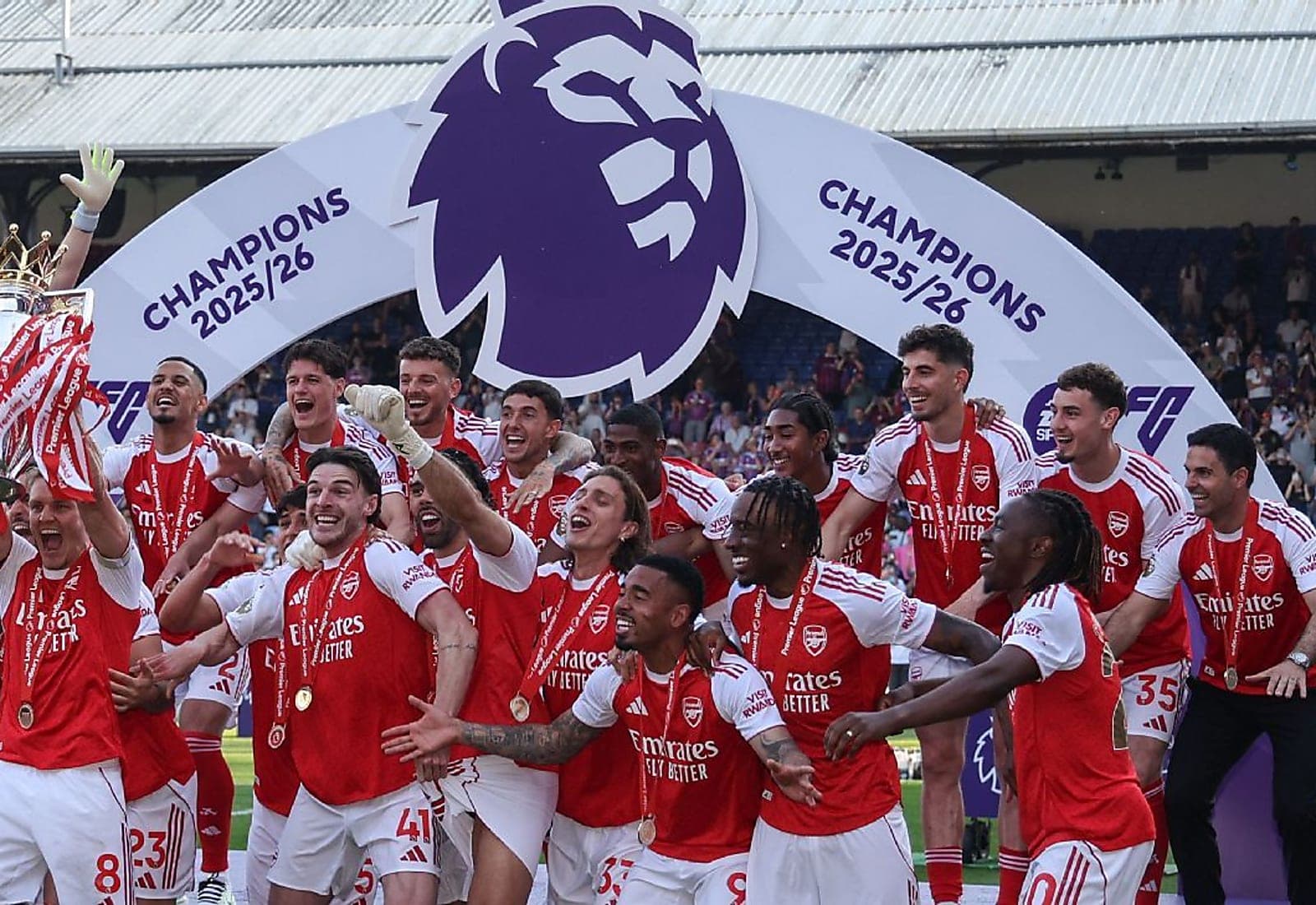
Arsenal's title-winning season did not end with a message of caution from the club's owners. According to reporting from the Guardian, co-chair Josh Kroenke said Arsenal intend to strengthen again rather than stand still after finally ending their long Premier League wait. That matters because when owners speak immediately after a breakthrough season, they are not only commenting on transfers. They are signalling what kind of cycle comes next.
For Arsenal supporters, the message is straightforward: the club do not want the title to be remembered as a peak followed by retreat. For Nigerian readers, the story matters because Premier League ownership decisions shape much more than the clubs themselves. They influence the transfer market, fan attention, sponsorship culture, sports-business discussion and the ambitions of supporters who follow English football as closely as local politics or entertainment.
Why this story matters
Ownership comments can often sound ceremonial, especially after a trophy lift. But the timing of Kroenke's message makes it more significant than the usual public-relations line. Arsenal had just delivered their first Premier League title in 22 years. The easy thing for any ownership group in that situation would be to celebrate the milestone, praise the manager and quietly rely on momentum to carry the next season.
Instead, the message coming out of the club was that more work still needed to be done. That matters because it tells supporters and rivals alike that Arsenal see the title as the beginning of a stronger era, not the end of a project. In elite football, that distinction is huge. Titles change expectation levels. They also expose weaknesses that were easier to excuse during the chase than after the win.
For readers in Nigeria, the relevance is direct. Arsenal are one of the most widely followed clubs in the country. When the club talks about investment, recruitment and next-phase ambition, Nigerian fans, media platforms and sports businesses pay attention almost immediately.
Context and background
The Guardian reported in late May 2026 that Josh Kroenke had promised Arsenal would strengthen their squad even if they won the Champions League, after already securing a historic league title. That context is important. Arsenal were not making the pledge from a position of decline or panic. They were making it from a position of success.
That helps explain why the statement carried weight. Arsenal's ownership, through Kroenke Sports & Entertainment, has spent years facing questions from supporters about ambition, timing and whether the club were being pushed hard enough to compete with Europe's elite. Since taking full control, the Kroenke family have had to persuade supporters that their model is not merely stable, but genuinely competitive.
The Guardian's report also highlighted that Josh Kroenke linked the next step not only to transfer spending, but to broader club development. That included support for Mikel Arteta, ongoing squad improvement and plans to invest in the Emirates Stadium experience. In other words, the message was not simply "more money is coming." It was "the club wants to act like a long-term elite institution."
What happened
According to the Guardian, Josh Kroenke said there could be no standing still even after Arsenal's domestic success. He spoke about the importance of continual improvement, praised Arteta's cultural impact and signalled that renewing the manager's contract remained a major priority. The report also pointed to investment thinking beyond transfers, including the stadium environment and the wider supporter experience.
That matters because elite clubs are no longer judged only on how much they spend in a window. They are judged on whether their decisions fit a coherent sporting model. Arsenal's public position suggested they wanted to present themselves as a club entering a mature phase of growth rather than reacting emotionally to one successful season.
There is also a psychological layer here. A title win can create satisfaction, but it can also create urgency. Rivals regroup. Agents raise demands. Supporters expect reinforcements. Internal standards shift. By promising more, the owners effectively placed themselves inside that higher-pressure conversation.
Why it matters now
The immediate significance of the story is that Arsenal's next transfer and infrastructure choices will now be measured against a public promise. Supporters can point back to the owners' words and ask whether the club acted consistently with them. That creates accountability.
It also matters because Arsenal's success changes the market they operate in. Players who might once have viewed the club as a near-miss project may now see a champion with momentum. Commercial partners may treat Arsenal differently. The club's recruitment staff may have more room to act decisively because the football case is easier to make.
For Nigerian fans, this matters in practical ways too. Arsenal's popularity in Nigeria means any new recruitment drive, stadium brand refresh or commercial expansion can quickly influence local fan culture. Shirt demand, fan content, watch-party interest, social-media discussion and sports-betting narratives all intensify when a club enters a season as reigning champion rather than hopeful challenger.
That does not mean every ownership promise leads to visible transformation. But it does mean the next phase will be watched closely from Nigeria as much as from north London.
Deeper analysis
The smarter way to read the Kroenkes' message is not as a simple spending promise, but as a statement about competitive continuity. Arsenal's challenge is no longer proving they can build a title-winning team. It is proving they can avoid the complacency and strategic drift that often follow a breakthrough.
That is harder than it sounds. Once a club wins, every weakness gets reinterpreted through the lens of preservation. Depth suddenly matters more. Squad age profiles matter more. Contract timing matters more. The balance between short-term additions and long-term succession planning becomes more delicate.
This is where ownership vision becomes important. If the owners truly support continued strengthening, they must decide what "more" actually means. Does it mean marquee signings? Better depth? Improved medical and performance infrastructure? Academy integration? Smarter stadium investment? Probably some combination of all of those.
The Guardian's reporting suggests Arsenal want to think in those broader terms. That is encouraging, because clubs that rely only on transfer headlines often lose coherence quickly. The stronger model is one where football strategy, facilities, commercial growth and supporter experience move in the same direction.
For Nigerian readers, there is also a lesson in how modern football power works. Clubs do not sustain dominance through emotion alone. They do it through capital, governance, planning and public clarity. Ownership statements matter because they show whether the club understands that success requires renewal even at the moment of celebration.
What happens next
The next thing to watch is whether Arsenal's actions match the promise. Supporters will assess the summer through a few clear questions.
Will the club add players in areas where the squad still looks light? Will Arteta get the level of support implied by the public messaging? Will the owners move quickly on contract decisions? Will the club follow through on stadium and supporter-experience plans rather than treating them as background talking points?
Those questions matter because the first season after a breakthrough often defines how history remembers the breakthrough itself. If Arsenal build well, the title becomes the foundation of an era. If they hesitate, the title risks becoming a high point followed by renewed instability.
In Nigeria, fans and content creators will likely follow every stage closely. Transfer rumours, sponsorship expansion, pre-season messaging and squad depth debates all tend to travel quickly in the Arsenal ecosystem. That makes the story bigger than an ownership quote. It becomes part of the club's global expectation cycle.
Final takeaway
Arsenal's owners did more than celebrate a trophy. They told supporters that winning the title should not lead to comfort. That is the right message for a club that wants to stay at the top.
According to the Guardian's reporting, Josh Kroenke's position was clear: strengthening must continue, Arteta remains central and the wider club should keep evolving. For Nigerian readers, that matters because Arsenal are not just a foreign team on television. They are a major part of local football culture and sports conversation.
The real test now is not the statement itself. It is whether the club acts like a champion that intends to keep building rather than one that expects applause to carry it forward.
Continue reading
- Arsenal's Victory Parade Shows How a Title Win Travels Far Beyond London
- Hearts Pursue Ghuendouz as Celtic Target Duran - Implications for Nigerian Football
- USA‑Paraguay World Cup Opener Sets New US Sports Viewership Benchmarks
No comments yet. Be the first to spark the conversation.