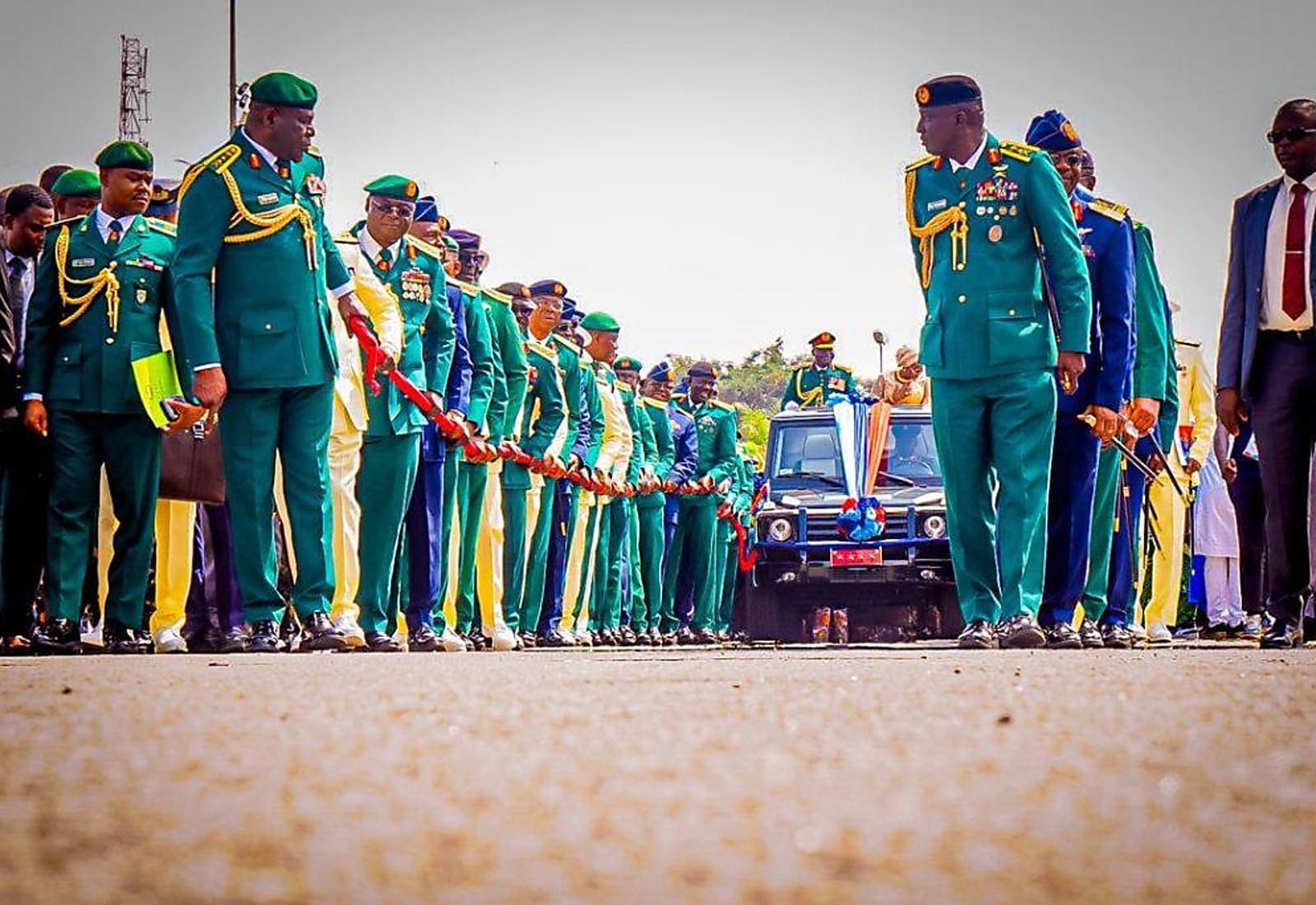
Nigeria's Federal Government has formally charged six individuals, including military-linked suspects, over an alleged plot to overthrow President Bola Tinubu's administration in one of the country's most sensitive treason cases in recent years.
The case immediately triggered intense national debate because coup allegations carry enormous historical weight in Nigeria.
For decades, military interventions shaped the country's political history through:
- instability,
- fear,
- authoritarian rule,
- and democratic disruption.
Although Nigeria has remained under civilian rule since 1999, the latest allegations revived memories many Nigerians hoped belonged firmly in the past.
And beyond the courtroom headlines lies a deeper national anxiety involving:
- insecurity,
- economic hardship,
- political distrust,
- military pressure,
- and fears about long-term democratic stability.
Because in Nigeria, the word "coup" still carries emotional power.
What Authorities Are Alleging
According to the Federal Government, the accused individuals were allegedly involved in plans aimed at violently removing President Bola Tinubu from office.
The charges reportedly include:
- treason,
- conspiracy,
- terrorism-related offences,
- and attempts to destabilise the Nigerian state.
Among the suspects are said to be:
- retired military officers,
- security-linked individuals,
- and civilian collaborators.
Authorities allege the defendants attempted to coordinate activities capable of threatening Nigeria's constitutional order.
The suspects, however, reportedly pleaded not guilty during their arraignment.
At the centre of the case is the accusation that the group discussed or supported efforts to overthrow the democratically elected government through unconstitutional means.
If proven, the allegations would represent one of the most serious political-security cases Nigeria has faced in years.
Why Coup Allegations Hit Nigerians Differently
Nigeria's political history explains why stories like this generate immediate national tension.
The country experienced multiple coups after independence, especially during:
- the 1960s,
- 1970s,
- 1980s,
- and 1990s.
For older generations, military rule is associated with:
- censorship,
- political fear,
- economic instability,
- detention,
- and weakened democratic freedoms.
Even younger Nigerians who never lived through military regimes still understand coups as symbols of national instability.
That historical memory remains powerful.
This is why any suggestion of military interference in politics instantly becomes emotionally explosive.
Nigeria's Democracy Is Still Relatively Young
Although Nigeria returned to democratic rule in 1999, the country's democratic system is still considered relatively young compared to many Western democracies.
Over the years, Nigeria's civilian governments faced repeated pressure involving:
- corruption scandals,
- insecurity,
- electoral disputes,
- economic hardship,
- and public distrust.
Yet despite those challenges, uninterrupted democratic rule became one of the country's biggest political achievements.
Any alleged coup activity therefore feels symbolic far beyond the individuals involved.
It touches the legitimacy of democracy itself.
Why Tinubu's Government Is Under Pressure
President Bola Tinubu's administration is currently navigating one of Nigeria's toughest economic periods in recent years.
The government's major reforms, including:
- fuel-subsidy removal,
- currency reforms,
- and broader economic restructuring,
have triggered severe cost-of-living pressure nationwide.
Millions of Nigerians continue struggling with:
- inflation,
- rising food prices,
- transportation costs,
- electricity challenges,
- and unemployment.
Supporters of the government argue painful reforms are necessary for long-term economic recovery.
Critics, however, believe hardship is increasing public frustration dangerously.
In politically tense environments, governments often become especially sensitive to:
- security threats,
- unrest,
- and institutional instability.
The Military Is Already Under Intense Pressure
Nigeria's armed forces are simultaneously battling:
- insurgency,
- banditry,
- kidnapping,
- separatist tensions,
- and organised criminal networks.
Military personnel operate under extremely difficult conditions across multiple regions.
Long-term security pressure can affect:
- morale,
- institutional confidence,
- operational fatigue,
- and public perception.
Some analysts believe prolonged national insecurity often creates deeper stress inside military structures over time.
That does not automatically mean coup risk becomes likely.
But it does explain why authorities treat internal military investigations seriously.
Why the Government Is Sending a Strong Message
By prosecuting the suspects publicly, the government appears determined to send a clear signal.
Nigeria's democratic system, officials insist, must remain protected from unconstitutional threats.
The prosecution also serves another purpose: reassuring both Nigerians and international observers that the government remains firmly in control.
Political stability matters enormously for:
- investment,
- diplomacy,
- business confidence,
- and international reputation.
Any perception of instability inside Africa's largest economy quickly attracts global attention.
Coup Anxiety Is Rising Across Africa
Another reason the case feels important is because Africa recently experienced a wave of military takeovers.
Countries including:
- Niger,
- Mali,
- Burkina Faso,
- and Gabon
all witnessed coups or military-led power transitions within recent years.
That broader regional trend increased sensitivity toward military-related political rumours across the continent.
Nigeria's size and influence make its stability especially important regionally.
If instability affects Nigeria, the consequences could spread economically and politically across West Africa.
Nigerians Online Remain Divided
Public reaction to the case has been mixed.
Some Nigerians believe the government acted correctly by aggressively prosecuting any genuine threat against democracy.
Others remain skeptical.
Critics online questioned:
- the evidence,
- political motives,
- or whether some accusations may eventually prove exaggerated.
Nigeria's history created deep public suspicion around high-profile political-security cases generally.
That skepticism reflects wider institutional distrust many citizens already feel toward political elites.
Why Treason Charges Are Extremely Serious
Under Nigerian law, treason remains among the gravest criminal accusations possible.
Historically, coup-related offences carried severe punishment including:
- long prison terms,
- military tribunals,
- and even execution during previous military eras.
Today, such cases move through civilian courts under constitutional procedures instead.
Still, treason allegations remain politically explosive because they directly challenge state authority itself.
The government is therefore likely to pursue the case aggressively.
What Happens Next
Attention will now shift toward:
- court proceedings,
- evidence presentation,
- witness testimony,
- bail applications,
- and broader security investigations.
Analysts will also monitor whether additional suspects become linked to the alleged conspiracy.
The case could eventually become one of Nigeria's most closely watched political-security trials in recent memory.
Final Analysis
The prosecution of six military-linked suspects over an alleged plot against President Tinubu is about more than one courtroom case.
It touches some of Nigeria's deepest national fears involving:
- democracy,
- military power,
- political trust,
- insecurity,
- and economic instability.
Whether the allegations ultimately lead to convictions or collapse under legal scrutiny, the story already reveals one uncomfortable reality:
Even after more than two decades of civilian rule, the shadow of military intervention still lingers inside Nigeria's political consciousness.
And in a country facing economic pressure and security uncertainty simultaneously, stability itself may now be one of Nigeria's most valuable national assets.
Six Military Officers Charged With Plot to Overthrow Tinubu matters because Nigeria stories often affect public trust, institutional credibility, and the way readers interpret wider national decisions. The deeper value comes from understanding what may change after the first burst of reaction.
What is this nigeria article about?
Nigeria has formally charged six military-linked suspects with treason and terrorism over an alleged coup plot targeting President Bola Tinubu, raising serious questions about democracy, security, and political stability.
Why does this story matter?
Six Military Officers Charged With Plot to Overthrow Tinubu matters because Nigeria stories often affect public trust, institutional credibility, and the way readers interpret wider national decisions. The deeper value comes from understanding what may change after the first burst of reaction.
When was this article published or updated?
It was published on 22 May 2026 and last updated on 22 May 2026.
Does this page include source references?
Yes. Source links or source details are shown on this page.
Where can readers find related Century Blog coverage?
Readers can continue with related coverage in the same topic area, including Oyo Monarchs Call for Federal Military Base Amid Growing Insecurity and Mass School Kidnappings Reach Nigeria's South‑West: Security, Education and Economic Implications.
No comments yet. Be the first to spark the conversation.