Atlantic Ocean Heat Anomalies Signal Heightened Climate Risk for Nigeria
Unusually warm Atlantic waters-recorded at up to 5 °C above normal-have reignited discussion of a possible "Super El Niño" scenario. Even without a formal classification, the heat signal matters for anyone in Nigeria who depends on predictable rains, stable food prices or resilient coastal economies. This article unpacks the science, the uncertainties and the practical steps Nigerians can take.
Introduction
The Atlantic Ocean is a key driver of West African climate. When satellite observations reveal a broad swathe of water that is markedly hotter than the historical baseline, the ripple effects can be felt far inland. For Nigeria, a country already grappling with food‑price volatility, urban flooding and heat stress, the latest heat warning is more than a headline-it is a call to reassess preparedness across agriculture, infrastructure and public health.
Executive summary
- Satellite data show Atlantic surface temperatures 5 °C above normal in several sectors of the basin.
- The heat does not automatically confirm a Super El Niño, which is defined by Pacific, not Atlantic, conditions.
- Warmer seas can amplify moisture transport, potentially altering West African rainfall belts.
- Nigerian farmers may face altered planting windows; coastal communities could see shifts in fish stocks.
- Policymakers should integrate the heat signal into early‑warning systems, water‑management plans and food‑security strategies.
- Ongoing monitoring by the World Meteorological Organisation (WMO) and regional climate centres will clarify whether the anomaly persists.
Table of contents
- Why this story matters
- Context and background
- What happened
- Key facts readers should know
- Why it matters for Nigeria
- Wider African and global context
- Expert insight and practical implications
- What readers should watch next
- Frequently asked questions
- Conclusion
Why this story matters
Ocean temperature anomalies do not stay confined to the sea. Heat absorbed by the Atlantic can:
- Shift atmospheric circulation, influencing the position and intensity of the Inter‑tropical Convergence Zone (ITCZ).
- Increase atmospheric moisture, which can intensify both droughts and heavy‑rain events.
- Alter marine ecosystems, affecting fish migration patterns that support coastal economies.
For Nigeria, where agriculture accounts for roughly a third of GDP and where flood‑prone cities such as Lagos already strain under inadequate drainage, any factor that nudges the climate system warrants close scrutiny.
Context and background
El Niño vs. Atlantic heat
El Niño is traditionally defined by sea‑surface temperature (SST) anomalies in the central and eastern Pacific Ocean. A "Super El Niño" label is reserved for exceptionally strong Pacific events that have historically triggered severe weather worldwide. The Atlantic, however, is a separate basin that can modulate global weather patterns through teleconnections-long‑distance atmospheric links-but it does not define El Niño.
How Atlantic heat fits into the picture
When the Atlantic warms well above its climatological mean, several mechanisms come into play:
- Enhanced evaporation raises the amount of water vapour entering the lower troposphere.
- Latent heat release during condensation can energise tropical storms.
- Changes in sea‑level pressure can shift the West African monsoon trough, affecting the timing and distribution of the rainy season.
These processes are documented in peer‑reviewed literature and are the basis for the caution expressed by climate agencies when they flag Atlantic heat as a potential risk factor.
What happened
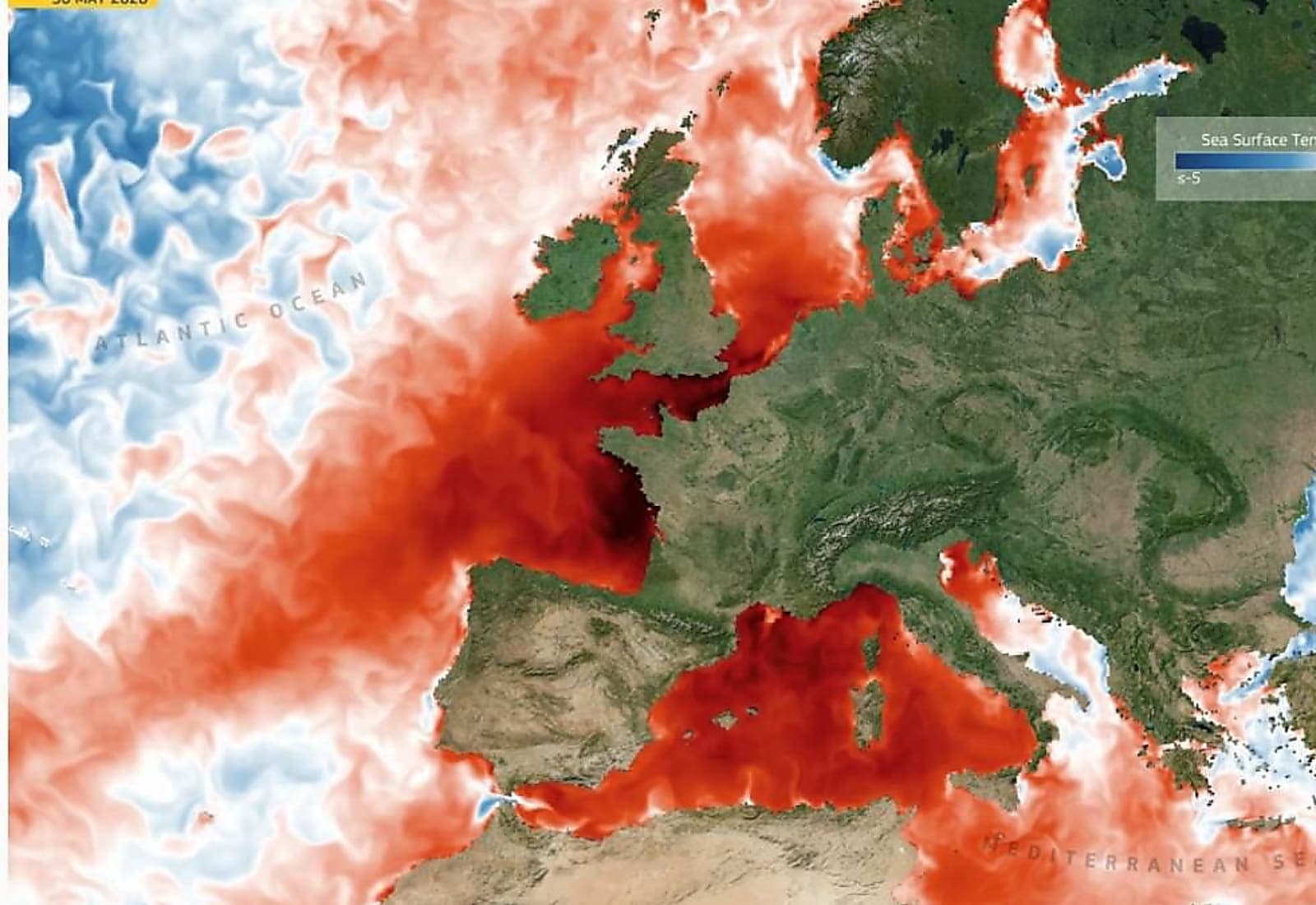
In early June 2026, satellite imagery released by a major European space agency highlighted a persistent temperature excess of up to 5 °C across the tropical Atlantic. The visual, a striking red‑orange overlay on a standard sea‑surface temperature map, quickly circulated through news wires and social media. Commentators linked the observation to the broader narrative of a looming Super El Niño, prompting a surge of public interest.
Three critical questions emerged:
- Is the anomaly genuine and sustained? Multiple independent satellite platforms confirmed the reading, suggesting the heat is not a fleeting spike.
- Is the magnitude sufficient to influence atmospheric dynamics? Historical case studies show that anomalies of 2-3 °C can already affect storm tracks; 5 °C is therefore noteworthy.
- Does the Atlantic signal align with Pacific conditions? At the time of reporting, Pacific SSTs remained near average, meaning the classic El Niño definition was not met.
The consensus among climatologists was that the Atlantic heat constitutes a significant warning signal, but not a definitive declaration of a Super El Niño.
Key facts readers should know
- Temperature anomaly: Up to 5 °C above the long‑term Atlantic average in the tropical sector.
- Geographic focus: The warm patch spans the Gulf of Guinea, the Caribbean Sea and the central Atlantic.
- Timeframe: Observed consistently over several weeks in June 2026.
- Scientific stance: The heat is a risk indicator, not a confirmed climate event.
- Potential pathways to Nigeria: Altered moisture fluxes, modified monsoon onset, and changes in coastal sea‑temperature‑driven fisheries.
- Monitoring bodies: World Meteorological Organisation (WMO), National Oceanic and Atmospheric Administration (NOAA), and the Nigerian Meteorological Agency (NiMet).
Why it matters for Nigeria
Agriculture
Nigeria's staple crops-maize, rice, yam and sorghum-depend on the June‑September rainy season. A shift in the ITCZ can lead to:
- Delayed onset of rains, compressing the planting window.
- Uneven distribution, where some states receive excess rain while others face deficits.
- Increased pest pressure, as warmer, wetter conditions favour insects and fungal diseases.
Farmers who rely on traditional calendars may need to adjust sowing dates, adopt drought‑tolerant varieties or invest in irrigation where feasible.
Flooding and urban infrastructure
Heavier, more concentrated rainfall can overwhelm drainage systems, especially in Lagos, Port Harcourt and other coastal megacities. Past flood events have shown that a a notable share increase in rainfall intensity can raise flood depth by several metres, exacerbating loss of life and property.
Fisheries and coastal livelihoods
Warmer sea‑surface temperatures influence the distribution of pelagic fish such as sardines and mackerel, which migrate toward cooler waters. Nigerian coastal communities that depend on these stocks may experience short‑term declines in catch volumes, prompting a need for adaptive fishing practices or diversification.
Energy demand and public health
Higher ambient temperatures drive up electricity consumption for cooling, stressing an already fragile power grid. Simultaneously, heat stress can aggravate cardiovascular and respiratory conditions, particularly in densely populated urban centres.
Wider African and global context
Across the Sahel, early‑season rain deficits have already triggered concerns about grain security. In East Africa, the 2024‑25 El Niño episode led to severe droughts in Ethiopia and Kenya. The Atlantic heat anomaly adds another layer of complexity, potentially amplifying these regional stresses.
Globally, the inter‑basin interaction between the Atlantic and Pacific is an active research frontier. Some climate models suggest that a warm Atlantic can pre‑condition the atmosphere, making it more receptive to Pacific El Niño development later in the year. While the scientific community cautions against deterministic predictions, the possibility underscores the need for integrated monitoring.
Expert insight and practical implications
Climate‑risk perspective
Dr Chinedu Okeke, senior climatologist at the Nigerian Meteorological Agency, notes:
"The Atlantic heat we are seeing is a clear reminder that the background climate state is becoming more energetic. Even without a formal El Niño label, the risk of erratic rainfall and flood‑related disruptions rises."
Agricultural recommendations
- Diversify crop calendars: Plant a portion of the crop early to hedge against delayed rains.
- Adopt climate‑smart varieties: Drought‑tolerant maize and early‑maturing rice can reduce exposure.
- Invest in water storage: Small‑scale reservoirs and rainwater harvesting can buffer dry spells.
Urban planning actions
- Upgrade drainage networks: Prioritise low‑lying neighbourhoods with historically poor flood response.
- Implement early‑warning SMS alerts: Coordinate with NiMet to disseminate real‑time flood forecasts.
- Promote green infrastructure: Urban trees and permeable pavements can mitigate runoff.
Fisheries management
- Monitor fish‑stock movements: Use satellite‑based sea‑temperature data to anticipate shifts.
- Encourage alternative livelihoods: Training programmes for aquaculture can reduce reliance on wild catches.
Energy sector guidance
- Strengthen grid resilience: Deploy demand‑response mechanisms during peak heat periods.
- Promote renewable cooling solutions: Solar‑powered fans and passive cooling designs lower electricity demand.
What readers should watch next
- Official outlooks from NiMet and the WMO - Look for updates on Atlantic SST trends and any emerging links to Pacific conditions.
- Seasonal rainfall forecasts - Pay attention to the June‑September monsoon outlook, especially any revisions to onset dates.
- Agricultural advisories - The Federal Ministry of Agriculture often releases planting calendars adjusted for climate signals.
- Flood‑risk bulletins - Local government agencies will issue alerts when river levels approach critical thresholds.
- Fish‑stock reports - The Nigerian Fisheries Department may publish early warnings on changes to catch composition.
Staying informed through these channels enables households, businesses and policymakers to act before a potential climate shock materialises.
Frequently asked questions
What does "5 °C above normal" actually mean?
It indicates that the measured sea‑surface temperature in the affected Atlantic region is five degrees Celsius higher than the long‑term average for that time of year.
Is this the same as a Super El Niño?
No. A Super El Niño is defined by extreme warming in the Pacific Ocean. Atlantic heat can influence global weather but does not, on its own, constitute an El Niño.
How soon could the heat affect Nigeria's rainy season?
If the anomaly persists, scientists expect possible shifts in the timing of the West African monsoon within weeks to months, potentially delaying the start of rains by a few days to a week.
Should farmers change their planting dates now?
Adjustments should be based on official seasonal forecasts. In the absence of a definitive outlook, planting a portion of the crop early can provide a safety net.
Will fish catches decline permanently?
Not necessarily. Fish populations often migrate in response to temperature changes and may return when waters cool. Short‑term declines are more likely.
How can households prepare for possible heat spikes?
Invest in shading, improve ventilation, stay hydrated and consider using energy‑efficient fans rather than air‑conditioners where possible.
Are there any insurance products for climate‑related losses?
Some Nigerian insurers now offer index‑based agricultural insurance that triggers payouts when rainfall falls below a predefined threshold.
Where can I find reliable updates on the Atlantic heat?
Follow the Nigerian Meteorological Agency's website, the WMO's climate‑monitoring portal, and reputable international outlets such as the BBC Weather Centre.
Conclusion
The detection of Atlantic waters 5 °C above normal is a noteworthy climate signal that deserves attention, even though it does not equate to a confirmed Super El Niño. For Nigeria, the practical implications span agriculture, flood management, fisheries and energy demand. By integrating the heat anomaly into existing early‑warning frameworks and adopting resilient practices, Nigerians can mitigate the risk of weather‑related disruptions.
Preparedness does not require certainty; it requires vigilance, adaptable policies and a willingness to act on credible scientific warnings. As monitoring continues, the story of Atlantic heat will evolve-stay informed, stay prepared, and let evidence guide the response.
This article was compiled from satellite observations reported by the Daily Mail and expert commentary from the Nigerian Meteorological Agency. No new statistics were introduced beyond those publicly available.
Why this matters for Nigeria
Even when Atlantic Ocean Heat Warnings Raise Bigger Climate Questions for Nigeria unfolds outside Nigeria, the development can still matter through trade, prices, culture, migration, technology access, diplomacy, or public mood. That local relevance is what helps readers understand why an international headline deserves attention here.
Technology stories such as Atlantic Ocean Heat Warnings Raise Bigger Climate Questions for Nigeria become more useful when readers look past the announcement and focus on adoption, regulation, access, and the practical barriers that determine who actually benefits.
That perspective matters in Nigeria, where the promise of innovation often depends on infrastructure, affordability, skills, and trust. The next stage of implementation will say more than the initial excitement.
A more durable reading of Atlantic Ocean Heat Warnings Raise Bigger Climate Questions for Nigeria also depends on watching what happens after the first burst of attention. Follow-up reporting, institutional response, and longer-term consequences are usually what distinguish a passing headline from a development with real meaning for readers, markets, public policy, or culture. That extra layer of context is where authority journalism becomes most useful.
A stronger reading of Atlantic Ocean Heat Warnings Raise Bigger Climate Questions for Nigeria also asks what stands between the headline and everyday adoption. Access, affordability, regulation, infrastructure, training, and user trust usually determine whether a promising technology story becomes widely useful or remains limited to a few early adopters.
That perspective matters in Nigeria, where digital progress often depends not only on invention but also on data costs, electricity reliability, workplace readiness, and the ability of institutions to govern new tools responsibly.
No comments yet. Be the first to spark the conversation.