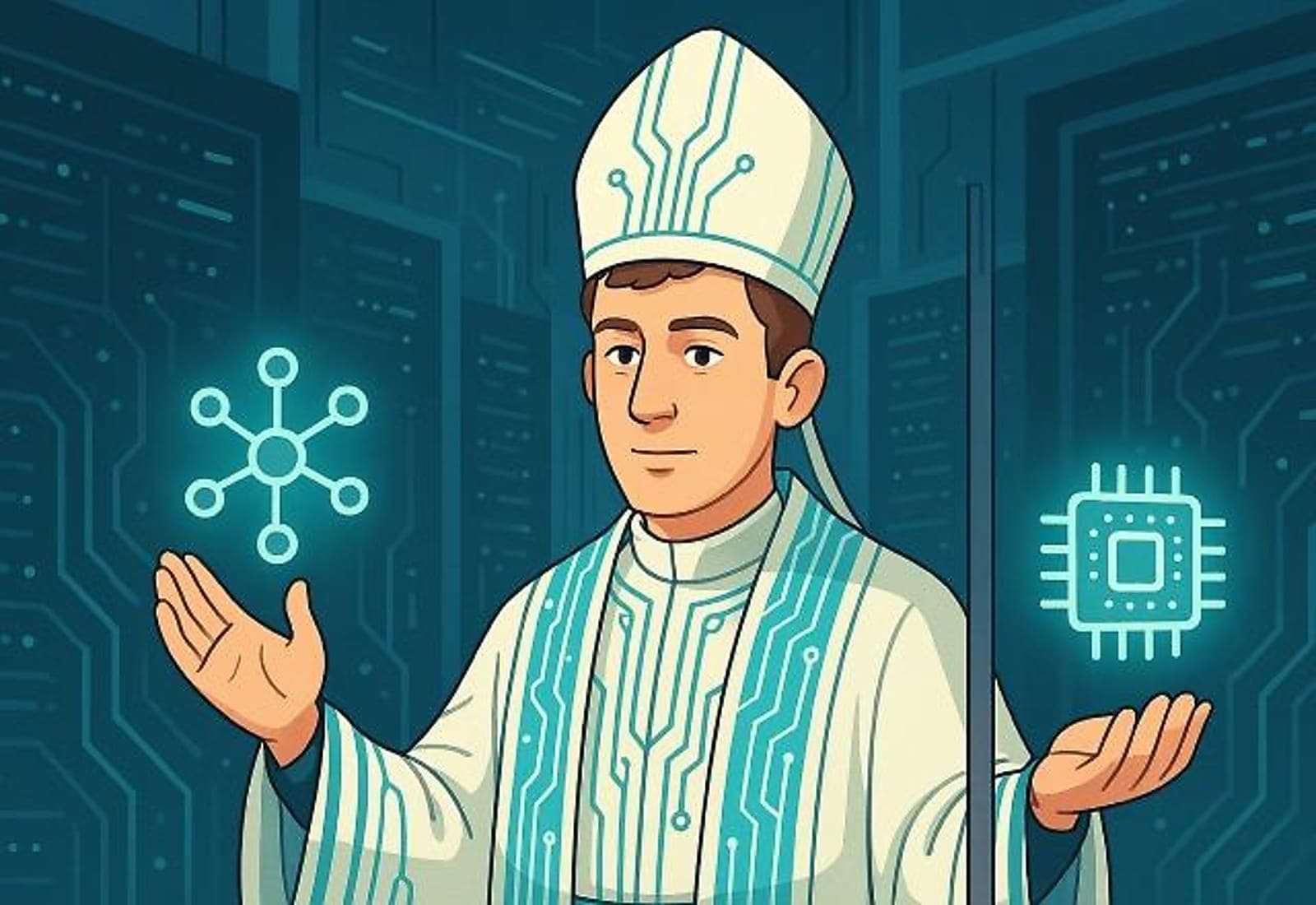
Artificial intelligence has officially entered one of the oldest moral conversations in human history.
The Vatican's newly released document on AI, strongly associated with Pope Francis and senior Catholic leadership, is rapidly becoming one of the most discussed ethical texts in the global technology debate.
At first glance, some people may wonder why a religious institution is involving itself so deeply in conversations about algorithms, machine learning, and advanced technology.
But the deeper you examine the document, the clearer its significance becomes.
Because the Vatican is not really trying to compete with technology companies.
It is trying to answer a much older question.
What happens to humanity when machines become increasingly powerful?
And in a world where AI is beginning to influence:
- education,
- warfare,
- relationships,
- employment,
- politics,
- healthcare,
- and even human identity,
that question suddenly feels urgent far beyond religion itself.
Why the Vatican Is Taking AI Seriously
The Catholic Church has historically engaged with major technological and social transformations throughout history.
From industrialisation to nuclear weapons, the Church often attempts to evaluate not only:
- what technology can do,
- but also what humanity should do with it morally.
Artificial intelligence represents perhaps the largest ethical challenge modern civilisation has faced in decades.
The Vatican's concern is not simply whether AI becomes useful.
It is whether societies can preserve:
- human dignity,
- moral responsibility,
- compassion,
- freedom,
- and truth
while increasingly relying on machines capable of making complex decisions.
That concern explains why the document feels surprisingly broad and philosophical rather than narrowly technical.
The Central Fear: Humans Becoming Less Human
One of the document's strongest themes is the fear that humanity may gradually surrender too much moral and emotional responsibility to machines.
The Vatican repeatedly warns against treating human beings merely as:
- data,
- economic units,
- automated behaviour patterns,
- or algorithmic outputs.
The concern is deeply philosophical.
If algorithms increasingly shape:
- hiring,
- policing,
- warfare,
- education,
- communication,
- and social interaction,
then societies may slowly begin valuing efficiency more than humanity itself.
The document argues that technological progress without ethical reflection can become dangerous.
Why AI Ethics Is Becoming a Global Battle
The Vatican's intervention arrives during a period where governments and technology companies worldwide are struggling to establish ethical boundaries for AI development.
Artificial intelligence is advancing faster than many legal and social systems can adapt.
Major concerns now involve:
- misinformation,
- surveillance,
- deepfakes,
- autonomous weapons,
- bias,
- privacy,
- and job displacement.
The Pope's document enters this environment as a moral voice rather than a technical one.
Instead of focusing primarily on market competition or innovation speed, it focuses on:
- responsibility,
- justice,
- truth,
- and human wellbeing.
That perspective is increasingly attracting attention globally.
The Document Warns About Power Concentration
Another major concern raised involves concentration of technological power.
The Vatican warns indirectly about situations where advanced AI becomes controlled by:
- a few corporations,
- governments,
- military systems,
- or wealthy actors.
This issue already worries many technology experts.
Advanced AI requires enormous:
- computing infrastructure,
- capital,
- data access,
- and technical expertise.
As a result, control over powerful AI systems may increasingly become concentrated inside a small number of institutions globally.
The document suggests such concentration could threaten:
- democracy,
- equality,
- and human freedom
if left unchecked ethically.
Why Human Creativity Still Matters
Interestingly, the Vatican does not reject AI entirely.
The document acknowledges technology can improve:
- medicine,
- education,
- accessibility,
- scientific research,
- and quality of life.
But it insists machines should remain tools serving humanity rather than replacing human meaning itself.
The Pope's message repeatedly emphasises:
- creativity,
- empathy,
- spirituality,
- conscience,
- and moral judgment
as uniquely human capacities that technology cannot fully replicate.
This becomes especially important as AI increasingly enters:
- art,
- writing,
- music,
- education,
- and emotional interaction.
Young People May Feel the Impact Most
The document also expresses concern about how younger generations interact with technology.
Children and young adults now grow up inside digital systems shaped heavily by:
- algorithms,
- recommendation systems,
- AI-generated content,
- and social media platforms.
The Vatican worries excessive technological mediation could affect:
- relationships,
- attention,
- emotional development,
- and understanding of truth itself.
This concern extends beyond religion.
Psychologists, educators, and technology critics increasingly raise similar warnings globally.
AI and Truth Are Becoming Dangerous Together
One particularly important theme involves truth and misinformation.
As AI-generated content becomes more sophisticated, distinguishing reality from manipulation may become increasingly difficult.
The Vatican warns that societies already struggling with:
- polarisation,
- propaganda,
- conspiracy theories,
- and digital misinformation
could face even greater instability if AI systems accelerate confusion.
This concern is especially serious during elections, conflicts, and political crises.
Why the Document Matters Beyond Catholics
Although the document emerges from the Catholic Church, its influence extends far beyond religious audiences.
The Vatican remains one of the world's most globally recognised moral institutions.
When the Pope comments on:
- climate change,
- migration,
- poverty,
- war,
- or ethics,
international leaders and media pay attention regardless of religion.
The AI document therefore enters global conversation as a significant ethical statement rather than purely a religious text.
The Timing Is Important
The release comes during a period where AI development feels increasingly explosive.
Companies are racing aggressively to build:
- smarter models,
- autonomous systems,
- AI assistants,
- and advanced automation.
At the same time, governments are still struggling to create coherent regulation.
The Vatican's intervention therefore reflects growing anxiety that humanity may be moving technologically faster than it is thinking morally.
Why This Debate Will Only Grow
The deeper significance of the document is that AI is no longer simply a technology issue.
It is becoming:
- a philosophical issue,
- a political issue,
- an economic issue,
- a cultural issue,
- and a moral issue simultaneously.
Questions about:
- consciousness,
- identity,
- truth,
- labour,
- freedom,
- and human purpose
are now increasingly connected to artificial intelligence itself.
Final Analysis
The Pope's AI document matters because it attempts to slow humanity down long enough to ask difficult questions before technology transforms society irreversibly.
The Vatican is not trying to stop artificial intelligence.
It is trying to ensure humanity does not lose itself while building it.
And in a world increasingly obsessed with speed, scale, automation, and technological competition, that warning may become more important than many people realise today.
No comments yet. Be the first to spark the conversation.