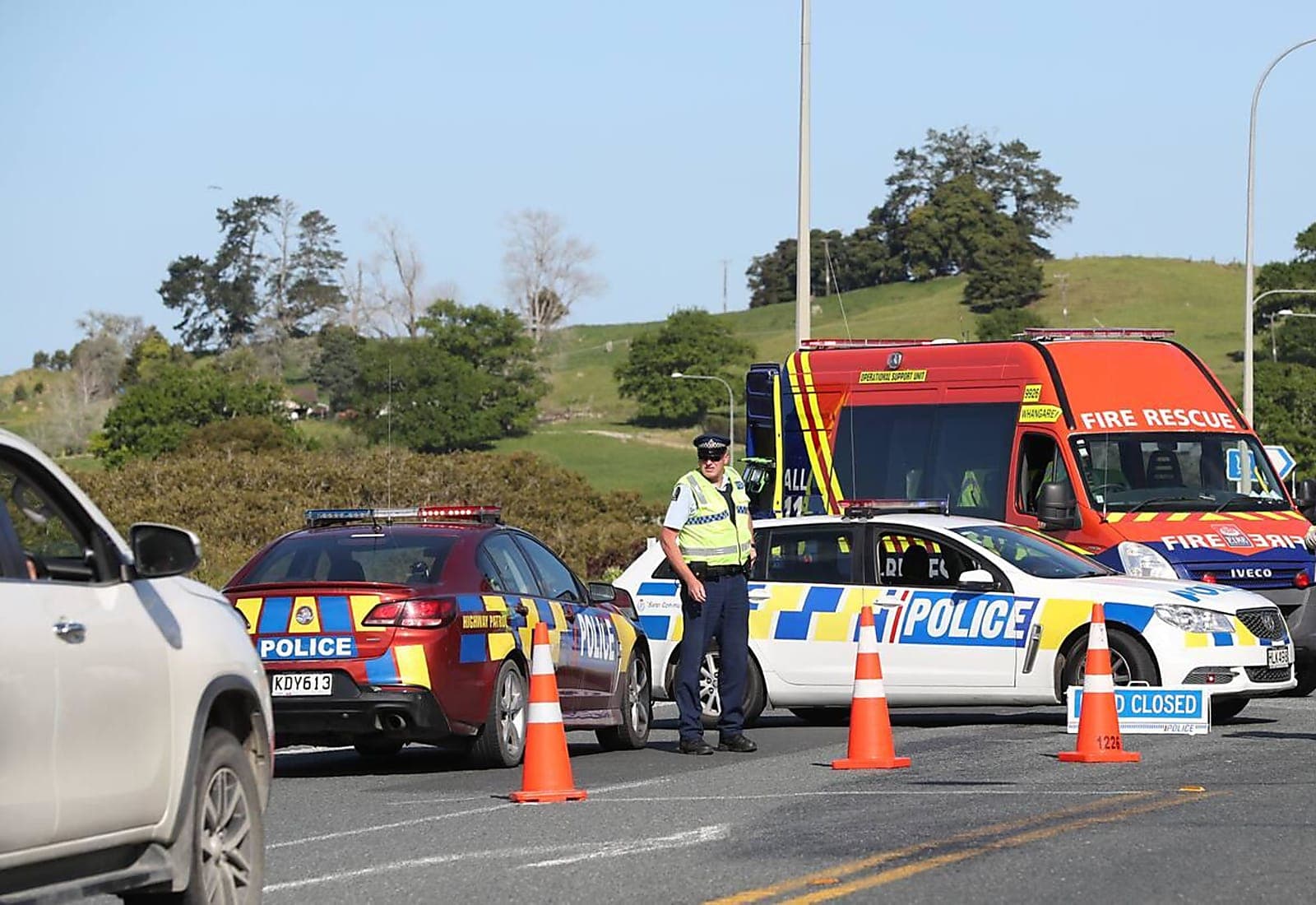
A major section of New Zealand's Waikato Expressway was closed southbound near Te Kauwhata following a serious crash that triggered emergency response operations and significant traffic disruption across the area.
Authorities confirmed that emergency services responded to the incident on State Highway 1 after reports of a serious collision involving multiple vehicles along the busy expressway corridor.
The closure quickly caused traffic congestion and delays as police and emergency responders worked at the scene.
Motorists travelling through the Waikato region were advised to avoid the area where possible and prepare for extended travel times as diversions and traffic management systems were put in place.
Emergency Services Responded Quickly
Reports from local authorities indicated that emergency crews, including police, ambulance personnel, and fire services, arrived rapidly after the crash was reported.
Although officials initially released limited information regarding the number of people involved or the severity of injuries, the scale of the response suggested authorities considered the incident serious.
The affected section of State Highway 1 is one of the most heavily used transport routes in the Waikato region, connecting major communities and serving as a critical corridor for commercial and passenger travel between Auckland and other parts of New Zealand.
Because of that importance, any major closure along the route can quickly create widespread delays and logistical complications.
Authorities urged drivers to remain patient while emergency teams carried out recovery operations and investigated the cause of the collision.
Traffic Disruption Spread Across the Region
The closure southbound from Te Kauwhata created immediate traffic pressure on surrounding roads as motorists attempted to find alternative routes.
Several drivers reportedly faced long queues and delays while traffic management systems redirected vehicles away from the affected section of the expressway.
Transport officials encouraged travellers to:
- check live traffic updates,
- delay unnecessary travel where possible,
- and follow official diversion instructions.
The incident once again highlighted how vulnerable major highway systems can become when accidents occur on critical transport corridors.
Even temporary closures on high-capacity expressways can disrupt:
- commercial transportation,
- supply deliveries,
- commuter movement,
- and emergency response logistics.
For many travellers, the disruption created uncertainty around arrival times and travel safety throughout the day.
Concerns Around Road Safety Continue Growing
The crash has also renewed conversations around road safety across New Zealand's highway network.
State Highway 1 remains one of the country's most important transport routes, but heavy traffic volumes, weather conditions, speeding, driver fatigue, and overtaking risks have continued contributing to accidents in several regions over the years.
Road safety advocates have repeatedly called for:
- safer driving behaviour,
- stronger public awareness,
- improved fatigue management,
- and greater caution during peak travel periods.
Although modern highway infrastructure has improved significantly in recent years, authorities continue emphasising that driver behaviour remains one of the most important factors affecting road safety outcomes.
Serious crashes on major highways often have consequences extending far beyond the immediate collision itself.
Families, businesses, commuters, emergency workers, and local communities can all feel the impact long after roads reopen.
Investigation Into the Crash Underway
Police and transport officials are expected to investigate the circumstances surrounding the collision fully.
That process typically involves:
- examining vehicle positions,
- reviewing road conditions,
- gathering witness statements,
- and determining whether factors such as speed, weather, visibility, or driver error contributed to the crash.
At this stage, authorities have not publicly confirmed the exact cause of the incident.
Officials also urged members of the public to avoid speculation while investigations continue.
In many serious road accidents, authorities take several hours or even longer to complete scene examinations safely before highways can reopen completely.
That process is especially important on major expressways where damaged vehicles, debris, fuel spills, and emergency operations can create additional hazards.
The Economic Impact of Highway Closures
Beyond immediate traffic disruption, incidents like this can also create broader economic consequences.
Major transport routes such as the Waikato Expressway play a critical role in:
- freight movement,
- regional commerce,
- tourism,
- and supply chain operations.
Extended closures can slow deliveries, affect transport schedules, and increase operating costs for businesses relying on efficient highway movement.
Commercial drivers and logistics companies often face significant delays whenever accidents occur on key national routes.
The incident therefore serves as another reminder of how closely road infrastructure and economic activity are connected.
Public Reaction After the Crash
Reaction online reflected a mixture of frustration, concern, and sympathy.
Many motorists expressed frustration over the delays and congestion, while others focused more on the human side of the incident, hoping those involved in the crash would recover safely.
Several social media users also urged drivers to prioritise patience and caution rather than aggressive driving during traffic build-ups caused by road closures.
That response reflects a growing awareness globally that road safety depends not only on infrastructure and enforcement, but also on everyday driving culture.
What Happens Next
Authorities are expected to continue recovery and investigation efforts before fully reopening the affected southbound lanes.
Drivers travelling through the Waikato region are likely to continue experiencing delays until the scene is cleared and traffic conditions stabilise.
Officials have advised motorists to:
- Monitor live traffic updates
- Use alternative routes where possible
- Follow emergency instructions
- Drive cautiously near diversion areas
For now, the serious crash near Te Kauwhata stands as another stark reminder of how quickly major transport incidents can disrupt daily life and place pressure on both emergency services and regional infrastructure.
No comments yet. Be the first to spark the conversation.