
Your watch is no longer just a watch.
Your ring is no longer just jewellery.
And your fitness tracker is no longer simply counting steps.
According to the American College of Sports Medicine, commonly known as ACSM, wearable technology has officially become the number one global health and fitness trend of 2026.
The announcement reflects something much bigger than gadgets or fitness culture.
It signals a major shift in how human beings now relate to:
- health,
- exercise,
- sleep,
- stress,
- ageing,
- and even self-awareness itself.
Across the world, millions of people are increasingly relying on wearable devices to monitor:
- heart rate,
- blood oxygen,
- sleep quality,
- calories,
- stress levels,
- workouts,
- and recovery patterns daily.
And in many ways, the human body is becoming permanently connected to data.
Why Wearable Technology Is Exploding
Wearable technology became dominant partly because modern health culture changed dramatically after the COVID-19 pandemic.
People now think differently about:
- prevention,
- personal health monitoring,
- fitness,
- immunity,
- and long-term wellness.
At the same time, technology companies improved wearable devices significantly.
Modern smart devices are now:
- more accurate,
- more stylish,
- more affordable,
- and more integrated into everyday life.
Today's wearables do far more than basic step counting.
Some devices can now track:
- irregular heartbeat,
- sleep disorders,
- stress patterns,
- workout intensity,
- menstrual cycles,
- body temperature,
- and early warning signs connected to health risk.
That level of personal monitoring feels revolutionary to many users.
Why ACSM's Ranking Matters
The American College of Sports Medicine is one of the world's most influential organisations in exercise science and health research.
Its annual fitness trend survey is closely watched by:
- healthcare professionals,
- gyms,
- wellness companies,
- fitness trainers,
- and technology firms globally.
When ACSM identifies wearable technology as the top trend, it reflects broad professional belief that digital health monitoring is now becoming mainstream rather than experimental.
In other words, wearables are no longer niche fitness accessories.
They are becoming part of everyday healthcare culture.
People Are Becoming Obsessed With Health Data
One reason wearable technology is growing so rapidly is because people increasingly want measurable control over their bodies.
Modern health culture now revolves heavily around:
- metrics,
- tracking,
- optimisation,
- and performance.
Many people check:
- sleep scores,
- heart-rate zones,
- calorie burn,
- stress readings,
- and workout recovery
almost as often as they check social media notifications.
For some users, this creates motivation and healthier behaviour.
For others, it can also create anxiety and obsession.
That tension is becoming an important psychological conversation.
The Fitness Industry Is Changing Completely
Wearable technology is also reshaping the fitness industry itself.
Gyms, trainers, and health platforms increasingly use wearable data to personalise:
- workouts,
- recovery plans,
- calorie targets,
- training intensity,
- and long-term fitness strategies.
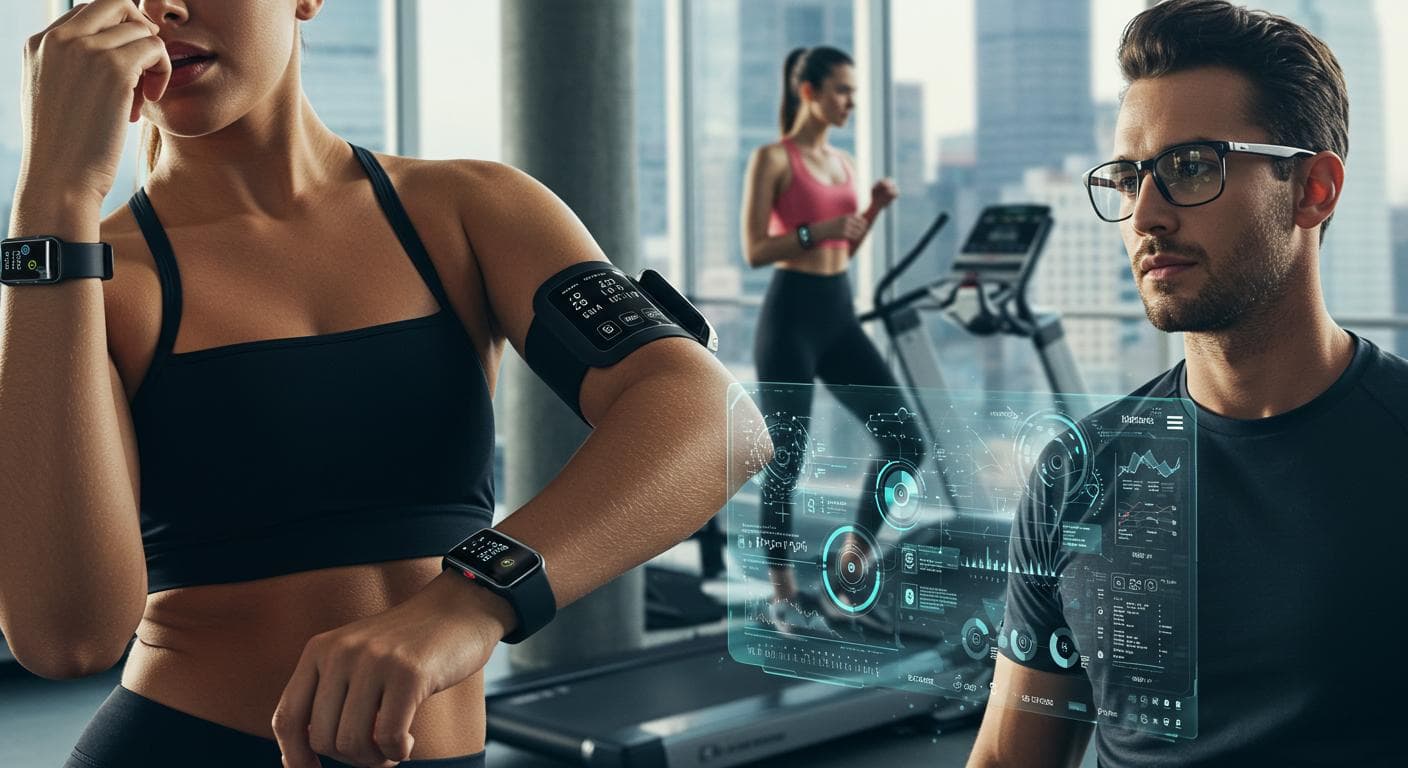
Artificial intelligence is now being integrated into many wearable systems too.
This allows devices to generate:
- health recommendations,
- workout adjustments,
- stress alerts,
- and recovery insights automatically.
The future of fitness is becoming deeply connected to personalised health analytics.
Sleep Tracking Became a Huge Obsession
One of the biggest wearable trends of recent years involves sleep.
People increasingly realise poor sleep affects:
- productivity,
- mental health,
- weight,
- stress,
- focus,
- and long-term disease risk.
As a result, wearable devices that analyse:
- sleep stages,
- recovery quality,
- breathing patterns,
- and overnight stress
have become extremely popular.
Ironically, modern society became so exhausted that people now use technology to teach themselves how to rest properly.
Mental Health Tracking Is Expanding Too
Another major shift is the growing focus on stress and mental wellness.
Some wearable devices now attempt to monitor:
- stress levels,
- emotional strain,
- breathing patterns,
- and nervous-system activity.
This reflects broader global awareness around:
- burnout,
- anxiety,
- emotional fatigue,
- and work-life imbalance.
Many people now see health as involving both:
- physical fitness,
- and mental wellbeing simultaneously.
Wearables are evolving to reflect that broader understanding.
Critics Warn About "Health Anxiety"
Despite the enthusiasm, wearable technology also faces criticism.
Some experts warn constant health tracking may increase:
- anxiety,
- obsessive behaviour,
- body-image pressure,
- and unhealthy self-monitoring.
People sometimes become emotionally dependent on:
- scores,
- notifications,
- or algorithm-generated feedback.
In extreme cases, users may begin trusting devices more than:
- medical professionals,
- bodily intuition,
- or emotional self-awareness.
This creates difficult questions about how technology affects psychological wellbeing.
Privacy Concerns Are Growing Quietly
Another major issue involves data privacy.
Wearable devices collect enormous amounts of highly personal information involving:
- health,
- movement,
- sleep,
- heart activity,
- location,
- and behavioural patterns.
That data has enormous commercial value.
Critics increasingly worry about:
- surveillance,
- insurance discrimination,
- corporate data collection,
- and digital privacy risks.
As wearable technology becomes more sophisticated, questions around ownership of personal health data will likely become much more serious globally.
Wearables Are Becoming Fashion Too
Interestingly, wearable devices succeeded partly because they stopped looking purely medical.
Companies increasingly design devices that feel:
- stylish,
- minimal,
- luxurious,
- and socially fashionable.
Smartwatches, fitness rings, and health trackers are now marketed as:
- lifestyle products,
- wellness symbols,
- and status accessories.
This combination of:
- technology,
- health,
- and fashion
helped wearable culture expand far beyond athletes alone.
Africa Could Benefit Enormously From Digital Health Tech
The wearable revolution may also create major opportunities for Africa.
Many countries across the continent still face limited healthcare access in some regions.
Affordable wearable monitoring systems could potentially improve:
- early detection,
- preventive care,
- remote health monitoring,
- and chronic disease management.
At the same time, affordability remains a major issue.
Many advanced wearable devices are still too expensive for large populations globally.
Why Humans Are Becoming More "Trackable"
The deeper story behind wearable technology is philosophical.
Human beings are increasingly turning life itself into measurable data.
Modern culture now tracks:
- sleep,
- mood,
- productivity,
- movement,
- fitness,
- fertility,
- attention,
- and emotional state constantly.
Some people view this as empowerment.
Others worry humanity may become too dependent on numerical validation for wellbeing.
That debate is only beginning.
Final Analysis
Wearable technology becoming the number one health trend of 2026 reflects more than consumer excitement around gadgets.
It reveals how deeply modern society now values:
- optimisation,
- prevention,
- self-monitoring,
- and personalised health control.
The benefits are potentially enormous.
Better fitness awareness. Earlier health detection. Improved wellness habits.
But the rise of wearable culture also raises important questions about:
- privacy,
- anxiety,
- digital dependence,
- and what happens when human wellbeing becomes permanently quantified.
Because in the future, the human body may not simply be biological anymore.
It may also become one of the world's biggest streams of data.
Wearable Technology Is the Number One Health Trend of 2026 - ACSM matters because health coverage shapes how readers understand risk, daily habits, and official guidance. A useful interpretation focuses on practical implications, what is confirmed, and what readers should treat with caution.
The next meaningful updates around Wearable Technology Is the Number One Health Trend of 2026 - ACSM will usually come from official statements, confirmed follow-up reporting, and the practical response of the people or institutions involved. Readers should watch for what changes after the first reactions, not just the first reactions themselves.
What is this health article about?
The American College of Sports Medicine says wearable technology is the top fitness and health trend of 2026 as smart devices increasingly reshape how people monitor health, sleep, stress, and exercise.
Why does this story matter?
Wearable Technology Is the Number One Health Trend of 2026 - ACSM matters because health coverage shapes how readers understand risk, daily habits, and official guidance. A useful interpretation focuses on practical implications, what is confirmed, and what readers should treat with caution.
When was this article published or updated?
It was published on 21 May 2026 and last updated on 21 May 2026.
Does this page include source references?
Yes. Source links or source details are shown on this page.
Where can readers find related Century Blog coverage?
Readers can continue with related coverage in the same topic area, including Hydration's Growing Role in Health: From Hot Weather to Daily Routines and South African Scientists Detect Seoul‑type Hantavirus on Dutch Cruise Ship, Demonstrating Global Health Vigilance.
No comments yet. Be the first to spark the conversation.