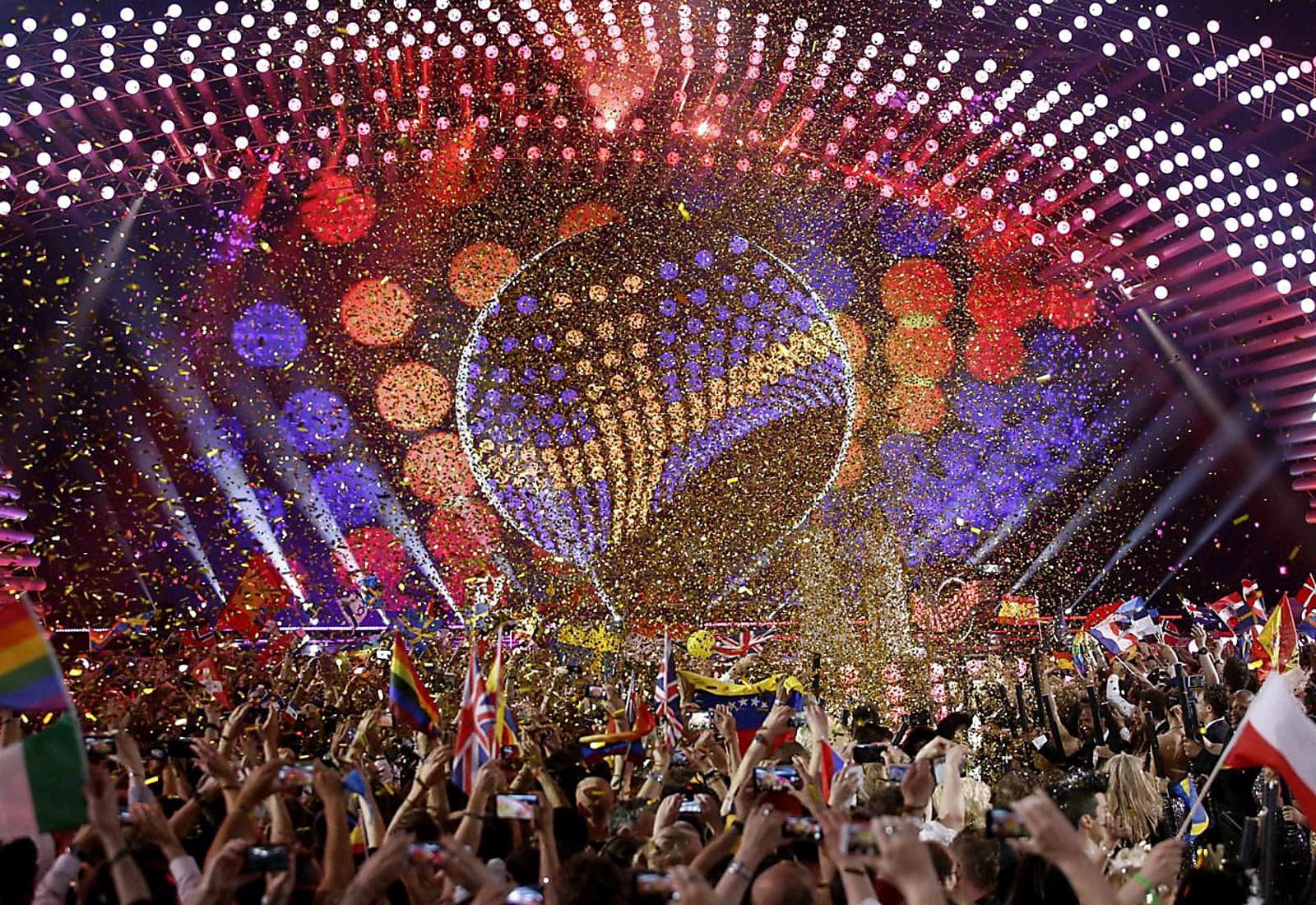
Vienna hosted the 70th Eurovision Song Contest on Saturday 16 May 2026, and when the final public votes were counted, Bulgaria had achieved something it had been chasing for two decades. Dara, performing "Bangaranga," won the contest with 516 points, defeating Israel's Noam Bettan in a dramatic finale that produced boos, cheers, and one of the most extraordinary voting sequences the competition has seen in years.
It was Bulgaria's first Eurovision victory. The 71st Eurovision Song Contest will be held in Sofia next year.
How the Night Unfolded
The 2026 Eurovision final brought 25 countries to the Wiener Stadthalle in Vienna, a venue that holds over eleven thousand people and was packed to capacity for the occasion. Austria was hosting after JJ's victory at the 2025 contest with "Wasted Love," making it the third time Vienna has hosted the world's most-watched annual music competition.
The night's voting produced one of the most nail-biting finishes the contest has delivered in years. As the national jury votes were announced, Israel's Noam Bettan climbed to the top of the leaderboard with "Michelle," a rock ballad performed in Hebrew, French, and English. The song was loudly cheered by the audience, though a smattering of boos accompanied its performance, reflecting the geopolitical tensions that have followed Israeli entries throughout the 2020s.
For much of the jury vote reveal, it appeared Israel would win. Then the public televote transformed everything. Dara's "Bangaranga" generated a wave of public support that overwhelmed the jury standings. The moment Israel was relegated from first place by the public vote, the audience erupted into boos, quickly replaced by jubilation from Bulgaria's supporters.
When all the votes were tallied, Bulgaria had 516 points total: 204 from national juries and 312 from the public vote. Dara won both the jury competition and the public vote, a combination that rarely produces anything other than a decisive victory and this one was exactly that.
Who Is Dara?
Dara is a Bulgarian pop artist who first gained attention on X Factor Bulgaria. She has built her reputation across the Bulgarian and Balkan music scenes with club-driven pop tracks defined by high energy and confident stage presence.
"Bangaranga" was co-written by Dara alongside Anne Judith Wik, Cristian Tarcea, and Dimitris Kontopoulos, one of the most successful composers in Eurovision history. Kontopoulos has worked on multiple winning entries over the years, and his understanding of what the Eurovision stage requires, impact, memorability, and the ability to translate through a television broadcast, was evident throughout Bangaranga's construction.
The song's staging was handled by Fredrik Rydman, and the production married Dara's explosive live energy with a visual concept that made full use of the Wiener Stadthalle's scale.
Her victory makes her one of the few Eurovision winners to have won convincingly in both the jury and public vote categories, a mark of an entry that succeeded with professional music industry opinion and mass European television audiences simultaneously.
The Final Top Five
The complete top five in the Eurovision 2026 final:
First: Bulgaria, Dara, "Bangaranga," 516 points Second: Israel, Noam Bettan, "Michelle," exact points not fully confirmed at publication but placing second after the televote reversal Third: Romania, Alexandra Capitanescu, "Choke Me" Fourth: Australia Fifth: Italy
Finland, who had been among the bookmakers' favourites entering the final, finished with 279 points, placing outside the top five in what will be considered a disappointing result given pre-contest expectations.
The UK's entry from LOOK MUM NO COMPUTER, performing "Eins, Zwei, Drei," received just one point from the jury vote and zero from the public, placing at the bottom of the final standings in a result that continued Britain's difficult recent record at the contest despite occasional strong entries.
Bulgaria's Eurovision History
Bulgaria's road to this victory is worth understanding in context. The country first participated in Eurovision in 2005 and has had one of the more dramatic trajectories in the contest's recent history.
Their breakthrough moment came in 2007 when Elitsa Todorova and Stoyan Yankoulov performed "Water" at Helsinki and delivered an impressive top-five finish that signalled Bulgaria's potential on the Eurovision stage.
Their previous best result came at Kyiv 2017, when Kristian Kostov's "Beautiful Mess" finished second with 615 points, a score that remains the third-highest in Eurovision Song Contest history. That result created the expectation that a Bulgarian victory was only a matter of time.
Dara has now made that expectation a reality, becoming the first Bulgarian Eurovision winner and securing the country's place in Eurovision folklore. The 71st contest in Sofia in 2027 will be the first time Bulgaria has hosted the competition.

The Israel Question: Controversy That Has Not Gone Away
Israel's presence at Eurovision has generated controversy throughout the mid-2020s, driven by the ongoing conflict in Gaza and broader tensions in the Middle East. The boos that greeted Noam Bettan's performance on Saturday were part of that continuing debate within the Eurovision community and among participating broadcasters.
Eurovision's organisers, the European Broadcasting Union, have consistently maintained that Eurovision is a non-political contest and that all eligible member broadcasters have the right to participate. Critics argue that this position does not account for the political meaning that any Israeli presence at a European cultural event carries in the current geopolitical environment.
Bettan's "Michelle" was in itself a musically strong entry. Its second-place finish, ahead of Romania, Australia, and Italy, reflects genuine support among European juries and public voters. Whether his performance would have been received differently in a different geopolitical moment is impossible to know.
What Eurovision 2026 Means for Global Music
Eurovision is watched by more than 160 million people annually, making it one of the most-watched non-sporting events in global television. For Nigerian music lovers, Eurovision may feel distant, but the contest's influence on global pop music, production styles, and the infrastructure for breaking artists across international markets makes it more relevant to the global music conversation than its European framing suggests.
Dara's "Bangaranga" combines Eastern European folk influences with contemporary club music production in a way that is immediately comparable to the genre-blending that has driven Afrobeats' global success. The willingness of European audiences to vote overwhelmingly for an entry that is unapologetically specific in its cultural identity rather than generically international mirrors the dynamic that has allowed Nigerian music to travel globally by being more Nigerian, not less.
Bulgaria will host Eurovision 2027 in Sofia. Preparations are expected to begin immediately. The competition's organisers have confirmed the standard process for host city selection will apply.
Conclusion
Dara and "Bangaranga" are the 2026 Eurovision Song Contest champions. Bulgaria's first victory, achieved with 516 points in a final that produced one of the most dramatic televote reversals in recent memory, is a result that rewarded originality, energy, and a willingness to be specific rather than safe.
Vienna gave the contest a fitting home for its 70th edition. Sofia will host the 71st. The Eurovision machine moves forward.
No comments yet. Be the first to spark the conversation.