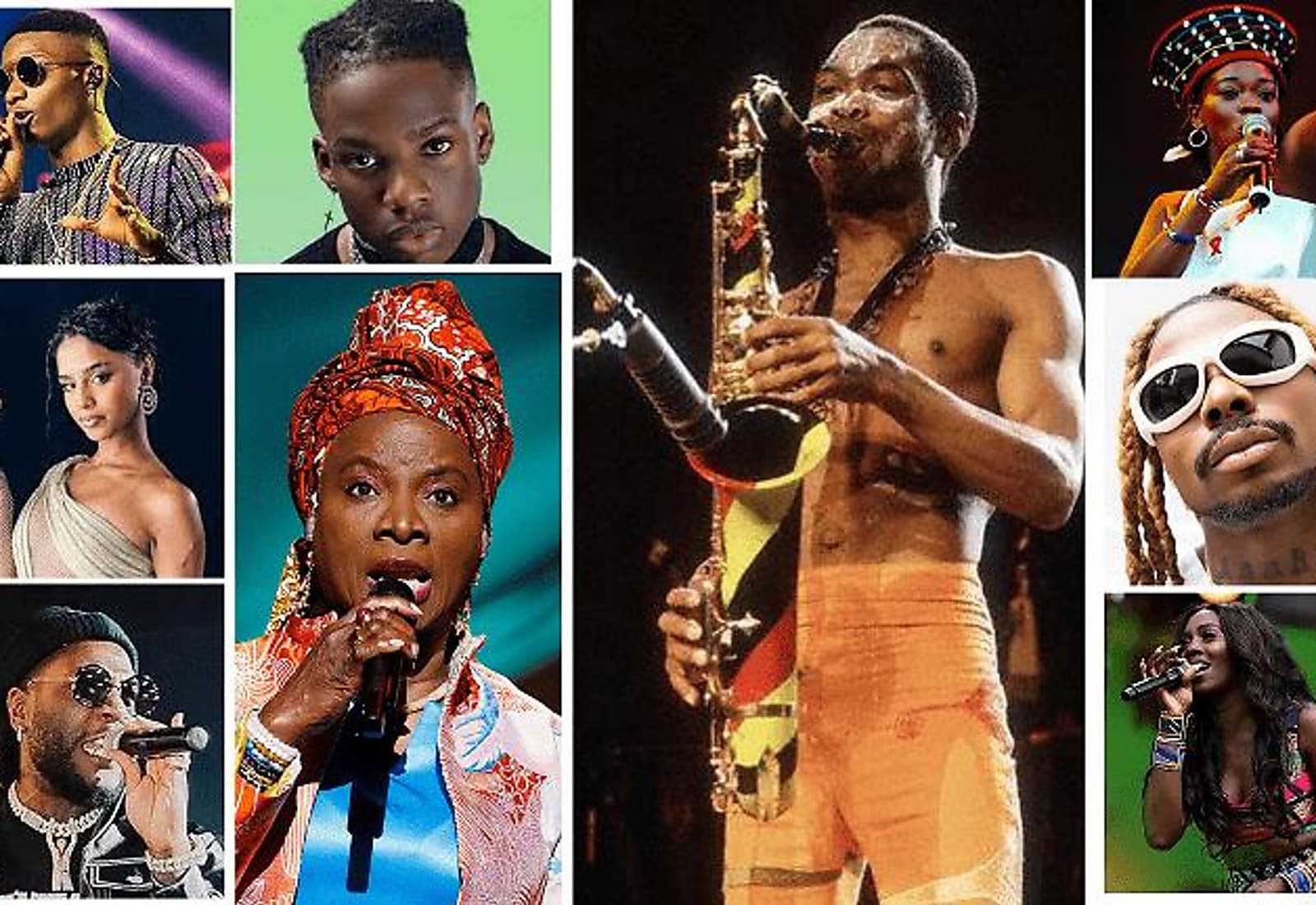
On 1 June 2026, David Adeleke, known everywhere as Davido, will walk into Atlanta's Historic Westside and receive a plaque on the Black Music and Entertainment Walk of Fame. His name will be embedded along a walkway that also bears the names of Michael Jackson, Beyoncé, Stevie Wonder, James Brown, Quincy Jones, Usher, Mary J. Blige, and Snoop Dogg.
He will be only the second Nigerian ever inducted.
The first was Fela Anikulapo-Kuti, honoured in 2022.
That pairing, Fela and Davido, is not just a Nigerian footnote in an American institution. It is a statement about the arc of Nigerian music over half a century and about what Afrobeats has become in the world. Understanding why this moment matters requires looking at both names together.
What Is the Black Music Walk of Fame?
The Black Music and Entertainment Walk of Fame was launched in January 2021, a joint initiative by the Black American Music Association and the Georgia Entertainment Caucus. It is located in historic Downtown Atlanta, with bronze and gold plaques embedded along the sidewalk outside Mercedes-Benz Stadium along Martin Luther King Jr. Drive and Northside Drive.
Its purpose is to celebrate individuals and organisations that have shaped Black culture and global music, not just commercially successful artists, but figures whose influence has bent the direction of entertainment itself.
The 2026 ceremony, scheduled for 1 June, takes place on Atlanta's Historic Westside and includes a class that reflects the breadth of that mission: Ludacris, the Atlanta rapper who has sold over 24 million albums worldwide and holds the distinction of being the highest-selling Southern Hip-Hop solo artist of all time; Paul S. Morton, a celebrated gospel bishop; and the late Maynard Jackson, Atlanta's first Black mayor and a figure whose political legacy is inseparable from the city's cultural rise.
Davido joins that class as the representative of a generation that has carried African music to every corner of the world.
Davido at 15: The Career That Earned This
On the same week the induction was announced, Davido posted a simple message on X: "God is the best of all planners. 15 years in da game."
Fifteen years. It does not feel like fifteen years because Davido has never really slowed down enough to let the time accumulate visibly. But the timeline is worth tracing.
Born in Atlanta, Georgia, and raised in Lagos, David Adeleke began his music career professionally in 2011, working on his debut album Omo Baba Olowo, a mix of Afrobeats and hip-hop that introduced a sound and a personality Nigerian music had not quite seen before. He rose to mainstream fame with "Dami Duro" in 2012, a song that felt like a declaration of arrival rather than a debut.
What followed was one of the most consistent run of hit records in the history of Nigerian popular music. Five studio albums: Omo Baba Olowo (2012), A Good Time (2019), A Better Time (2020), Timeless (2023), and 5IVE (2025). Each one a snapshot of where Davido was, where Nigerian music was, and where both were heading.
The numbers are significant. Over five billion streams. More than 1.2 billion video views. In 2023, he became the first African artist to top the iTunes Album Chart with Timeless, which earned three Grammy nominations at the 66th Annual Grammy Awards, including Best Global Music Album. His fifth studio album 5IVE earned him a nomination for Best African Music Performance at the 68th Grammy Awards, bringing his total Grammy nominations to five.
Five nominations without a win is a conversation for another day. What is not in question is the scale of his global footprint.
The Fela Connection: Two Nigerians, One Walkway
The detail that gives this induction its deepest resonance is the Fela comparison. Not because the two artists sound anything alike, but because of what they represent in sequence.
Fela Anikulapo-Kuti was inducted into the Black Music Walk of Fame in 2022. The Afrobeat pioneer, who died in 1997, spent his career using music as a weapon against power. His Afrobeat was percussive, political, often uncomfortable, and entirely original. He did not pursue international fame. International recognition eventually pursued him, arriving decades after his death as the world caught up to what he had been doing in Kalakuta Republic all along.
Davido is the other pole of that continuum. Where Fela's global recognition came posthumously and through the slow accumulation of critical reassessment, Davido's came during his lifetime, in real time, through streaming platforms, sold-out international tours, and collaborations that span continents. He pursued the world deliberately and reached it.
Together, they bookend the story of Nigerian music's relationship with global recognition. One who made the world come to him. One who went to the world. Both now on the same walkway in Atlanta.
The Upper Entertainment captured this well: "Where Fela's revolutionary sound and political artistry laid the philosophical and musical foundation for African rhythm to command global attention, Davido's career represents a modern continuation of that export, translating Nigerian pop into a globally fluent language over the past decade."
What This Means for Nigerian Music and Culture
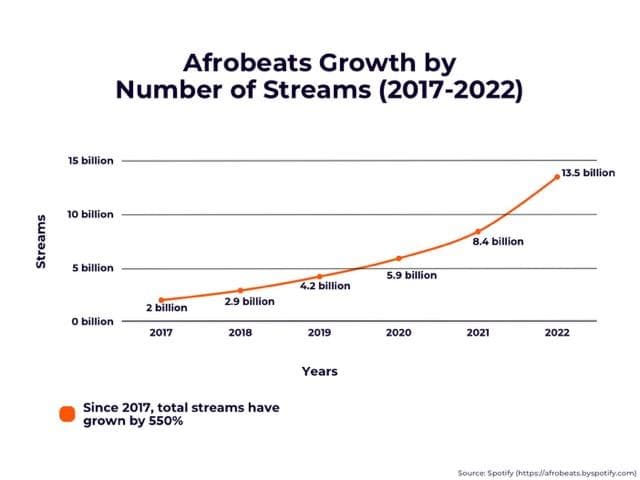
The timing of Davido's induction coincides with a broader moment of reckoning for Afrobeats as a genre.
Afrobeats is no longer a niche interest that global music executives occasionally notice. It is a consistent commercial and cultural force. Burna Boy won a Grammy. Wizkid's "Essence" became a global phenomenon. Tems has collaborated with some of the biggest names in American music. The genre is in a different position than it was even five years ago.
Davido's Walk of Fame induction is a formal institutional acknowledgement of that shift. When an organisation that has previously honoured Michael Jackson, Beyoncé, and Stevie Wonder places a Nigerian Afrobeats artist on the same walkway, it is doing more than recognising one individual. It is recognising the global legitimacy of a musical tradition that Nigeria built.
For Nigerian music fans, particularly the generation that grew up with "Dami Duro" and "Skelewu" and "Fall" and "IF," this is a moment to understand clearly. It is not just an award. It is a statement about where Nigerian culture sits in the world right now.
Davido the Person: Beyond the Plaques
Awards and plaques are the public measure of an artist. But Davido's staying power in the public consciousness has also come from something harder to quantify: his willingness to be visible in his vulnerability.
The loss of his son Ifeanyi in 2022 was a tragedy that played out partly in public, because Davido had built his career with an unusual degree of openness with his audience. The grief was real and seen. His return to music after that loss, the recording of Timeless and its emotional weight, was one of the most honest artistic responses to personal devastation that Nigerian pop has produced.
The Walk of Fame plaque will not capture that. But it is part of the reason the recognition feels earned rather than merely commercial.
Common Misconceptions to Clear Up
"This is the same as a Grammy or a BET Award." The Black Music Walk of Fame is a cultural honour rather than a competitive award. Artists are not nominated against each other. They are selected by the Black American Music Association and the Georgia Entertainment Caucus for their impact on Black music and culture. It is recognition of legacy, not a result of voting or competition.
"Davido is the first African artist on the Walk of Fame." Fela Kuti was inducted in 2022, making Davido the second African and the second Nigerian. The distinction matters because it reflects an ongoing relationship between the institution and African music, not a one-off acknowledgement.
"This means Afrobeats has finally arrived globally." Afrobeats arrived globally some years ago. This induction is the institutional recognition catching up with a reality that streaming data, concert ticket sales, and cultural influence had already established.
Conclusion
On 1 June 2026, a plaque bearing the name David Adeleke will be placed along a walkway in Atlanta that already carries the names of the people who shaped Black music across the twentieth and twenty-first centuries.
Next to it, somewhere along the same stretch, is a plaque for Fela Anikulapo-Kuti.
Two Nigerians. Two very different artists. Two very different relationships with fame and recognition. Both now permanently embedded in an American institution dedicated to celebrating the culture that Black music built across generations and across borders.
Nigeria put its music into the world. The world is finally putting it in stone.## Subheading## Subheading## Subheading
No comments yet. Be the first to spark the conversation.