
If your child is on Instagram or Facebook and listed a fake birthday to get around the age requirement, Meta's new AI is designed to find them anyway.
On 5 May 2026, Meta announced a significant expansion of its age assurance technology across both platforms. The system uses artificial intelligence to scan profiles, posts, captions, visual content, and behavioural patterns to estimate whether a user is actually a teenager, regardless of the birthdate they entered at sign-up.
It is one of the most technically ambitious child safety moves a major social media platform has made. It is also one of the most debated.
Here is exactly what Meta is doing, how the technology works, what changes for young users, and what parents and guardians need to understand right now.
Background: Why This Is Happening Now
Social media platforms have required users to be at least 13 years old since the Children's Online Privacy Protection Act established that threshold in the United States in 1998. For nearly three decades, enforcement of that rule has been almost entirely based on self-reported age. A child types a birthdate. The platform accepts it. Nobody checks.
The consequences of that system have been well-documented. Children as young as eight and nine years old have accessed Instagram and Facebook by entering false birthdates. They have been exposed to harmful content, contacted by strangers, and in some cases targeted by predators. Parents, regulators, and child safety researchers have pressured platforms to do better for years.
The pressure has now reached a regulatory tipping point. Australia enacted a social media minimum age law restricting access for users under 16. The European Union's Digital Services Act has placed significant obligations on large platforms around child safety. EU regulators recently concluded that Meta had failed to adequately prevent children under 13 from accessing Facebook and Instagram, exposing the company to potentially significant penalties. The United Kingdom, Brazil, and multiple US states have also introduced or are considering similar legislation.
Meta's expanded age assurance technology is, in part, a response to that regulatory environment. But it also represents a genuine technical advance in how platforms approach the problem.
How the Technology Actually Works
Meta's updated age assurance system operates through three distinct but complementary mechanisms.
Contextual AI profile analysis
The first layer involves AI scanning entire profiles for contextual clues that suggest a user may be younger than their stated age. This includes analysing posts, comments, bios, captions, and interactions for signals such as references to school grades, birthday celebrations with age indicators, mentions of being in secondary school, or patterns of engagement consistent with teenage rather than adult behaviour.
This capability is being expanded across additional features including Instagram Reels, Instagram Live, and Facebook Groups, which means the scanning covers content beyond just static profile information.
Visual content analysis
The second layer is new and has attracted the most attention: AI visual analysis of photos and videos shared on the platform. Meta's system scans visual content for general age indicators, described by the company as things like height, body proportion, and other broad physical characteristics that help estimate whether a person in the content may fall within a certain age range.
Meta has been explicit on one critical point: this is not facial recognition. The system does not identify specific individuals. It analyses general visual themes to estimate approximate age range, not personal identity.
Automatic Teen Account placement
The third layer is the protective response. When Meta's AI determines that a user is likely a teenager, even if that user registered with an adult birthdate, the account is automatically placed into Teen Account settings. Teen Accounts apply a set of default protections: restricting who can send messages, limiting exposure to sensitive content, applying time management tools, and requiring parental approval before a teen can change most of these settings.
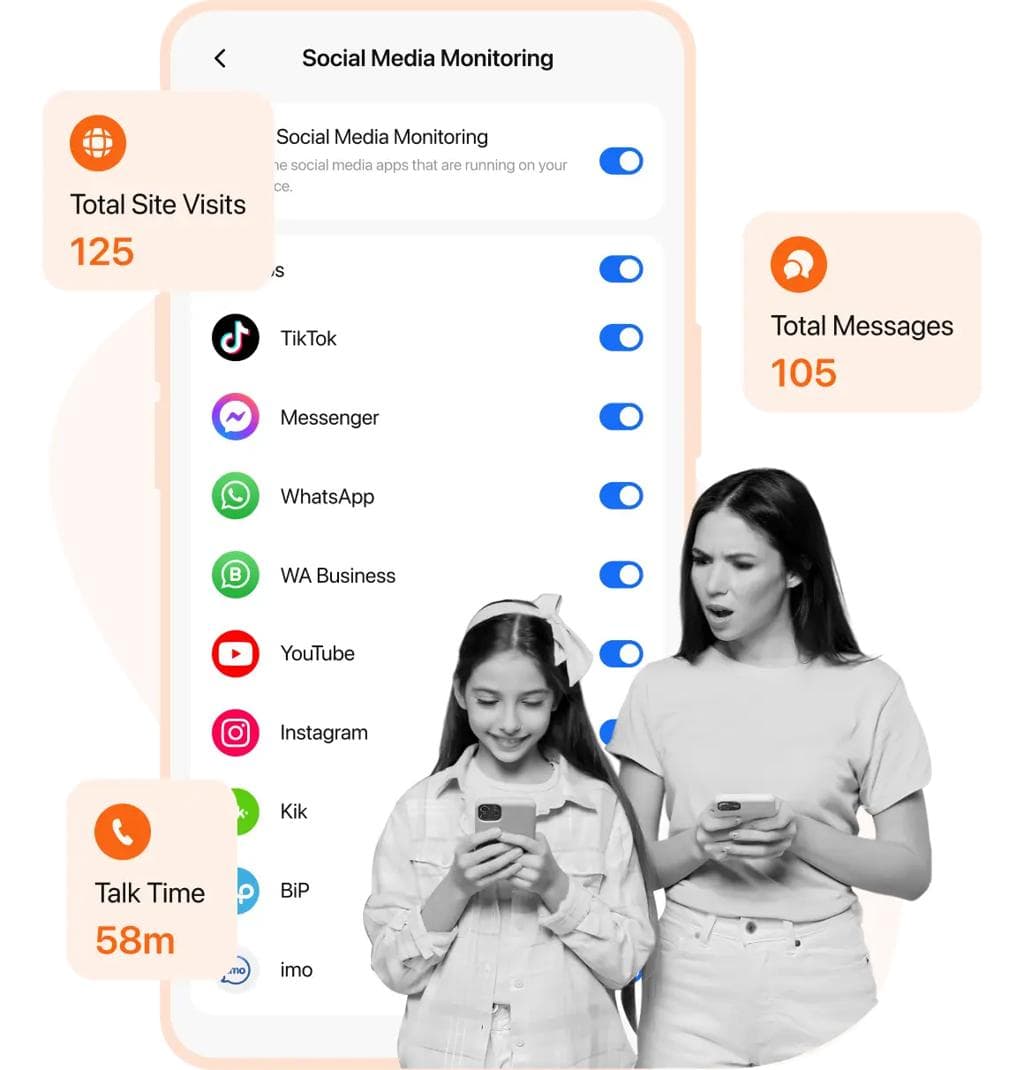
This expansion is rolling out to Instagram users across all 27 European Union countries and Brazil, and to Facebook users in the United States. Similar Facebook protections are expected to extend to the United Kingdom and the full EU in June 2026.
If a user is suspected to be under 13, which is Meta's minimum age requirement, the account is deactivated entirely pending age verification. Where verification cannot be completed, the account is deleted.
What This Means for Parents in Nigeria and Beyond
Nigeria is not yet among the initial rollout markets for the expanded Teen Account protections. However, the underlying AI detection systems for underage account identification operate globally, and Meta has indicated the expanded rollout will continue to additional regions over time.
For Nigerian parents, the more immediately relevant development is understanding what currently exists and what is coming.
If your child uses Instagram or Facebook and is under 13, Meta's AI systems are actively working to detect and remove that account. If your child is between 13 and 17 and entered an honest birthdate, they are already in Teen Account protections in markets where it has launched.
If your child entered a false birthdate, Meta's new system is designed to catch that, but it is not guaranteed to catch every case. AI detection is probabilistic, not absolute. A child who is careful about what they post and avoids age-revealing language or content may still slip through.
The most reliable safeguard remains a direct conversation with your child about what they are accessing, why age limits exist, and how to navigate social media safely. Meta is now providing new notifications and guidance for parents on Facebook and Instagram, including tools available through its Family Centre, to support exactly these conversations.
The Privacy Debate: What Critics Are Saying
Not everyone is celebrating Meta's expanded age assurance approach. The announcement has attracted substantive criticism from privacy researchers and digital rights advocates.
The core concern is about the method. Rather than using established, independent age verification services, Meta is using its own AI to conduct what the UK Information Commissioner's Office categorises as profiling, scanning vast amounts of user-generated content to infer personal characteristics.
Critics argue that this gives Meta's AI systems access to an even wider library of user data under the justification of child safety, without independent oversight of how that data is being used or retained. The Biometric Update, a specialist publication covering digital identity issues, noted that Meta's approach "sidesteps dedicated age assurance in favour of large-scale profiling."
Meta has pushed back on this framing, arguing that its systems are designed specifically for age estimation purposes and that visual analysis is explicitly not facial recognition. The company has also called for industry-wide solutions, including age verification at the operating system or app store level, which would reduce the burden on individual platforms and create a more consistent experience for users.
The debate reflects a genuine tension in digital child safety: the most effective protections often require platforms to collect and process more personal information, which creates its own set of risks.
Common Misconceptions to Clear Up
"This is facial recognition being used to spy on children." Meta has been explicit that its visual analysis system is not facial recognition. It does not identify individuals. It estimates general age range from broad visual indicators. That distinction is important, even if the underlying privacy questions around data collection remain legitimate.
"Once Teen Accounts are turned on, children are completely safe online." Teen Account protections significantly reduce exposure to harmful content and unwanted contact. They do not eliminate all risk. Determined bad actors and content that slips through AI content moderation still exist. Parental involvement remains essential.
"This only affects children under 13." The system applies differently at different age levels. Under-13 accounts face deactivation. Users between 13 and 17 are placed into Teen Account protections. The distinction matters for how parents think about their children's specific situation.
"This does not affect Nigeria." The full Teen Account rollout is not yet in Nigeria, but the underage detection and removal systems operate globally. Nigerian children on Instagram and Facebook are within the scope of Meta's AI detection systems.
Conclusion
Meta's expanded age assurance technology is the most serious attempt a major social media platform has made to close the gap between stated age and actual age online. The AI systems involved are sophisticated, the protections triggered are meaningful, and the regulatory pressure driving the move is unlikely to ease.
But technology alone cannot solve what is, at its core, a parenting and education challenge. Algorithms can identify signals. They cannot replace conversations between parents and children about what the internet is, what risks exist, and what responsible use looks like.
Meta's tools are getting better at finding young people who should not be where they are online.
The more important question is whether the adults in those young people's lives are having the conversations that technology cannot have for them.
No comments yet. Be the first to spark the conversation.