US‑Iran Standoff in the Strait of Hormuz Threatens Global Oil Supply and Fuels Economic Turbulence
Why this story matters
The Strait of Hormuz channels roughly one‑fifth of the world's daily petroleum trade, making it a linchpin of global energy security. When that artery is destabilised, the immediate effect is a tightening of supply that pushes crude prices higher, which in turn lifts the cost of everything that depends on fuel - from airline tickets to supermarket shelves. The present US‑Iran standoff has already driven Brent crude above $110 a barrel, a level not seen since the early 2020s, and the market is pricing in further upside if the confrontation escalates.
For oil‑importing economies - Nigeria, the United Kingdom, much of the European Union and many Asian nations - higher oil prices translate into higher transport costs, inflationary pressure on food and goods, and tighter fiscal margins. Export‑oriented producers may enjoy a short‑term windfall, but they also face heightened market volatility and the reputational risk of profiting from a conflict‑driven price surge. In short, the ripple effects of a Hormuz disruption are felt far beyond the Persian Gulf, touching supply chains, financial markets and household budgets worldwide.
Context and background
The Hormuz corridor, a 21‑mile channel linking the Persian Gulf with the Gulf of Oman, has been a strategic flashpoint since the 1970s. After the 1973 oil embargo, OPEC nations recognised that control of the waterway could be leveraged against Western economies, prompting the United States to maintain a persistent naval presence to guarantee freedom of navigation. Iran, meanwhile, has repeatedly threatened to close the strait in response to sanctions or perceived aggression, using the threat as a bargaining chip in regional power politics.
Relations between Washington and Tehran have swung between tentative diplomatic overtures and open hostility. The 2015 Joint Comprehensive Plan of Action (JCPOA) temporarily eased tensions, but the United States' unilateral withdrawal in 2018 and the re‑imposition of sanctions reignited a cycle of retaliatory measures. Over the past two years Iran has employed asymmetric tactics - missile launches, drone attacks and the seizure of commercial vessels - to signal its willingness to disrupt oil flows if its demands are ignored.
In parallel, the United States has expanded its forward‑deployed forces, stationing carrier strike groups, destroyers and additional air assets near the Gulf. The strategic calculus is clear: any Iranian attempt to block the strait would jeopardise global energy security, prompting a swift military response aimed at preserving the status quo. This latest escalation must therefore be viewed against a backdrop of long‑standing rivalry, regional geopolitics and the ever‑present risk of miscalculation. For further regional insight see the analysis of the cease‑fire's fragility in the Ceasefire Is on Life Support article.
What happened
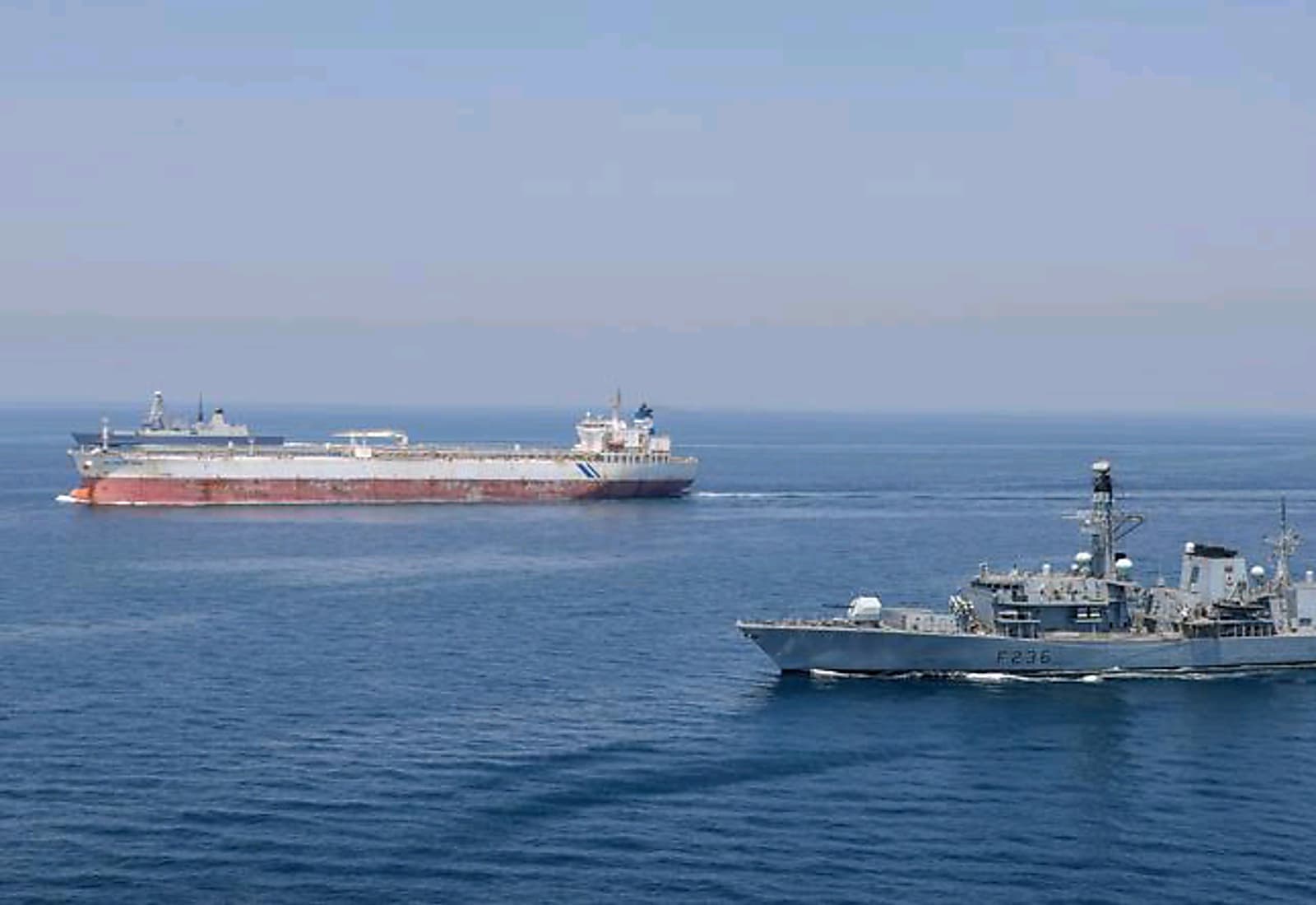
In the past fortnight Iranian forces launched a coordinated barrage of anti‑ship missiles and armed drones aimed at commercial tankers and a US Navy destroyer operating near the strait. The United States responded by dispatching an additional carrier strike group, raising the total US presence in the immediate area to roughly 15,000 service members, supported by destroyers, frigates and maritime patrol aircraft.
The US Central Command then announced "Operation Safe Passage", a coordinated effort to escort merchant vessels through the waterway under the protection of naval gunfire and airborne surveillance. While the operation has successfully escorted several high‑value tankers, many commercial operators have elected to reroute around the Cape of Good Hope, adding weeks to transit times and inflating shipping costs.
The heightened military activity has been mirrored by a sharp rise in oil market volatility. Brent crude touched $114 per barrel, while US West Texas Intermediate (WTI) breached $110. Futures markets are pricing in a 10‑15 % premium for oil that must be sourced from longer routes. Analysts attribute the price surge to both the immediate threat of supply disruption and the broader uncertainty surrounding the durability of the cease‑fire that has held since 2022.
Why it matters now
The timing of the escalation coincides with a fragile global economic recovery. Many advanced economies are still grappling with post‑pandemic inflation, and central banks have been tightening monetary policy to rein in price growth. An abrupt increase in oil prices threatens to reverse recent gains, as energy costs feed directly into consumer‑price indices.
For Nigeria, a country that imports a substantial share of its refined petroleum, the impact is immediate. Higher crude prices raise the cost of imported fuel, which in turn lifts the price at the pump. The ripple effect extends to transport‑dependent sectors such as agriculture, mining and logistics, potentially stoking a broader inflationary spiral. While Nigeria's own oil production could benefit from higher global prices, the nation's fiscal balance is constrained by limited refining capacity and a reliance on imported gasoline.
Beyond Nigeria, the United Kingdom, the European Union and many Asian economies are experiencing similar pressures. Airlines are reporting higher jet‑fuel costs, shipping lines are passing on increased bunker fees, and manufacturers are warning of higher input costs. Financial markets have reacted with a modest sell‑off in energy‑sensitive equities, and the US dollar has strengthened as investors seek safe‑haven assets.
In short, the Hormuz standoff is not an isolated geopolitical incident; it is a catalyst that could amplify existing inflationary trends, strain household budgets and test the resilience of global supply chains at a moment when many economies are still trying to stabilise.
Deeper analysis
Geopolitical risk premium
When a chokepoint such as Hormuz is threatened, oil traders automatically embed a risk premium into prices. This premium reflects the probability that a sudden supply cut could occur, forcing the market to source oil from more distant fields or from strategic reserves. The current premium appears to be around $8‑$10 per barrel, a figure that could expand if diplomatic channels fail or if either side escalates further.
Market dynamics and speculative behaviour
The surge in oil prices has also attracted speculative capital. Futures contracts are being rolled over at higher levels, and the increased open interest suggests that traders are betting on a prolonged period of elevated prices. Such speculation can exacerbate price swings, creating a feedback loop where higher spot prices feed into futures, which in turn influence spot market expectations.
Impact on emerging economies
Countries with large import bills for oil - Nigeria, Ghana, Kenya and Bangladesh - face a two‑fold challenge. First, higher import costs erode foreign‑exchange reserves, putting pressure on currency stability. Second, the pass‑through of fuel costs into transport and production raises the overall cost of living, potentially igniting social unrest if wages do not keep pace.
Conversely, major oil exporters - Saudi Arabia, Russia, the United Arab Emirates - stand to gain from higher revenues, but they also risk being caught in a price‑volatility trap. A sudden price spike can lead to over‑optimistic budgeting, followed by sharp corrections if the Hormuz situation de‑escalates, leaving fiscal planners vulnerable.
Strategic considerations for the United States
The US deployment serves a dual purpose: protecting commercial navigation and signalling resolve to Iran and other regional actors. However, maintaining a large naval presence is costly, both in terms of direct operational expenses and the political capital required to sustain public support for a potentially protracted engagement. Moreover, any misstep - such as an accidental strike on a civilian vessel - could trigger a broader conflict that would dramatically amplify the oil shock.
Energy transition implications
The Hormuz crisis underscores the strategic vulnerability of a world still heavily dependent on fossil fuels. It provides a real‑world case study for policymakers advocating accelerated investment in renewable energy, strategic petroleum reserves and diversified supply routes. While the transition will not happen overnight, events like this reinforce the economic argument for reducing reliance on geopolitically sensitive oil supplies.
What happens next
Three plausible pathways dominate the near‑term outlook. First, diplomatic engagement - possibly mediated by European allies - could produce a temporary de‑escalation, allowing commercial traffic to resume under escorted convoys and easing price pressure. Second, a further military tit‑for‑tat could see additional missile launches or naval skirmishes, pushing oil prices into the $120‑$130 range and prompting many shippers to permanently avoid the strait. Third, a prolonged stalemate may develop, with intermittent incidents but no full‑scale closure, leading markets to price in a sustained risk premium and encouraging countries to diversify their energy sources.
For investors and businesses, the prudent approach is to monitor official statements from US Central Command, the Iranian Revolutionary Guard and the International Energy Agency, while also keeping an eye on oil futures and shipping indices. Companies with exposure to fuel costs should consider hedging strategies, and governments may need to reassess fuel subsidy policies to mitigate inflationary fallout.
Final takeaway
The US‑Iran standoff in the Strait of Hormuz is a stark reminder that geopolitical flashpoints can quickly become economic flashpoints. With a fifth of the world's oil passing through this narrow waterway, any disruption reverberates through global markets, lifts inflation and tests the resilience of both oil‑importing and oil‑exporting nations. While the immediate focus is on preventing a full‑scale closure, the longer‑term lesson is clear: diversifying energy supplies and reducing dependence on volatile chokepoints are essential steps toward a more stable economic future.
No comments yet. Be the first to spark the conversation.